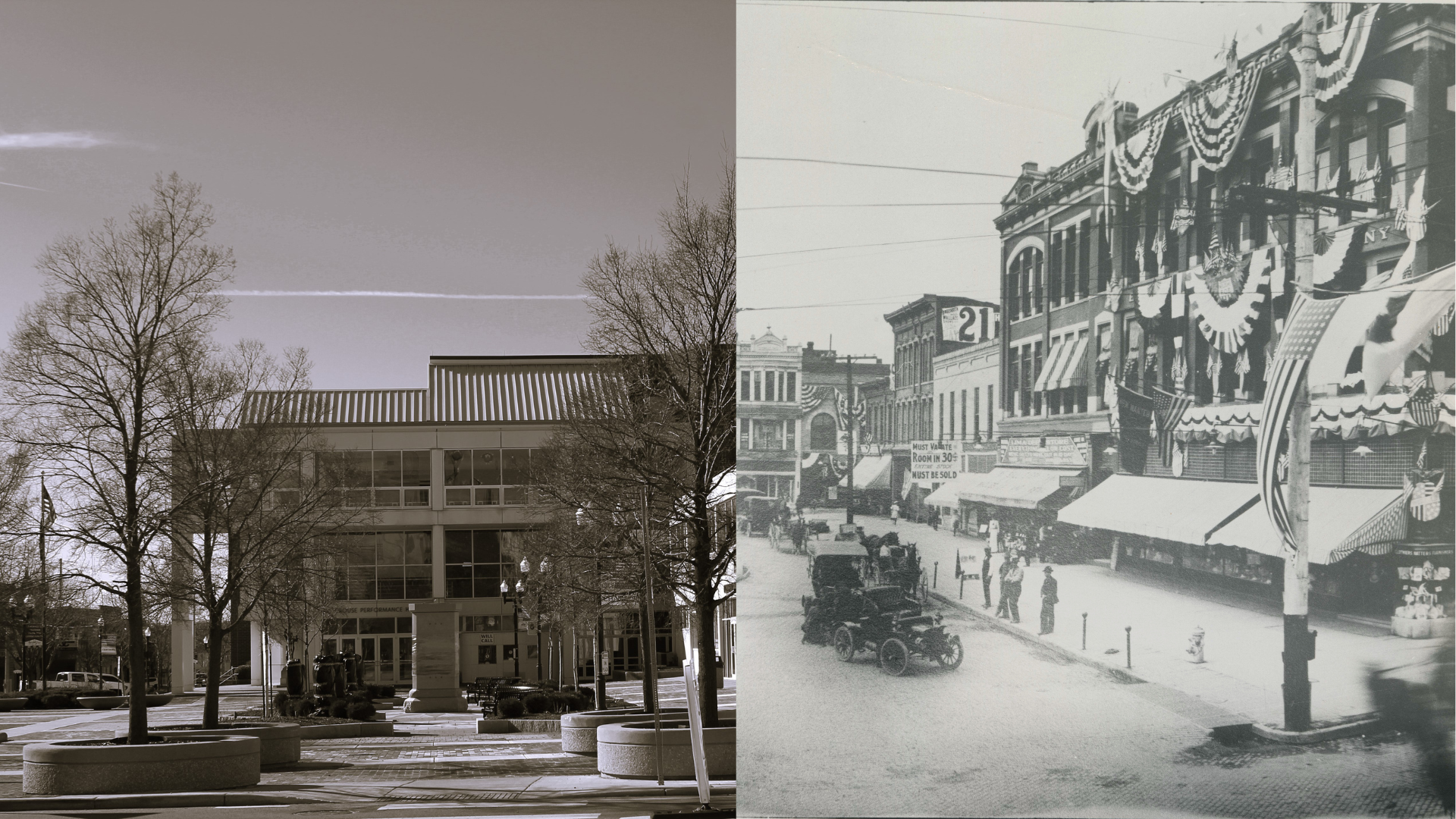
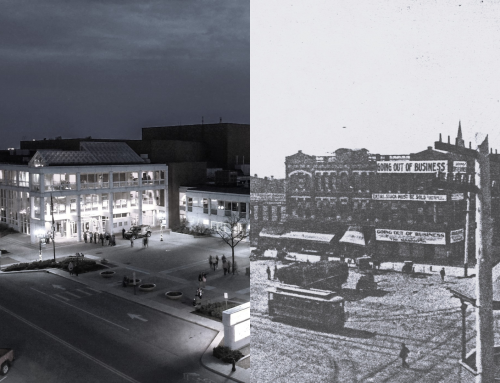
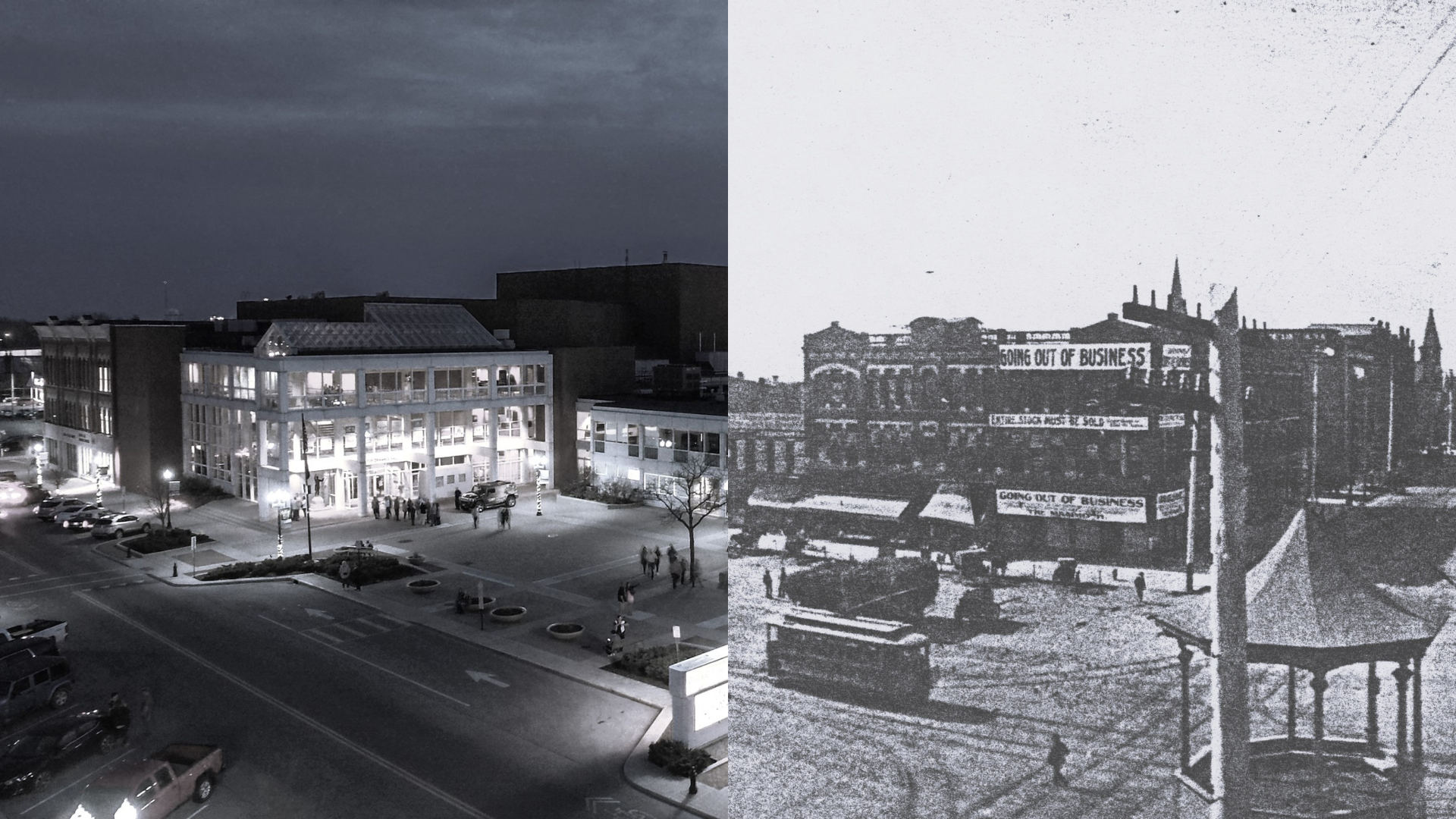
Today’s article will finish the story of the southwestern corner of Public Square by looking at the years from 1900 to today. Specifically the history of the Cincinnati, Badeau, and Bowdle blocks will be covered as we walk through the stores and businesses located there over the last century and a quarter, until we get to what graces that area today. We all know that the Veterans Memorial Civic and Convention Center stands there today, but how did it get there, and what happened in the meantime? That’s what we will cover today, highlighting the impact this quadrant of downtown had on our area’s history.
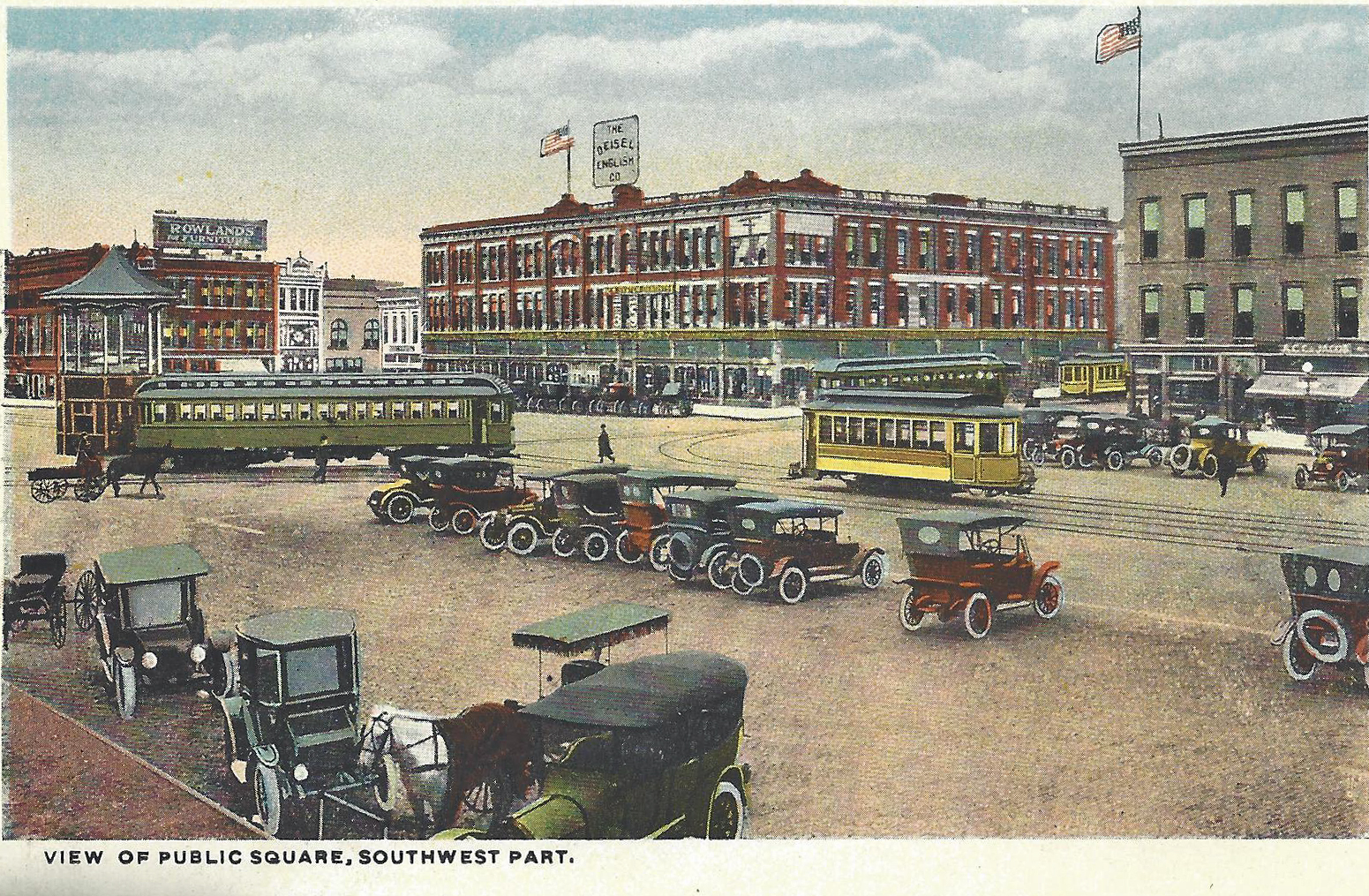
As the century changed over to the 1900s, “The Mammoth” was still occupying most of the Cincinnati Block, along with a few loan companies and dentist offices.[1] A business group made up of George Newsom and the Hawisher brothers would buy the Cincinnati block in 1909.[2] They bought up a smaller city block just south of the Cincinnati Block, razed it, and then built out the Cincinnati block to be twice the size.[3] That’s where “The Big Store,” as it was commonly called, would be located.[4] It was first called Newsom-Hawisher after the business group who expanded the building and ran the store. This blew “The Mammoth” out of the water in its size and selection. It had sixteen different departments within the store and you could buy everything from food to jewelry.[5] It was also easier to visit than ever before because of the increased transportation within the area via the interurban and the city trolly.[6] The name and ownership would change several times over the next few years until 1914 when Henry Deisel and his son bought control of the “Big Store” for $200,000,[7] close to $6.5 million today.[8] One of its subsequent managers, William E. English, would run the business with Deisel Jr. under the business name Deisel-English Co.[9] Two years later, Deisel-English Co. advertised it held 57 stores within its business and were turning more profit than any other business that had been housed in the Cincinnati Block.[10] That same year, 1916, English would leave the business to move out west for work, and the store would turn into Deisel Co.[11] That would be the state of the store for 11 years, until Fred Uhlman, from Bowling Green, purchased the business and turned it into a wholesale clothing business.[12] We will continue with the Cincinnati Block in the 1930s after highlighting the early 1900s histories of the Badeau and Bowdle Blocks.
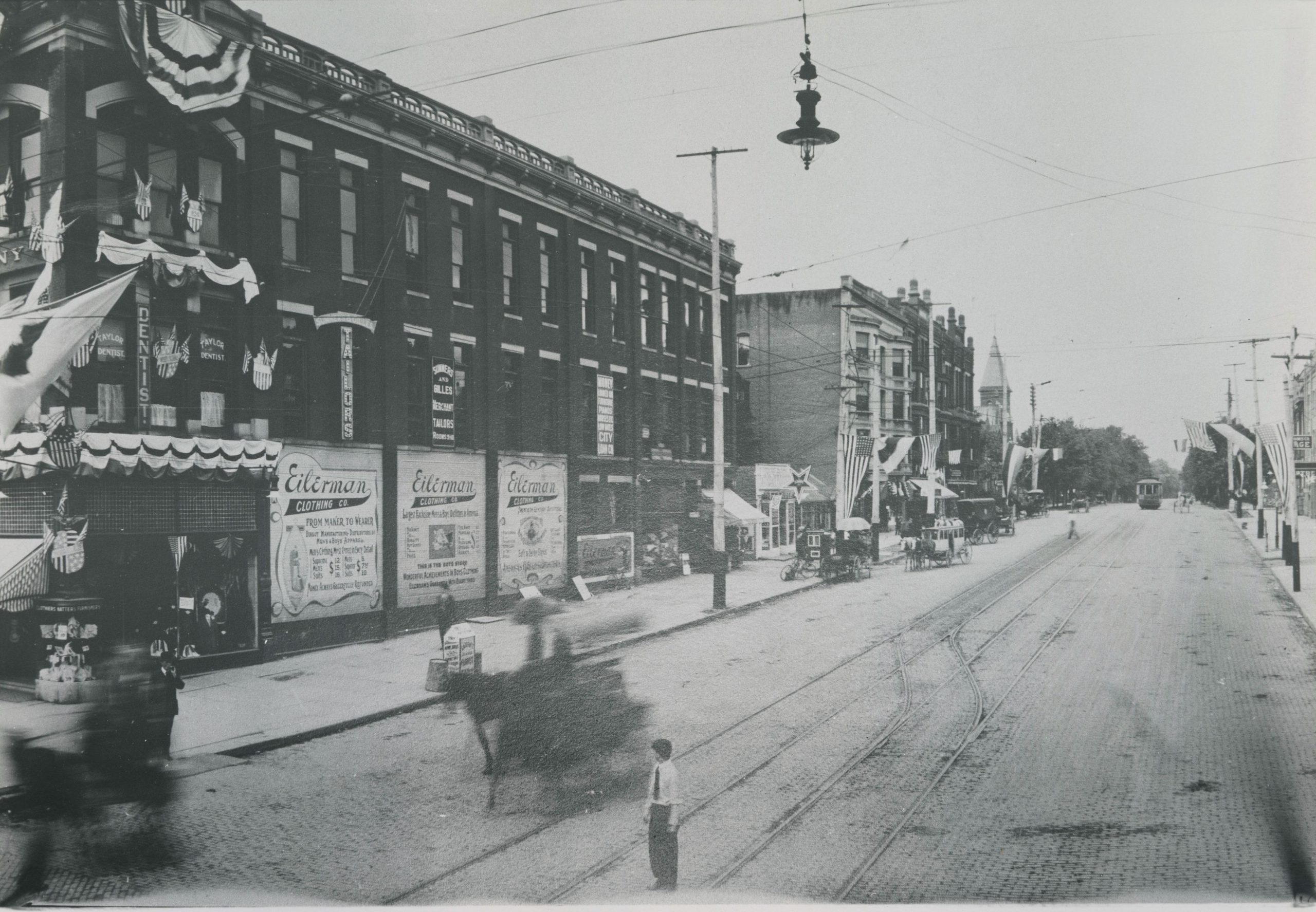
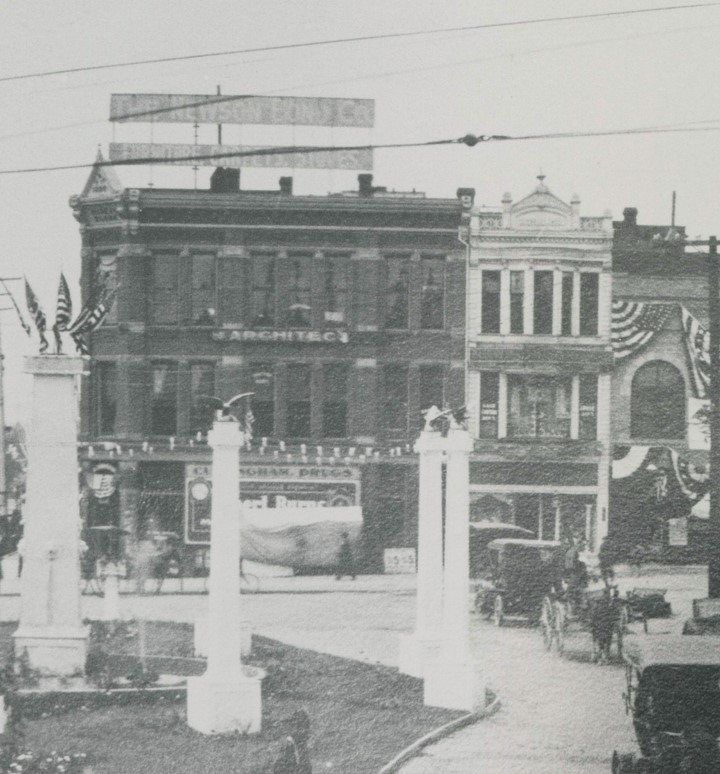
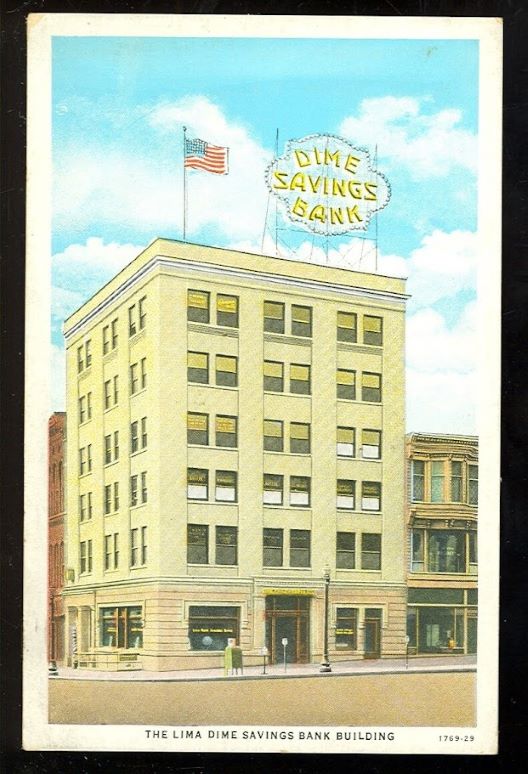
The Badeau Block had held Tillie Badeau’s studio, Cunningham Pharmacy, an architect named C. H. Miller’s offices, and some other tenants at the end of the 1800s.[13] Cunningham Pharmacy would be in business there until 1919.[14] Likewise, it seemed Tillie Badeau worked out of her studio until the early 1910s.[15] That is to say that business continued from the turn of the century with many companies moving in and out of the Badeau Block until it was torn down in 1924.[16] The main business the block was renovated for was the Dime Savings Bank.[17] This bank had started just a block down on Main Street, but had grown and needed a larger space. The new Badeau block building was six stories, becoming larger than the surrounding buildings, and it was finished at the end of 1925.[18] The Dime Savings Bank took up the bottom floor, but there was still room for other businesses in the upper floors. The following year, 1926, the Northwestern School of Commerce moved into the Badeau Block.[19] The school had been formed in 1920 and lives on to this day as the University of Northwestern Ohio (UNOH).[20] The school would move out of the Badeau Block only two years later in 1928.[21] It would relocate to the corner of Market and West streets.[22] Leaving the Badeau Block to be the home of Dime Savings Bank and various other businesses during the next few years.
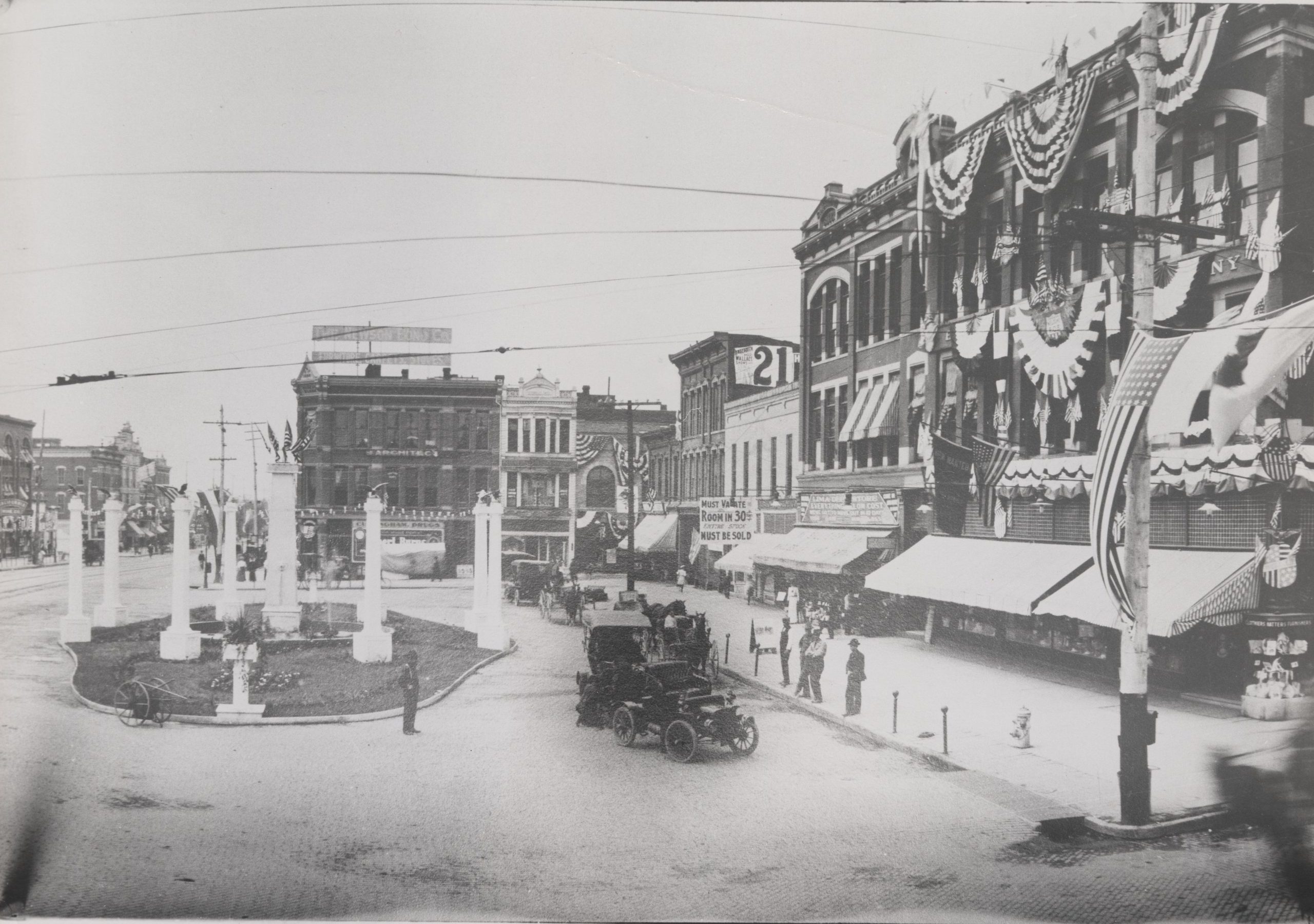
After the turn of the century, the Bowdle block was home to the Lima Theater—one of the first motion picture theaters of the area.[23] It was owned by a man named O. L. Hengsteler and took up only a few rooms, much different than the palatial theaters of today.[24] Ezekial Owen, a reporter of the era, reminisced about the Lima Theater years later, “It had an elaborately lighted front and many will remember the kaleidoscopic show of colored electric effects in the second story window. It was possibly the most beautiful electrical piece that Lima has ever had, and it was universally admired.”[25] The Lima Theater drew in crowds with its technicolor signage.[26] Unfortunately, it could not keep bringing in the crowds because its motion pictures were not very interesting.[27] Like many early theaters it would change management many times until it eventually went out of business.[28] For a short period of time during 1925 and 1926, Hunter’s Drug Store set up shop in the Bowdle Block.[29] We will discuss Hunter’s Drug Store more thoroughly in the northwestern corner of Public Square’s history, because it was typically located in the Lima Trust Building on the northwest corner of W. Market and Main Street.[30] However, it did spend over a one-year time period in the Bowdle Block, where it served Lima citizens’ pharmaceutical needs and sold convenience items. Likewise, Betty Jo, one of the Hunter daughters, graduated from Ohio Northwestern University, which had been just right next door, with her pharmaceutical degree.[31] She had been able to study and work all in the southwest corner of Public Square. Thus, even though businesses did not stay in the Bowdle Block for long during the early 1900s, it was still an impactful part of the city’s downtown.
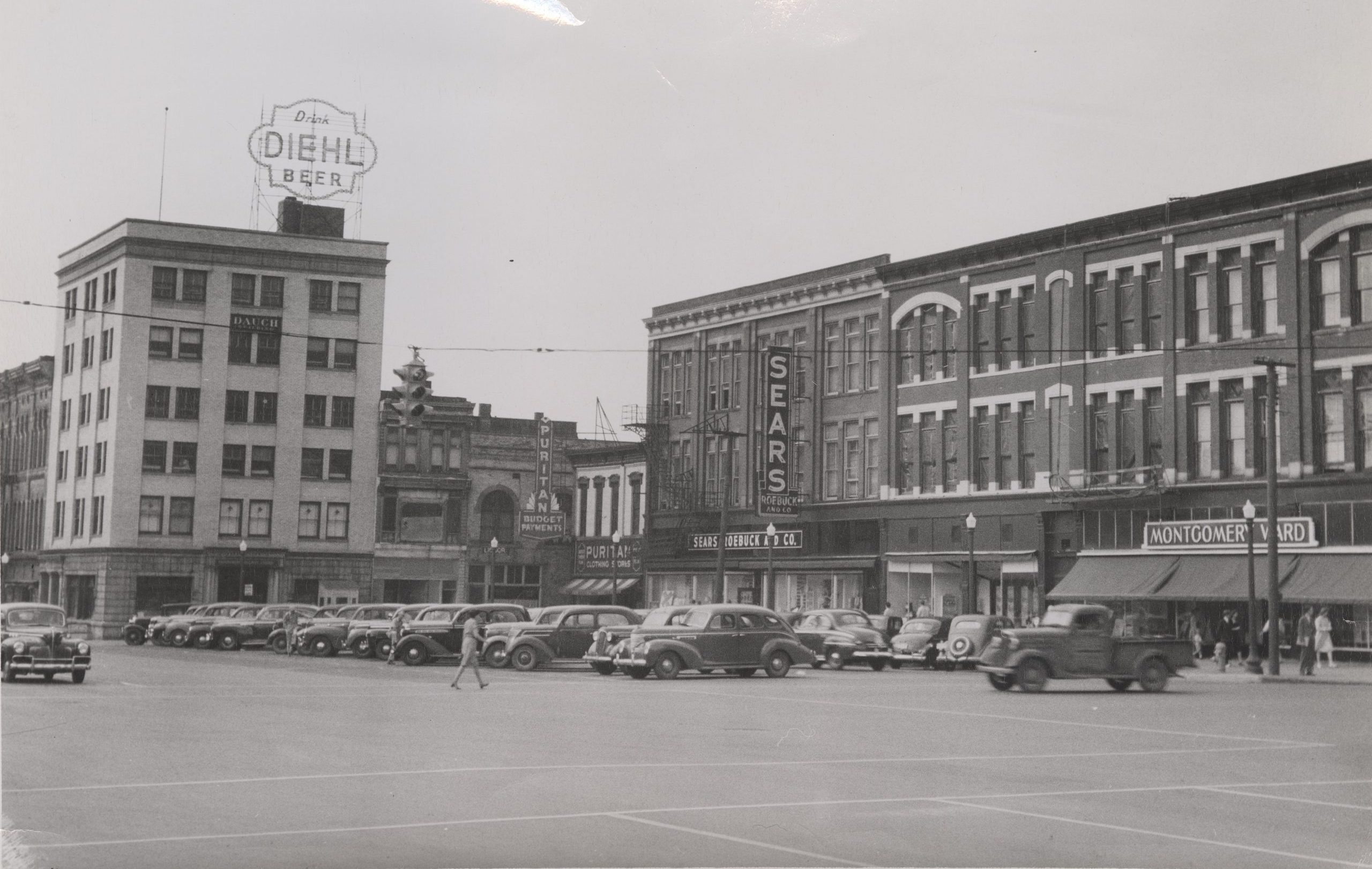
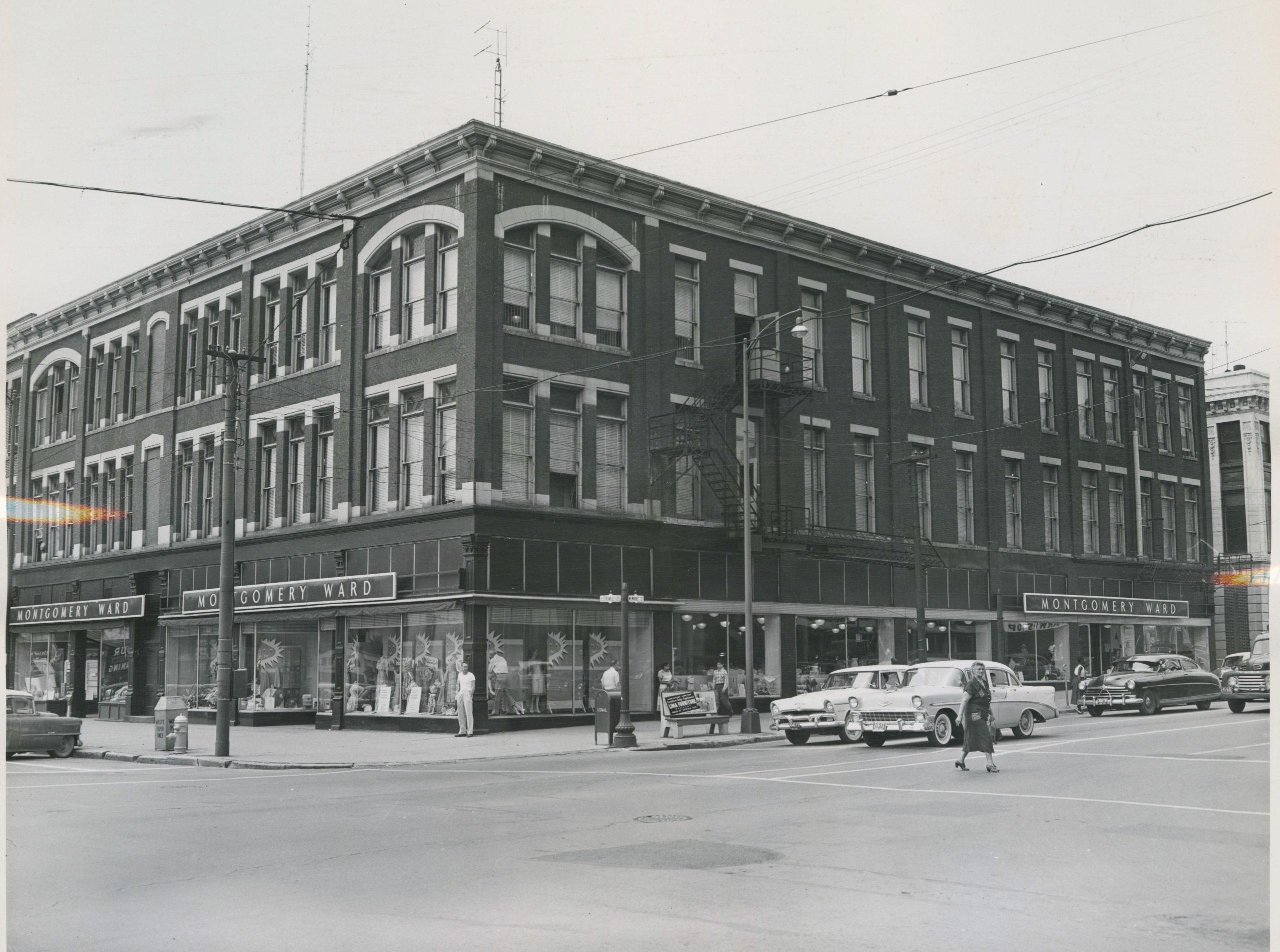
Now we move on to the time span between the 1930s and the 1960s. Those decades were a time of significant change across the Public Square, and no less so than in the Cincinnati Block, which shifted from local stores to nationwide chain stores. In 1931, Sears, Roebuck, and Co. moved into the southern half of the Cincinnati Block.[32] Uhlman’s wholesale clothing store, which was in the northern half, closed its Lima location in February 1933.[33] Only a year later, 1934, Montgomery Ward moved into the location that Uhlman’s had just vacated, and the store was expanded.[34] This is when the Cincinnati and Bowdle Block became one singular business block and their stories will converge for the rest of this story. Throughout the rest of the 1930s and even through the trials and tribulations of WWII, both Sears and Montgomery Ward thrived in Lima.[35] Both were essential stores to the downtown area during the late 1940s and 1950s. Alongside other downtown stores, like Gregg’s and Kresge’s, most shoppers in Allen County could get whatever they needed for daily life or for the holidays at these department stores. That of course changed in the middle of the 1960s as these stores moved into local malls.[36] Both Sears and Montgomery Ward moved to Lima Mall at that time, leaving the Bowdle and Cincinnati blocks empty.[37] In 1969, the block was torn down, temporarily becoming a parking lot before the Metropolitan Bank of Lima built a drive-through on the site in December of 1970.[38] We will come back to what happened next to this area after going through Badeau Block’s history for this time period.
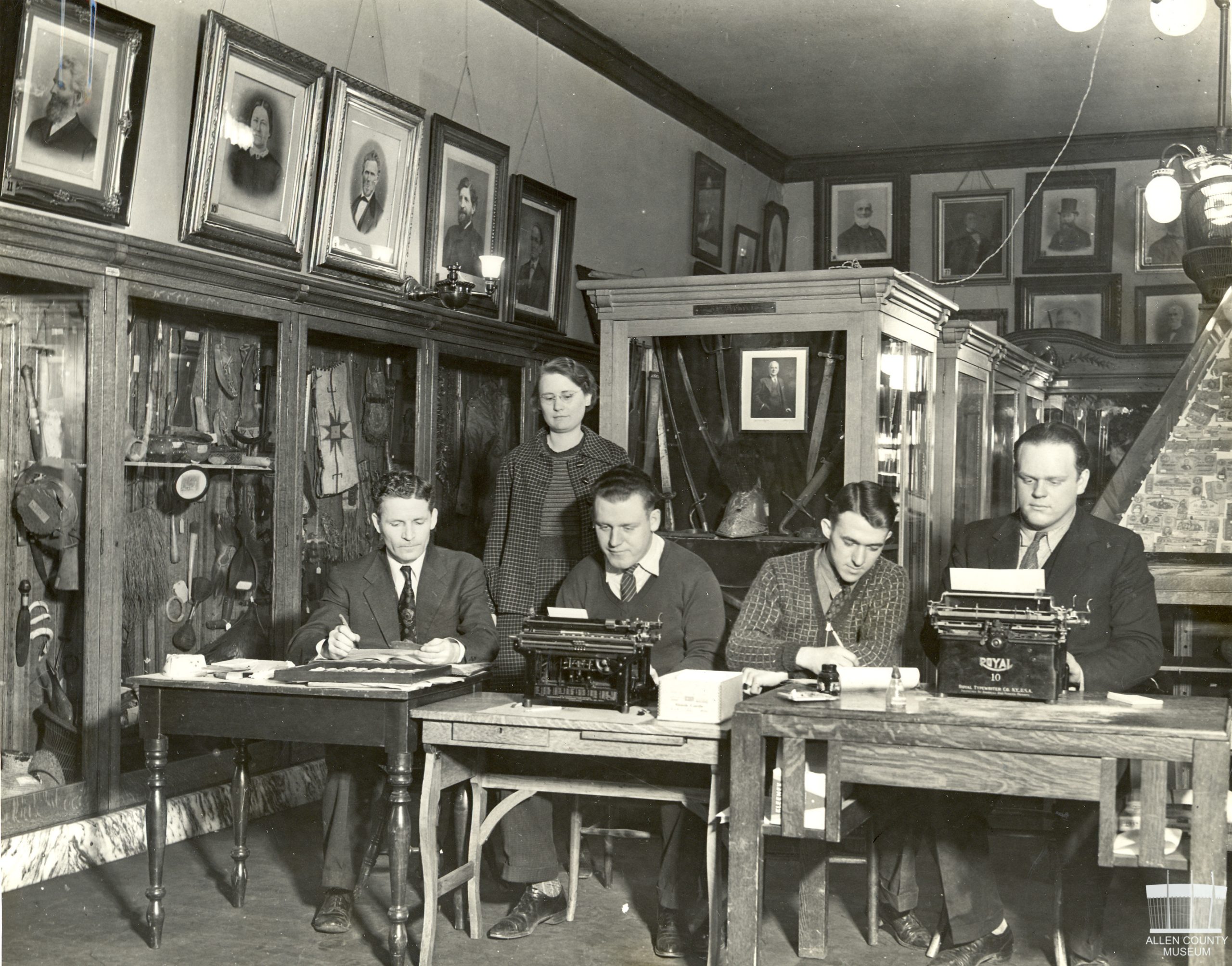
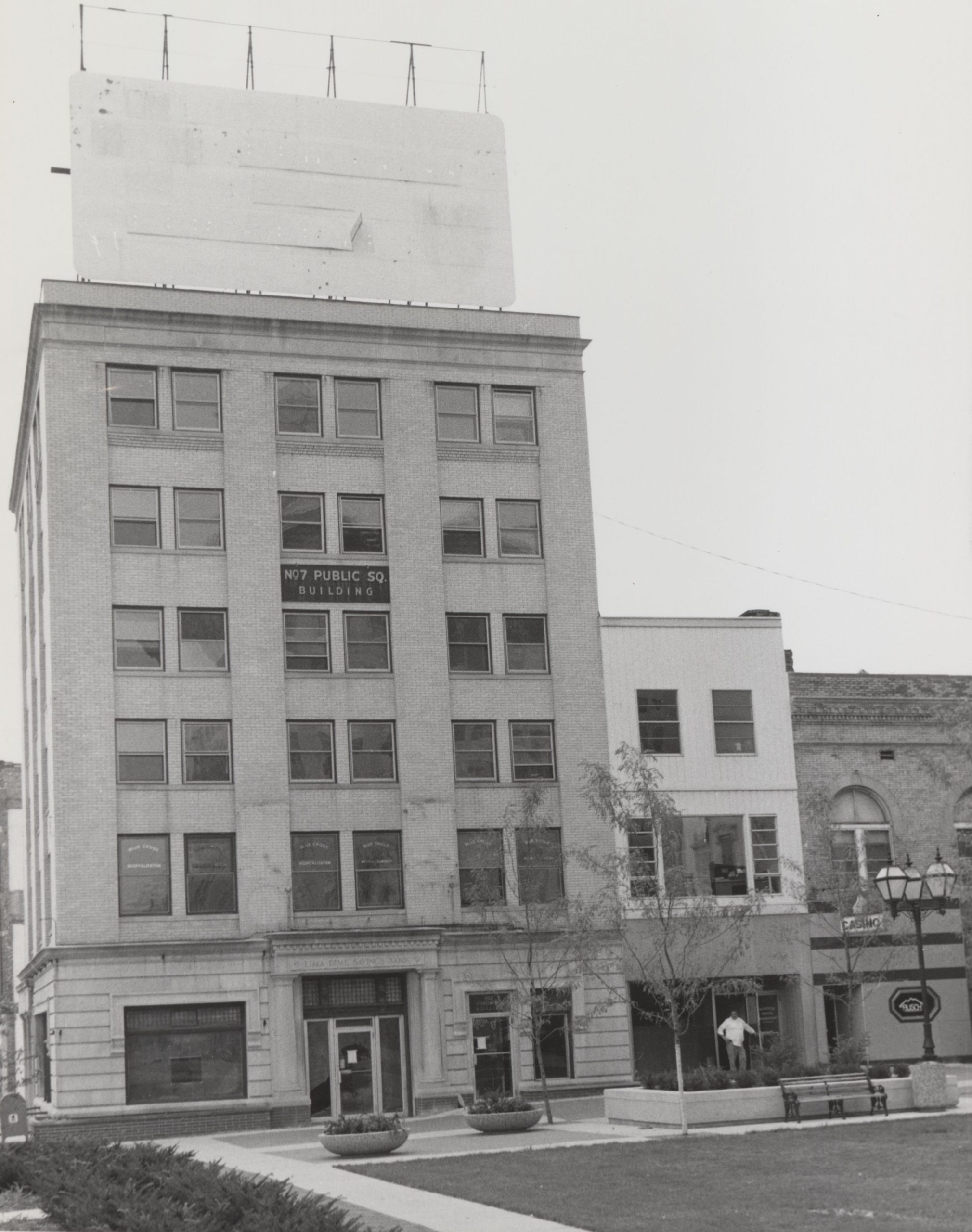
The Badeau Block still held the Lima Dime Savings Bank until early 1930. It was one of the first banks in the area to fail during the Great Depression and was liquidated in March 1930.[39] However, that does not mean the whole block failed. Many offices still ran out of it during the 1930s, most importantly the local branch of the Works Progress Administration worked from the Badeau Block.[40] The Works Progress Administration (WPA) was a part of President Roosevelt’s New Deal which gave jobs for the building of public projects like roads, airports, public parks, public buildings, and bridges.[41] During their time in Allen County, WPA workers built the Lima Post Office, McCullough Lake, later Schoonover Park, wrote a travel guide to Lima, and even helped the museum catalogue its collection.[42] Those are just some of their bigger projects. Still, all these WPA workers operated out of the Badeau Block. The block was bought out around this time by Mr. Dauch, and from then on, it was commonly called the Dauch Block.[43] During the next few decades, businesses came and went from the block. Two that are most memorable are Blue Cross – Blue Shield, the insurance company, and a One-Hour Cleaning Service, which was undoubtedly very helpful for all the working people in downtown at the time.[44] That is the end of the Badeau Block’s singular story, as well as the Cincinnati and Bowdle Blocks.
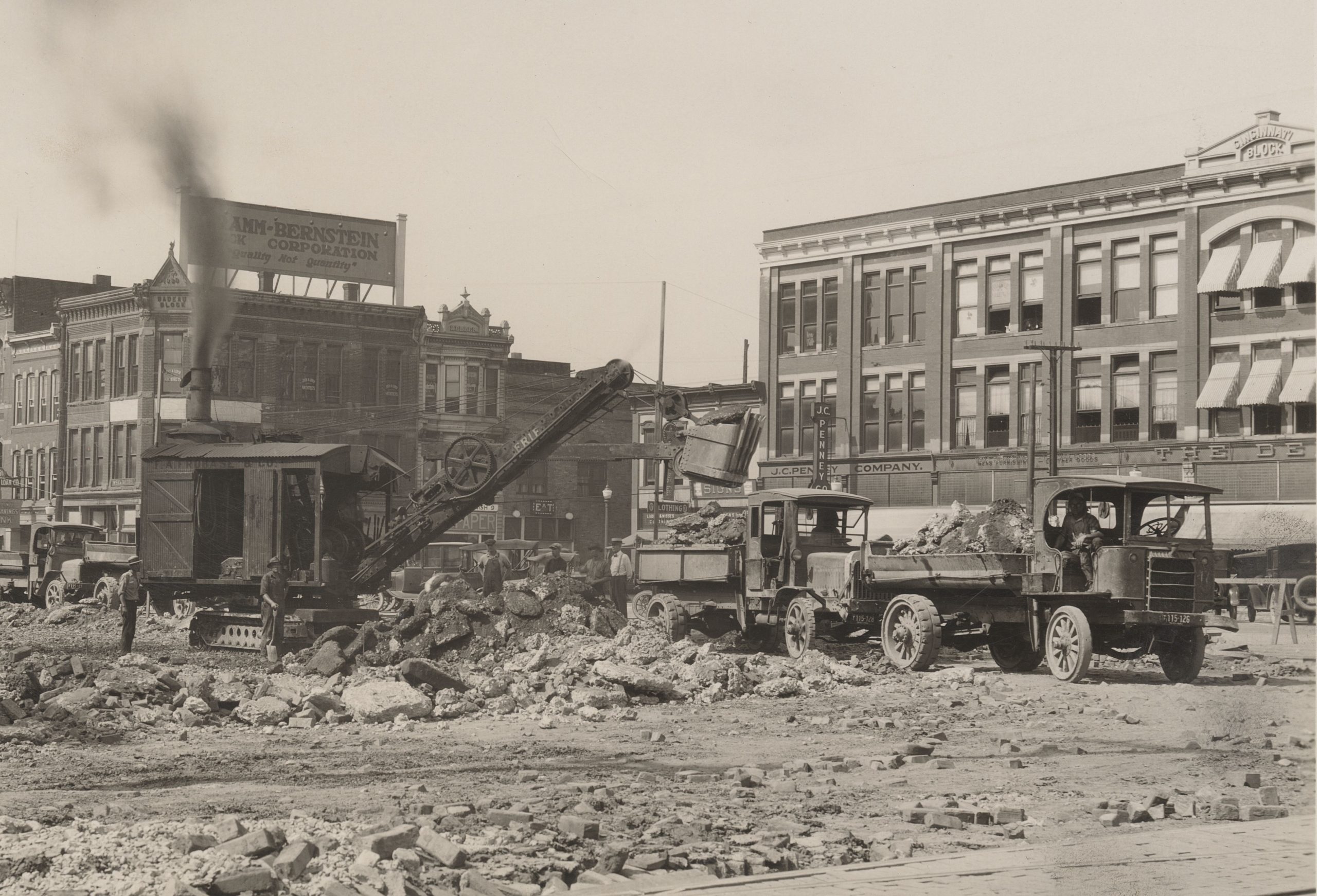
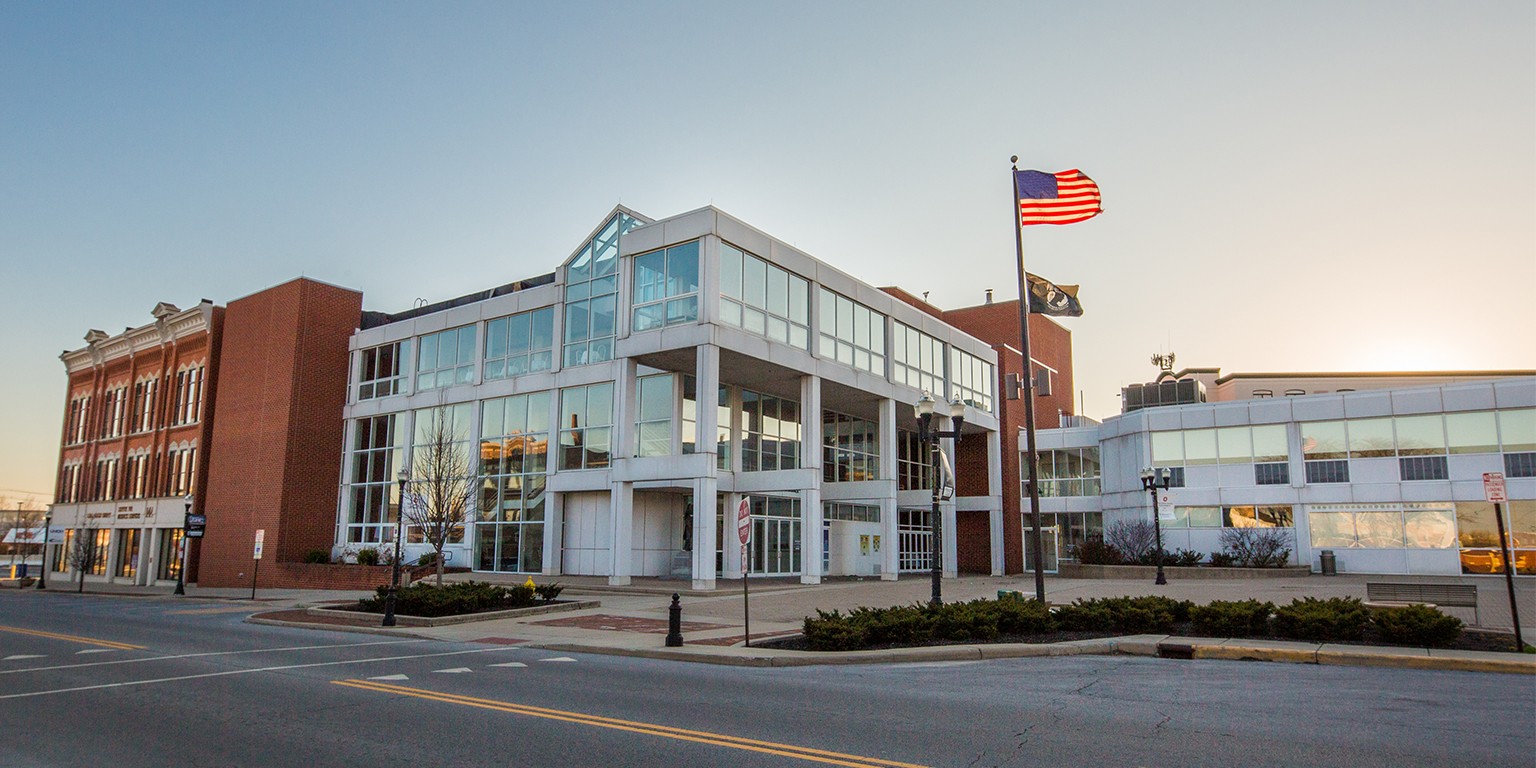
In the 1970s, planning for a new civic center began. What the committee knew was they wanted it downtown, preferably on Public Square.[45] They started planning it in the southwest corner in 1978; the past blocks were all raised between 1981-1983.[46] Building of the Veterans Memorial Civic and Convention Center officially started in 1983 and was completed on October 18, 1984.[47] With its opening a new era of entertainment and events began in Allen County. Familiar faces like Phyllis Diller, Hugh Downs, and Helen O’Connel were welcomed home to perform.[48] Ever since it has been a central hub of the community holding everything from concerts to weddings and graduations.[49] The newest construction to happen there is the building of the Lima Veterans Memorial Grove, that will sit outside the Civic center near Main Street. The Grove is currently on hold during the winter months but hopefully it will be finished soon.[50] In the center, already placed, is a granite plinth that stands nine feet tall and will be topped with an eight-foot-tall flame sculpture.[51] There will also be six plaques made by Joint Systems Manufacturing Center that will each represent a branch of the U. S. Armed Forces.[52]
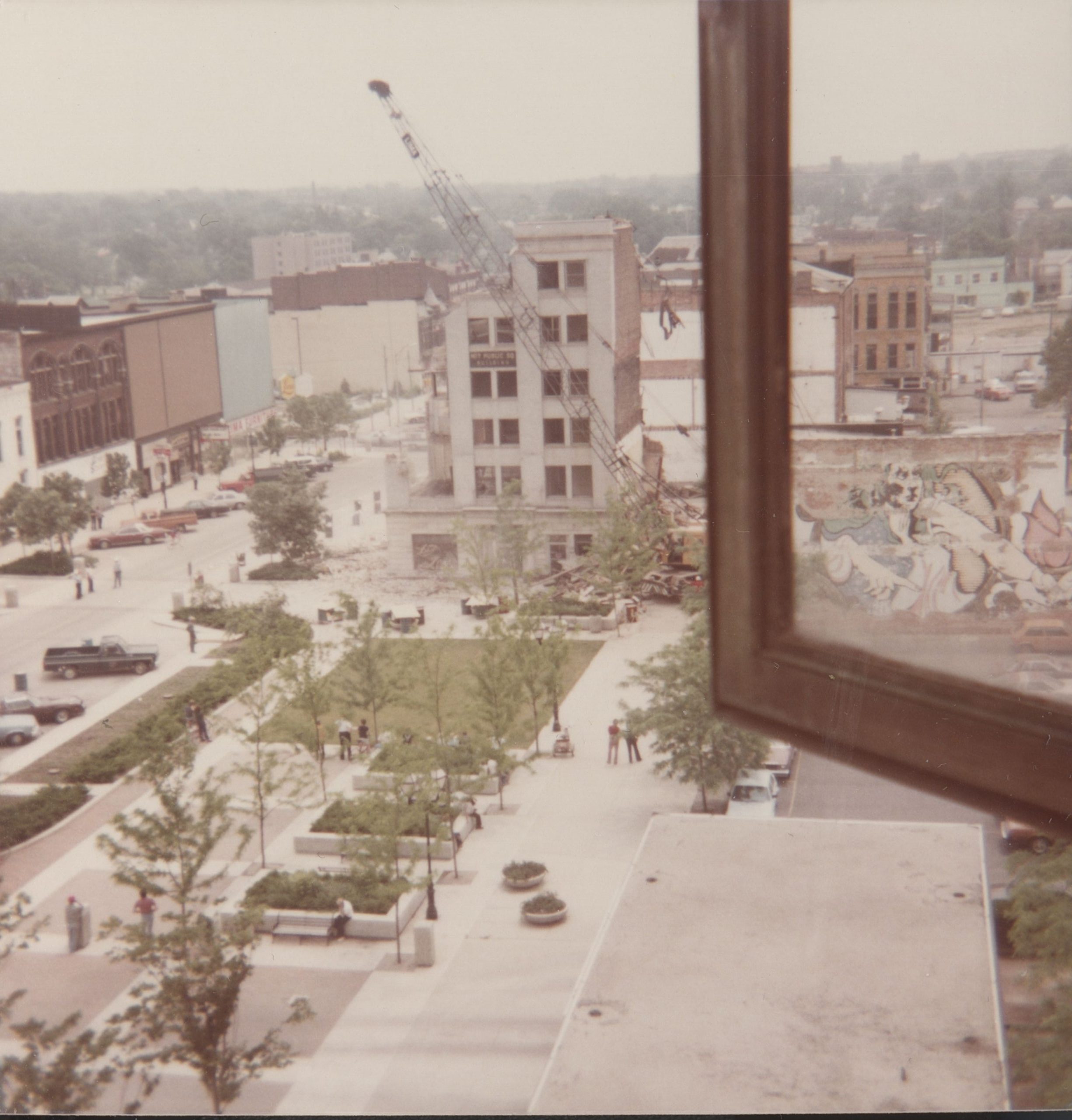
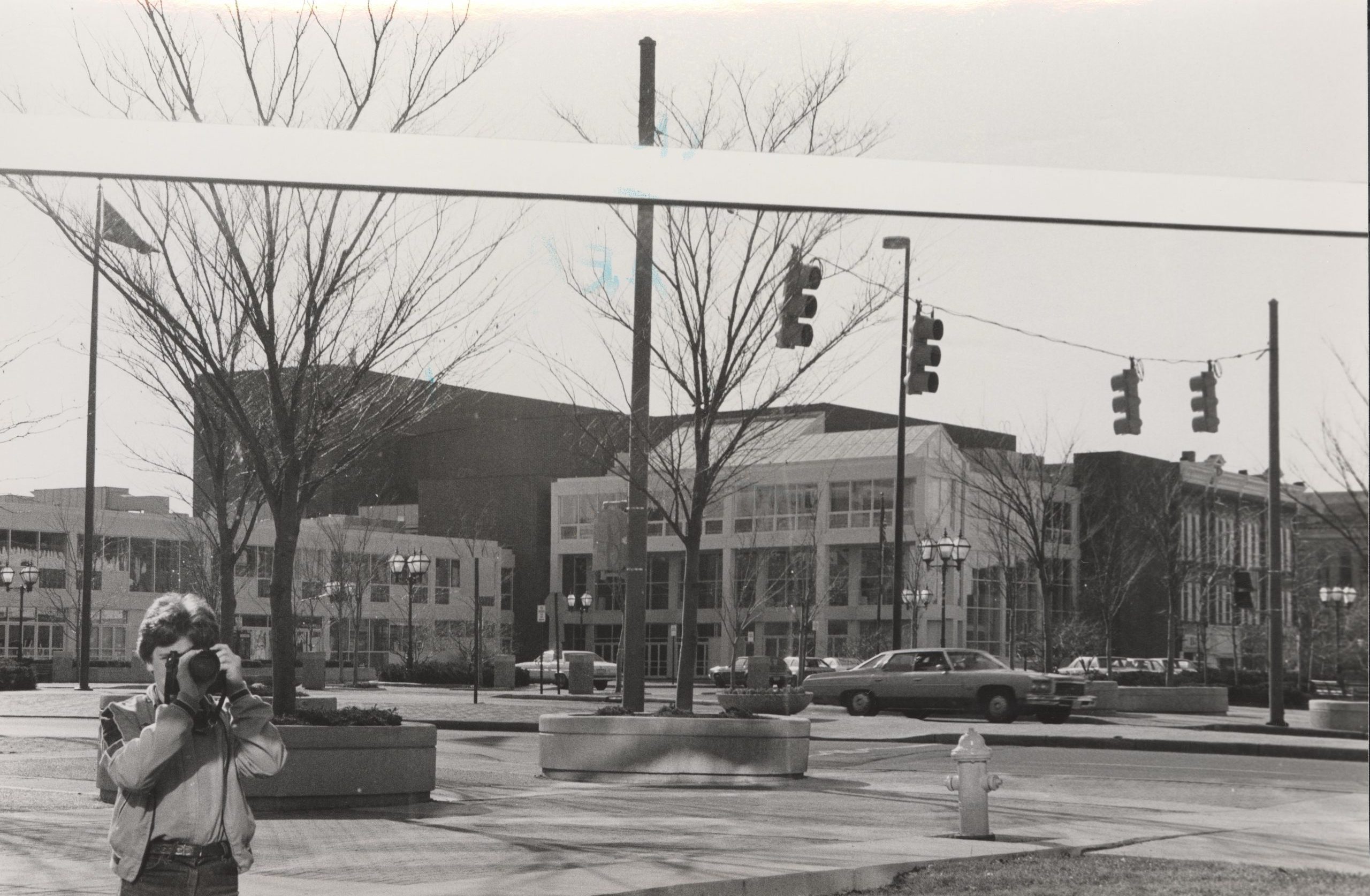
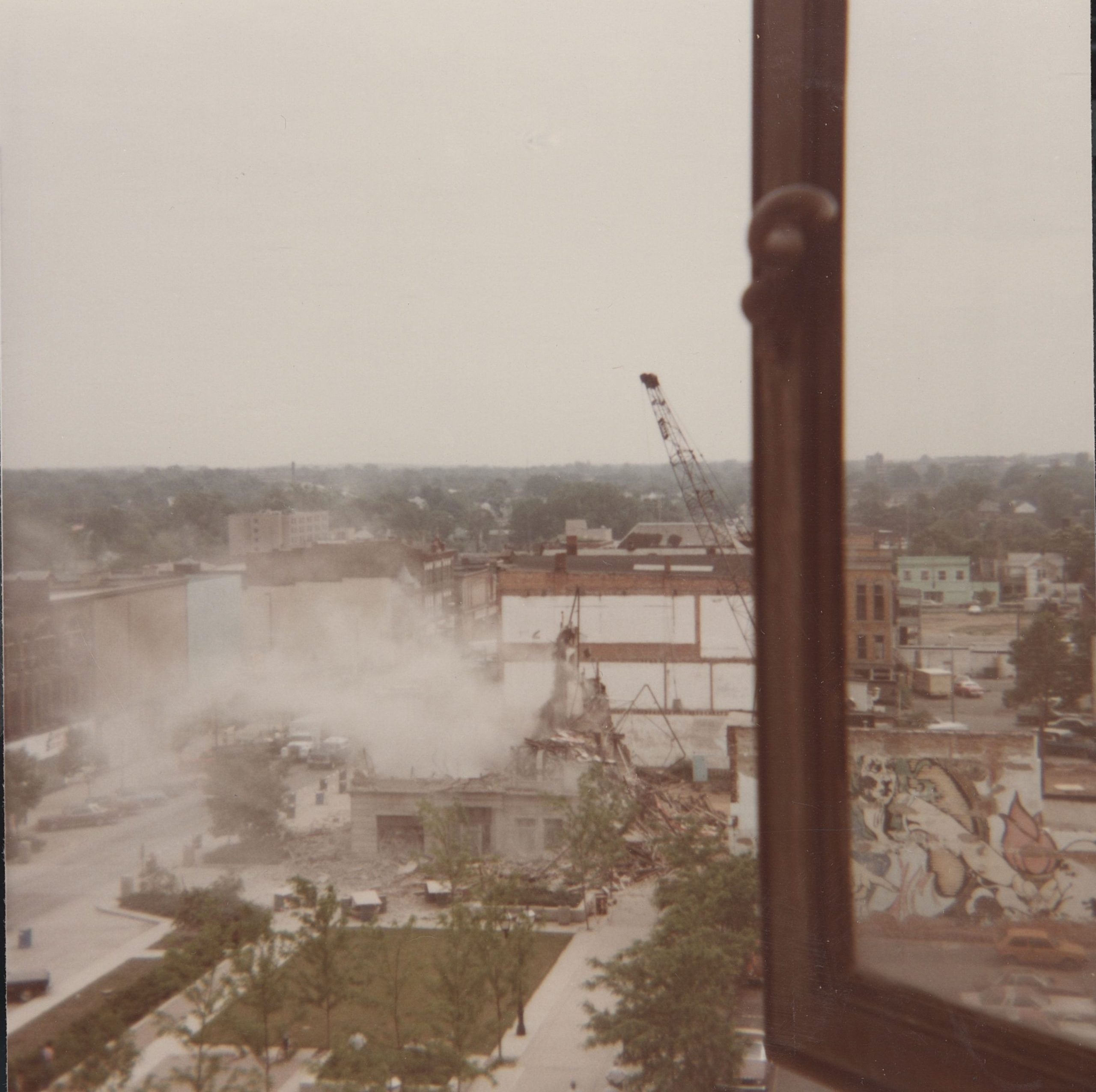
That brings us to today in the southwestern corner of Public Square. An area of Allen County that has been inhabited since the Shawnee, Kikaapoi, and Myaami Tribes settled there, choosing the area because of the Ottawa River. Then it became the center of Allen County, home to its second Courthouse, post office, and much more. Later, it grew into a business district that housed some of the era’s most important stores and offices. Today, it houses the Veterans Memorial Civic and Convention Center, one of the area’s key buildings where many important community events are held. Thus, some vital aspects of life in Allen County have always been tied to the southwest corner of Public Square.
[1] Anna B. Selfridge, “West Market: the South Side,” Allen County Reporter, Vol. LXIV, 2010, No. 2, 47.
[2] Greg Hoersten, “Reminisce: ‘Lima’s Big Store,’” Lima News, June 11, 2024, accessed October 24, 2025, https://www.limaohio.com/top-stories/2024/06/11/reminisce-limas-big-store/.
[3] Ibid.
[4] Ibid.
[5] Ibid.
[6] Ibid.
[7] “Control of ‘Big Store’ Passes to Henry Deisel Great Expansions Coming,” Republican Gazette, November 10, 1914, in Deisel File at the Allen County Archive.
[8] https://www.in2013dollars.com/us/inflation/1914?amount=200000, accessed December 10, 2025.
[9] “Control of ‘Big Store’ Passes to Henry Deisel Great Expansions Coming,” Republican Gazette, November 10, 1914, in Deisel File at the Allen County Archive and Greg Hoersten, “Reminisce: ‘Lima’s Big Store,’” Lima News, June 11, 2024, accessed October 24, 2025, https://www.limaohio.com/top-stories/2024/06/11/reminisce-limas-big-store/.
[10] Greg Hoersten, “Reminisce: ‘Lima’s Big Store,’” Lima News, June 11, 2024, accessed October 24, 2025, https://www.limaohio.com/top-stories/2024/06/11/reminisce-limas-big-store/.
[11] Ibid.
[12] Ibid.
[13] Greg Hoerston, “Rise and Fall of Dime Savings Bank,” Lima, October 27, 2021, in the Reminisce files at the Allen County Archives.
[14] Ibid.
[15] Dwane Grace, “The Badeau Family of Allen County,” Allen County Reporter, Vol. LXI, 2006, No. 1, 27.
[16] Greg Hoerston, “Rise and Fall of Dime Savings Bank,” Lima, October 27, 2021, in the Reminisce files at the Allen County Archives.
[17] Greg Hoersten, “Badeau Family Roots,” Lima News, June 13, 2018, in Reminisce files at the Allen County Archives.
[18] Greg Hoerston, “Rise and Fall of Dime Savings Bank,” Lima, October 27, 2021, in the Reminisce files at the Allen County Archives.
[19] Ibid.
[20] Ibid.
[21] Ibid.
[22] Ibid.
[23] Ezekiel Owen, “More Trip Through Time,” Allen County Reporter, Vol. LXVI, 2012, No. 2, 18-19.
[24] Ibid.
[25] Ibid.
[26] Ibid.
[27] Ibid.
[28] Ibid.
[29] Adrienne McGee, “The Hunter Drugstore,” Lima News July 21, 2010, in Hunters Drug Store file at the Allen County Archives.
[30] Ibid.
[31] Ibid.
[32] Polk’s Lima (Ohio) City Directory, Vol. XVII, 1931, R. L. Polk & Co., Publisher, Columbus, Ohio, 467.
[33] Greg Hoersten, “Reminisce: ‘Lima’s Big Store,’” Lima News, June 11, 2024, accessed October 24, 2025, https://www.limaohio.com/top-stories/2024/06/11/reminisce-limas-big-store/.
[34] Anna B. Selfridge, “West Market: the South Side,” Allen County Reporter, Vol. LXIV, 2010, No. 2, 47.
[35] Ibid.
[36] Ibid.
[37] Ibid.
[38] Ibid.
[39] Greg Hoerston, “Rise and Fall of Dime Savings Bank,” Lima, October 27, 2021, in the Reminisce files at the Allen County Archives.
[40] Ibid.
[41] “The Works Progresss Administration,” PBS, accessed January 12, 2026, https://www.pbs.org/wgbh/americanexperience/features/surviving-the-dust-bowl-works-progress-administration-wpa/.
[42] WPA Exhibition at the Allen County Museum.
[43] Greg Hoerston, “Rise and Fall of Dime Savings Bank,” Lima, October 27, 2021, in the Reminisce files at the Allen County Archives.
[44] Ibid.
[45] Anna B. Selfridge, “West Market: the South Side,” Allen County Reporter, Vol. LXIV, 2010, No. 2, 48.
[46] Greg Hoerston, “Rise and Fall of Dime Savings Bank,” Lima, October 27, 2021, in the Reminisce files at the Allen County Archives and Anna B. Selfridge, “West Market: the South Side,” Allen County Reporter, Vol. LXIV, 2010, No. 2, 48.
[47] Anna B. Selfridge, “West Market: the South Side,” Allen County Reporter, Vol. LXIV, 2010, No. 2, 48.
[48] “Veterans Memorial Civic and Convention Center celebrates 40 years of entertaining the Lima-Allen County region,” Hometown Stations, October 15, 2024, accessed October 24, 2025, https://www.hometownstations.com/news/veterans-memorial-civic-and-convention-center-celebrates-40-years-of-entertaining-the-lima-allen-county/.
[49] Ibid.
[50] Stacey Myers Cook, “Center Stone for Veterans Memorial Grove Installed Downtown Lima,” accessed January 12, 2026, https://www.hometownstations.com/news/allen_county/center-stone-for-veterans-memorial-grove-installed-in-downtown-lima/article_fe04c7cc-f206-491b-96b1-d9c259771a1e.html.
[51] Ibid.
[52] Stacy Myers Cook, “ArtSpace renovation, Veterans Memorial Grove construction underway,” Hometown Stations, August 11, 2025, accessed October 24, 2025, https://www.hometownstations.com/news/allen_county/artspace-renovation-veterans-memorial-grove-construction-underway/.
Lima Civic Center, https://media.licdn.com/dms/image/v2/C4E1BAQFDJxqKhTiYuA/company-background_10000/company-background_10000/0/1584118529078/lima_civic_center_cover?e=2147483647&v=beta&t=6HhVmXzM1u3e_fDD40EgxQCJWfPQXZFMjZw3We9kUFA, accessed March 9, 2026.
All other images are either from the Allen County Archives or taken by employees of the Allen County Museum.












Leave A Comment