
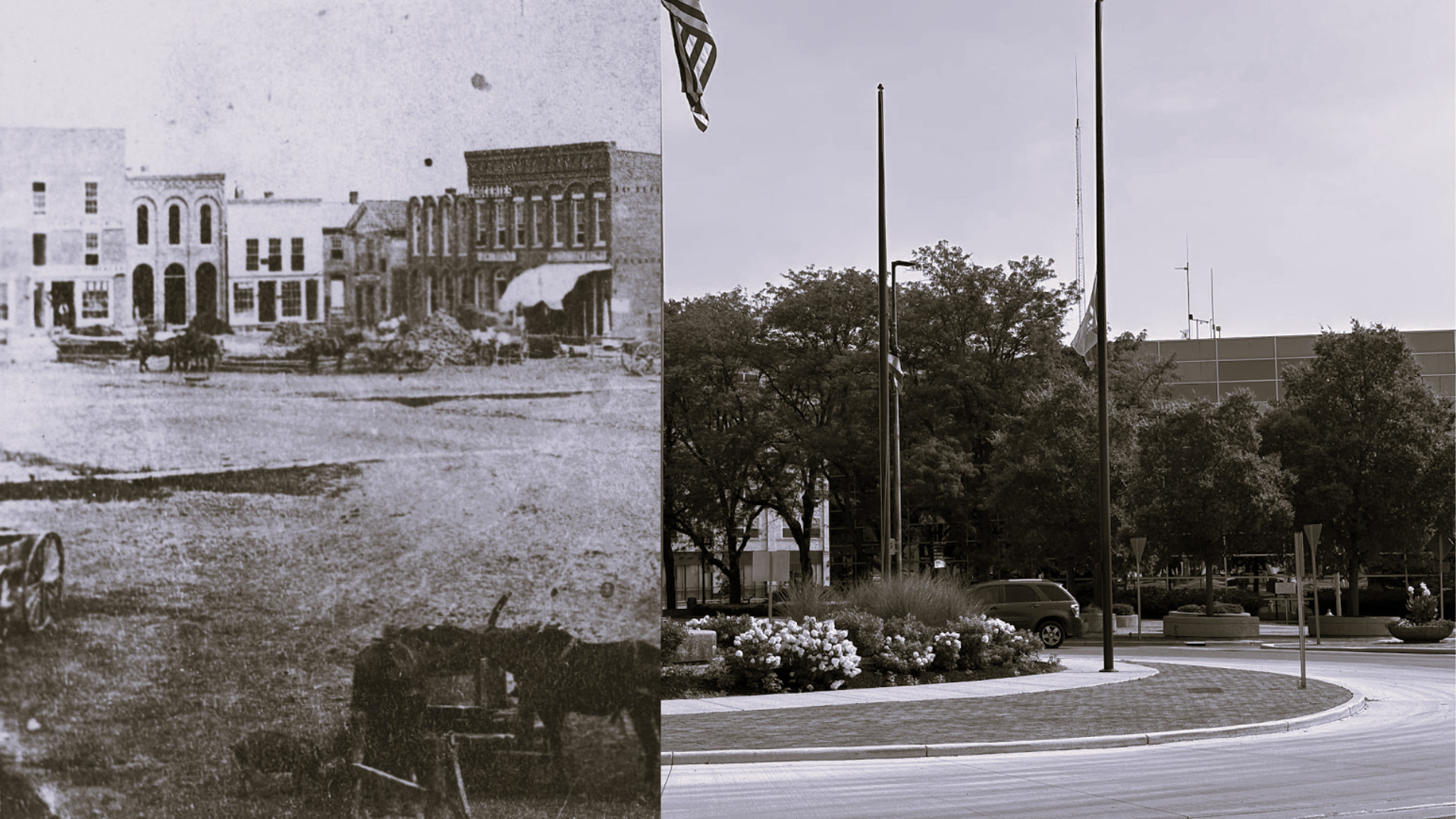
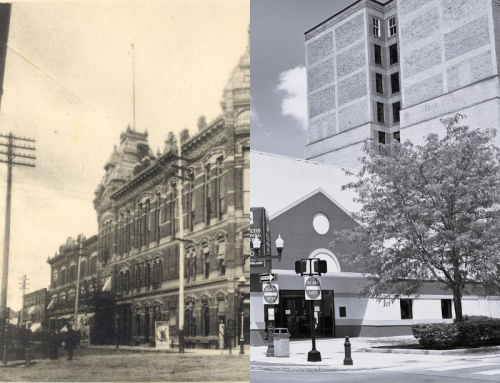
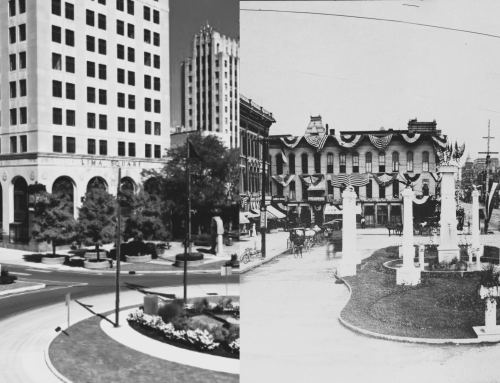
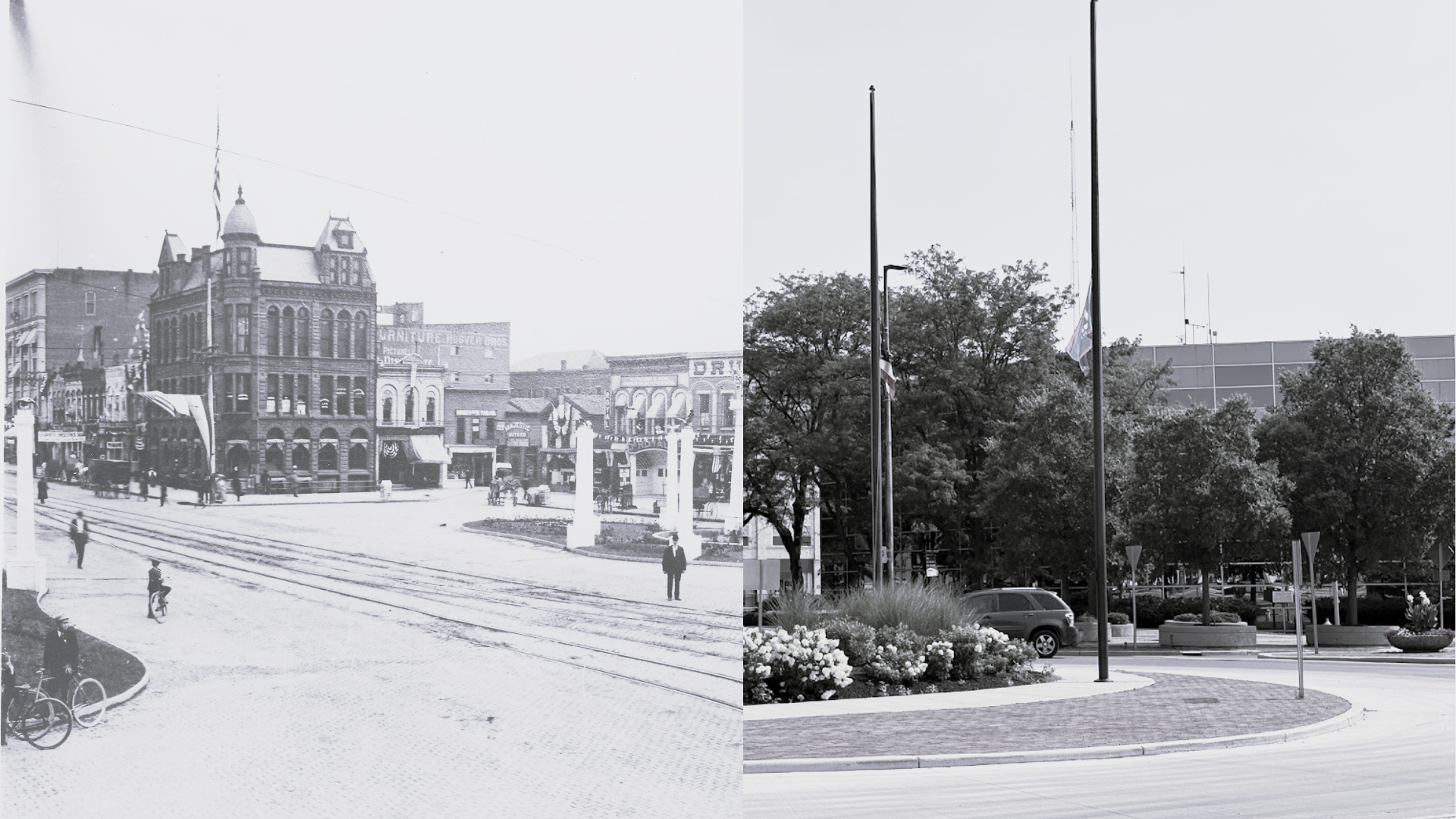
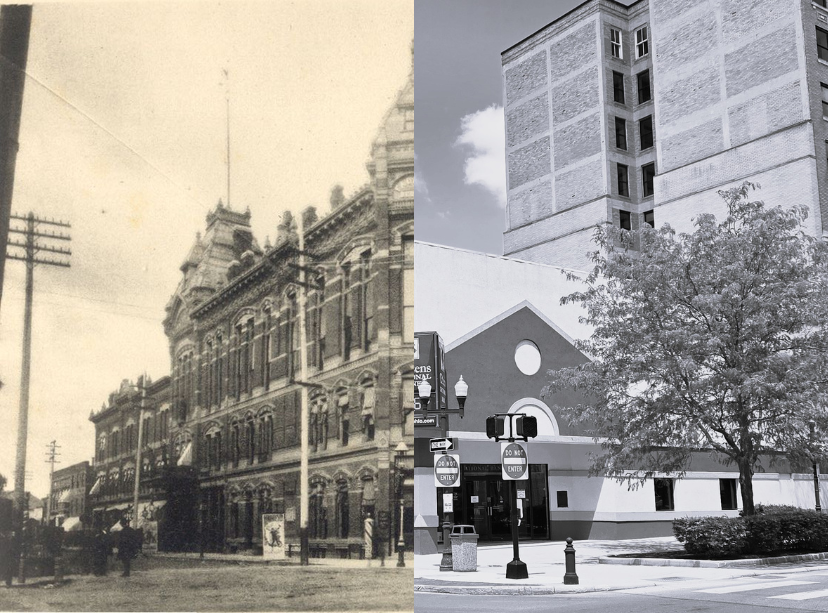
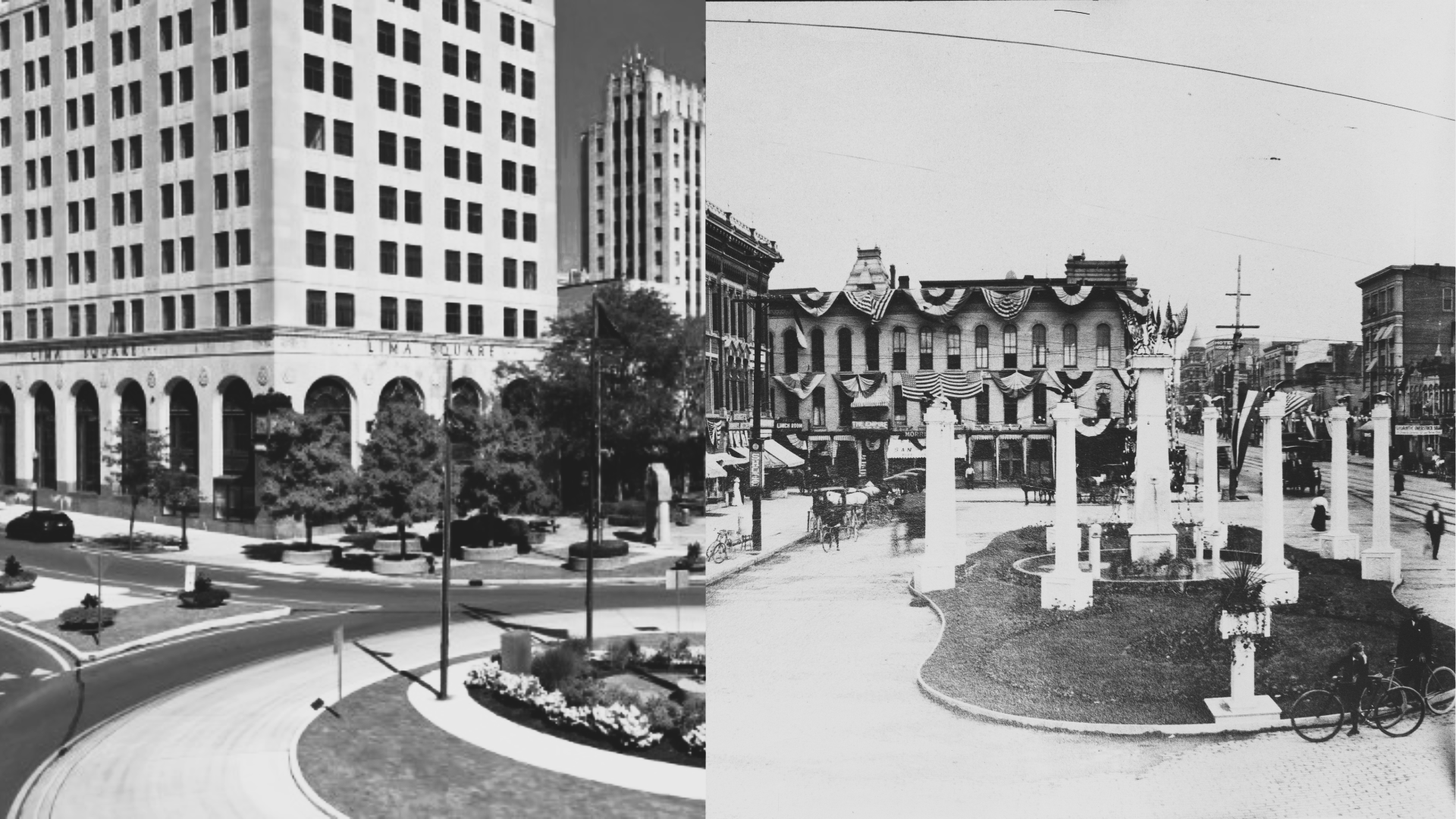
Now we are moving on to the northeast corner of Public Square. Inhabited today by Our Town Roast, Town Square Senior Apartments, and the Lima City Government Building. Over the years, the building blocks of this area have had several names. The main ones are as follows: Mitchell Block, which houses Joey’s Subs; Cunningham Block, where Our Town Roast is; Anderson Block, the northern part of where the Lima Mayor’s offices are; and the Lima House Hotel Block, which was where the southern part of the Lima Mayor’s office is located. Like all the other articles in this series, the goal is not to list every business or house in this area. Instead, there will be a focus on interesting stories, with many businesses highlighted, but not all. Likewise, we will be following the order of the blocks above, moving from the corner of Main Street and Public Square down to the corner of Public Square and E. Market Street, repeating every time we enter a new era. This area of Public Square is undoubtedly the most photographed because of its iconic architecture and prominent businesses.
Before venturing further, it is vital to note that before any settlers or pioneers came to the Allen County area, it was the home and trade location of many indigenous tribes, including the Shawnee, Kiikaapoi, Kaskaskia, and Myaami Tribes. These tribes and more were forcefully removed from Allen County and Ohio, and to tell the story of this area without acknowledging this would be an erasure of history. We recognize and honor the past, present, and future lives of Indigenous people in Allen County, as well as the historic tribes that have inhabited the area, and recognize their continued resilience as the original stewards of this land.
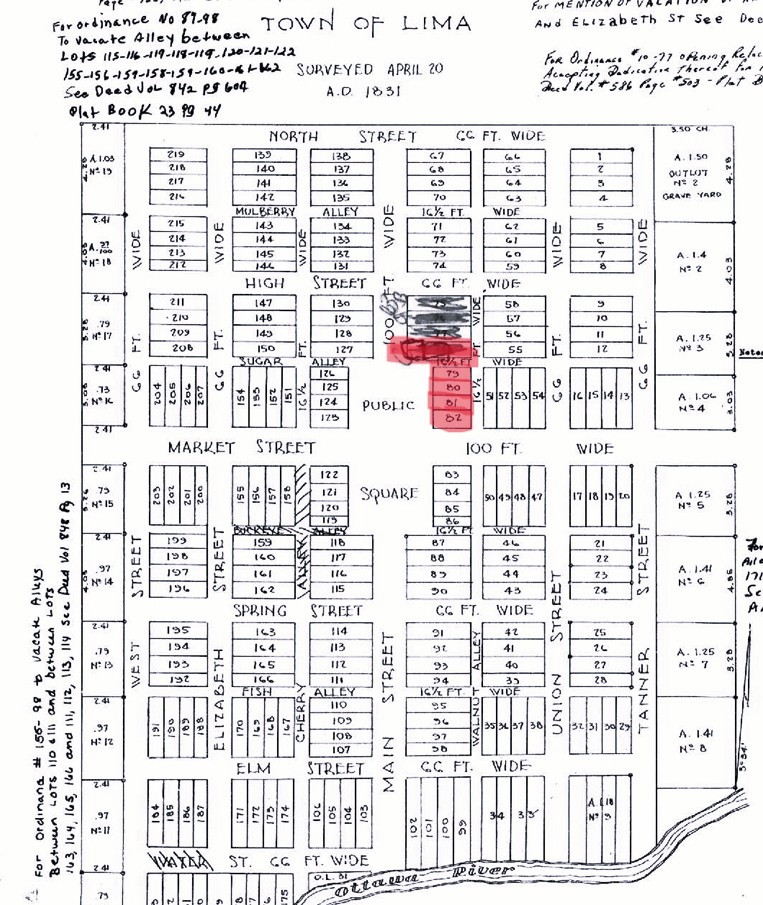
This story will start at the Mitchell Block, the first building on the corner of Public Square and North Main Street, which holds Joey’s Subs. This plot of land was first sold to Christopher Wood in 1838 for $40.[1] The whole plot bought by Wood probably extended beyond the Mitchell Block’s footprint. Wood was one of the founders of Allen County, a surveyor of Lima, and the first and only Town Superintendent.[2] Forty dollars in 1838 would only equal around $1,420 today.[3] Only a little while later Wood sold the land to Joseph Hover for $200, which equaled around $7,100 today.[4] In 1861, Mr. Whitaker who made buggies, carriages, and spring wagons built another building on this plot of land to manufacture and sell his wares.[5] Another name for the block over the years was the Langan Block because of James Langan who opened a grocery store there with John Wheeler. It was first located on the eastern part of the first floor.[6] During the Civil War era, they had some difficulties with public relations. The Langan & Wheeler Grocery had many barrels of products on the porch of their store where boys liked to spend their leisure time watching the happenings in the town square. What became the issue is that these boys started making lewd comments about women and girls passing by, thus causing no one to visit the store.[7] Langan and Wheeler soon got rid of the barrels to alleviate the problem and to bring back costumers.[8] Langan would fully take over the store during the 1870s, buying out Wheeler.[9] Soon after that, Langan’s store became the hang out spot for old timers, who joked and told stories without interrupting the business’s patrons.[10] Other businesses moved in and out of the block during the 1860 and 70s. The National Deposit Bank moved in during 1872.[11] King & Son was next door to Langan and sold hardware and agricultural tools.[12] Upstairs was Dr. George Hall’s dentist offices which advertised painless tooth extractions with the aid of nitrous gas; S. K. Krauss’s photo studio; John Lilly & J. Ferguson’s barber shop; and George Fisher’s restaurant and lunchroom.[13] It was a busy block during the first few decades of Lima’s existence.
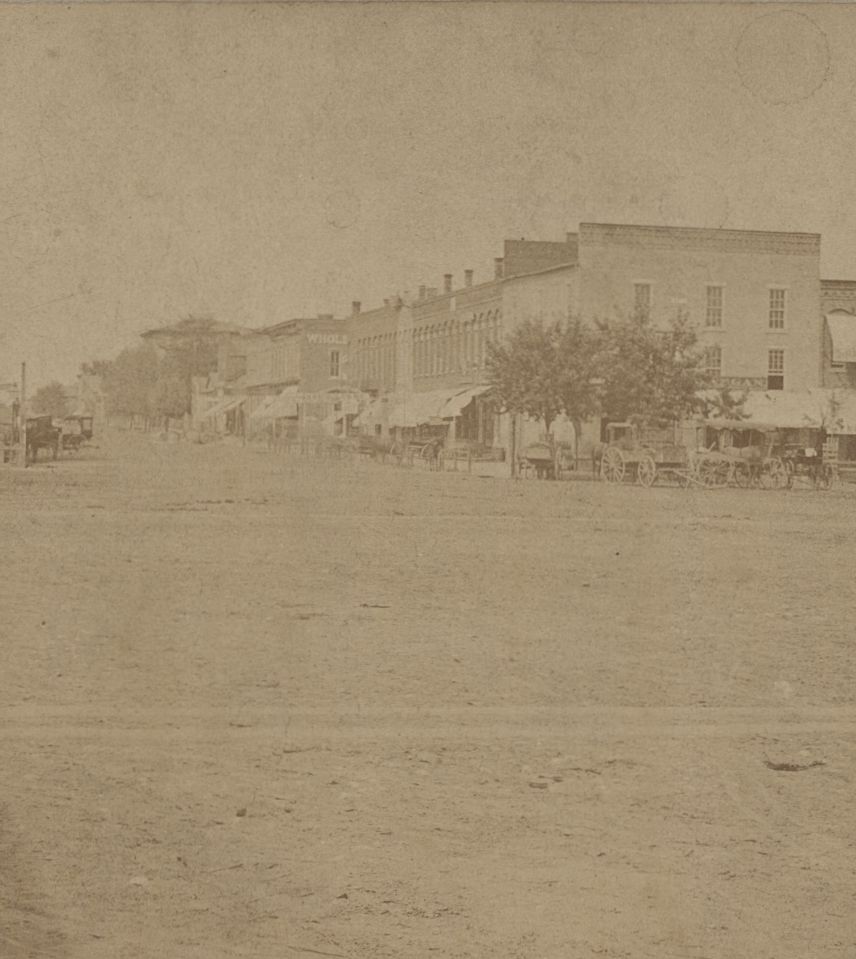
Moving east by one building, we come to the Cunningham Block, now home to Our Town Roast. The lot was owned by Robert and John Fulton in 1844, and it was rented by Archibold Scott Cunningham for $48.[14] That is the equivalent of $2,113 today.[15] It was then that the block became known as the Cunningham Block.[16] A brick three story building was built on the site around 1856.[17] This is the oldest business block still standing in the Public Square.[18] John McWhorter’s wholesale grocery store operated out of the building starting in 1857.[19] The next year in 1858, the Masons took over the third floor and made it into their meeting hall.[20] In 1859, Cunningham bought the property for $500,[21] or almost $20,000 today.[22] Businesses that worked out of the block during the 1860s included the law firm of Matthias Nicholes & G. M. Baxter, Holland & Buskirk grocery, and Goody Book Store.[23] Thus, the Cunningham Block kept up with its neighbor the Mitchell Block.
The block next door, at the exact northeast corner of Public Square, was known as the Waldo Hotel in the 1900s, but did not have a block name. Today, this block is where the Town Square Senior Apartments are located. The block became a separate entity from the Cunningham Block in 1859 when Cunningham sold it to Hudson Watt.[24] With that land, Watt constructed a new building joining the Cunningham Block.[25] Before that it seemed the Cunningham family lived in a house on that plot of land.[26] In the recollections of Cunningham’s son, Edgar Cunningham, the area had also held his paternal aunt’s millinery business and a restaurant/saloon ran by a man named Doepkin.[27] It was not clear if these were also removed when Watt bought the land in 1859 or later. That ends the whole northern half of the northeast corner of Public Square’s early history.
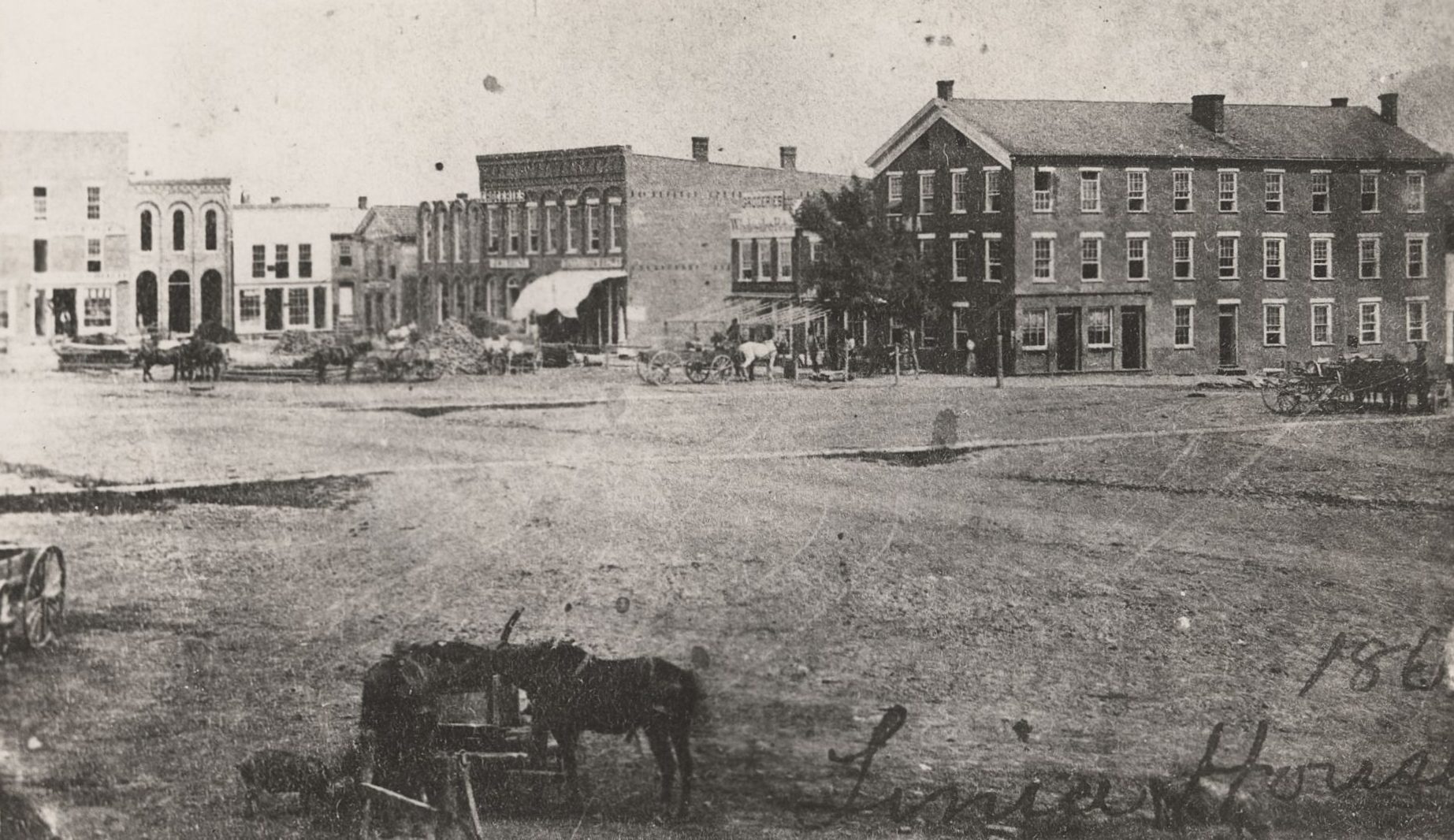
The Anderson Block comes next, being the first building south of the alley that still splits the northeast corner. Its history is foggy up to the 1870s. On January 17, 1871, F. A. Wheeler’s drugstore was running out of the Anderson Block, and in its rear room a fire started.[28] The fire was discovered at 10 o’clock, unknown if it was a.m. or p.m., but the alarm was quickly given.[29] Unfortunately, the fire engine was slow to get started and the fire was spreading quickly to adjoining blocks.[30] At that time, firefighting water was supplied from two 500-barrel cisterns, located at the north and south ends of Public Square.[31] At the height of the fire, the northern cistern ran out of water causing the fire engine to move towards the southern cistern.[32] This move caused the roof of the Anderson Block to be entirely engulfed in flames as well as its southern neighbor, the Jacobs Block.[33] Luckily, the firemen were able to contain the fire to these two blocks, and no other buildings of the area were damaged except by water.[34] The businesses occupying the space damaged by the fire included: Wheeler’s drug store; Guy Feis’ clothing store; Moor & Brother’s dry goods; and Mowen & Langan groceries.[35]
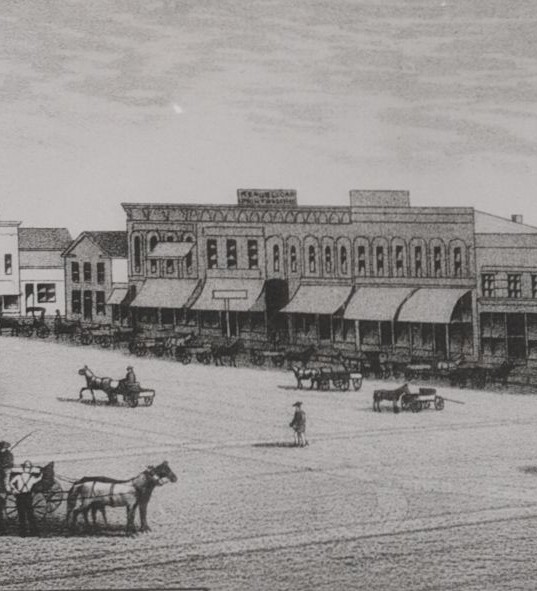
The Jacobs Block, later known as the Lima House Hotel, is the southern business block of this corner, located on the northeast corner of Public Square and E. Market Street. In 1836, it was purchased by the Carlin family who sold it to T. K. Jacobs 8 years later in 1844.[36] Jacobs is who the Block was named after; he was a tailor by trade and also served as the Treasurer of Allen County for a few years.[37] In 1852, Jacobs and John Anderson connected their two brick buildings turning them into a public inn.[38] It was known as Jacob’s Tavern and was heralded as brand new and ready for visitors.[39] Only two years later, in 1854, Jacobs sold it to Joel Curtis and John Benton for $2,800,[40] or a little over $110,000 today.[41] It was Curtis and Benton who named the hotel Lima House, which was what it would be known as for the next hundred years.[42] A few years later in 1858, John Shade bought the hotel for $10,500,[43] or $418,000 today.[44] In a 1860 advertisement, the Lima House Hotel Saloon advertised oysters, pigs feet, tripe, sardines, and ice cream on their menu.[45] Not quite the food sensibilities of today, but definitely luxurious for the era. After the Civil War, in 1867, Shade would add a third story to the building, accommodating more guests.[46] At that time it was considered not only the finest hotel in Allen County, but the papers also claimed it was one of the finest in the western United States.[47] That’s where the Lima House Hotel’s story ends for the beginning of the 1800s.
Like much of Lima and Allen County, the discovery of oil and the influx of travel and wealth to the area dramatically changed the northeast corner of the Public Square. Once again, we will start the story with the Langan/Mitchell Block on the corner of N. Main Street and Public Square. In 1878, the Langan Block was bought by Thorton Taylor Mitchell, better known as T. T. Mitchell.[48] He was a pioneer in the leather industry and a bank president.[49] This is when the block became commonly known as the Mitchell Block. The Mitchell family was involved in the opening of the City Bank of Lima with other Allen County businesspeople, in 1874.[50] At that time, it was housed in the Baxter Block just north of the Mitchell Block on N. Main Street.[51] The bank must have outgrown that location, because in 1889, T. T. Thorton rebuilt the Mitchel Block specifically to house the City Bank.[52] It was a four story limestone and brick building designed by C. H. Miller.[53] It is the building still there today that housed Joey’s Subs, with the tower and dome on top.[54] The first floor was built for the bank, the second housed office spaces, the third was a huge meeting hall, and the smaller fourth floor housed the janitor’s residence.[55] The bank’s set up was state of the line for that time period with a safety deposit vault and a bank vault.[56] The bolts of the vaults locked and unlocked automatically using a system called the Yale Triple Chronometer Time Lock that would only open the vaults at a predetermined hour each day.[57] That was how the Mitchell Block entered the 20th century, we will cover the rest of its history with next month’s article.
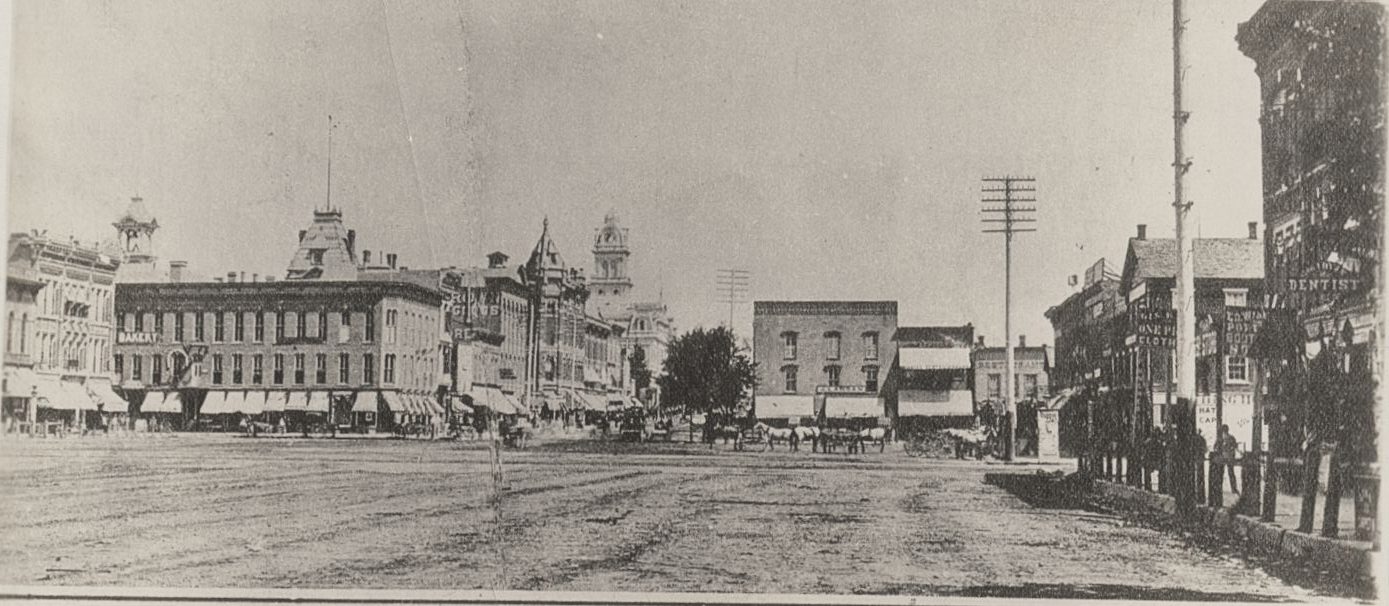
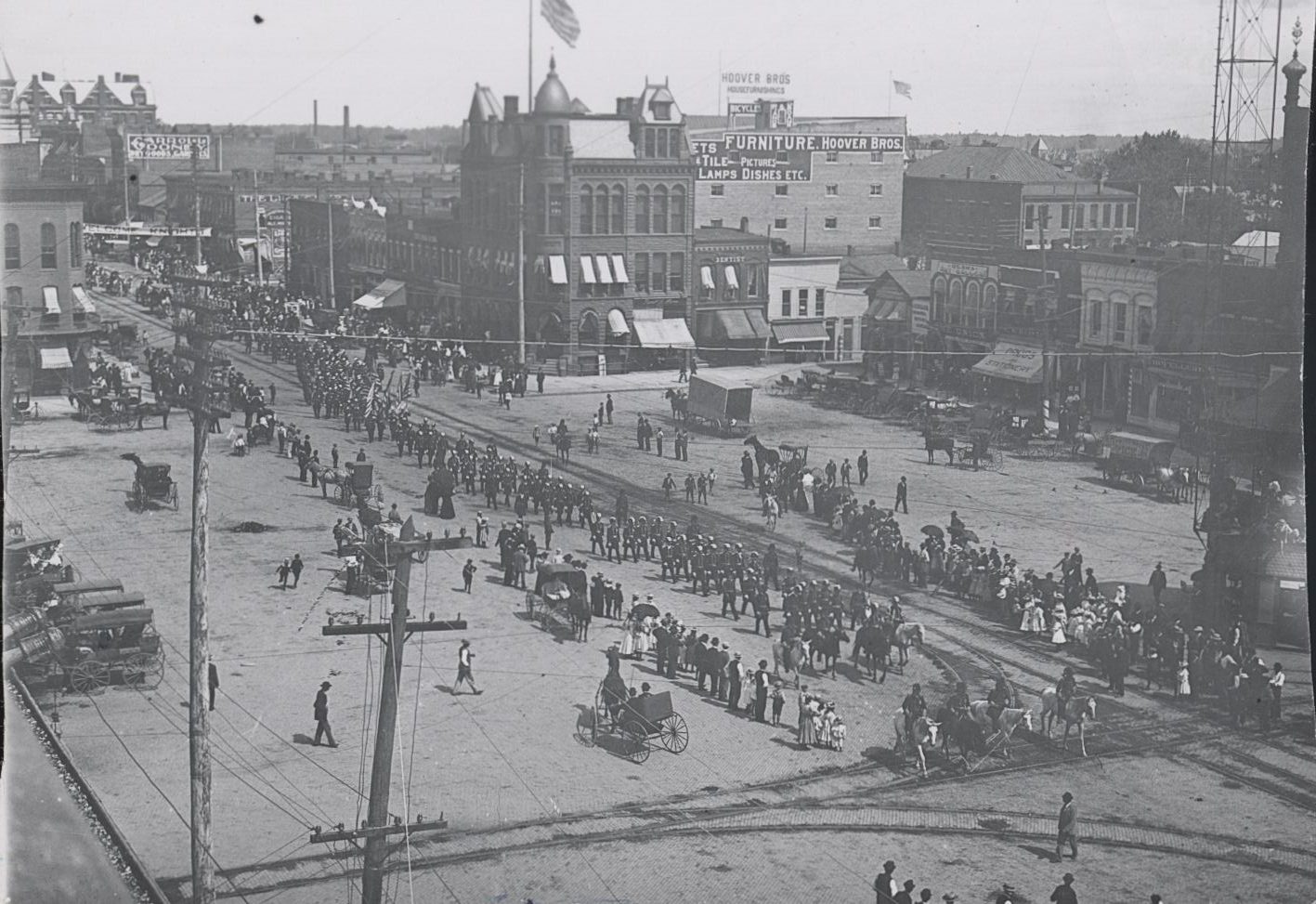
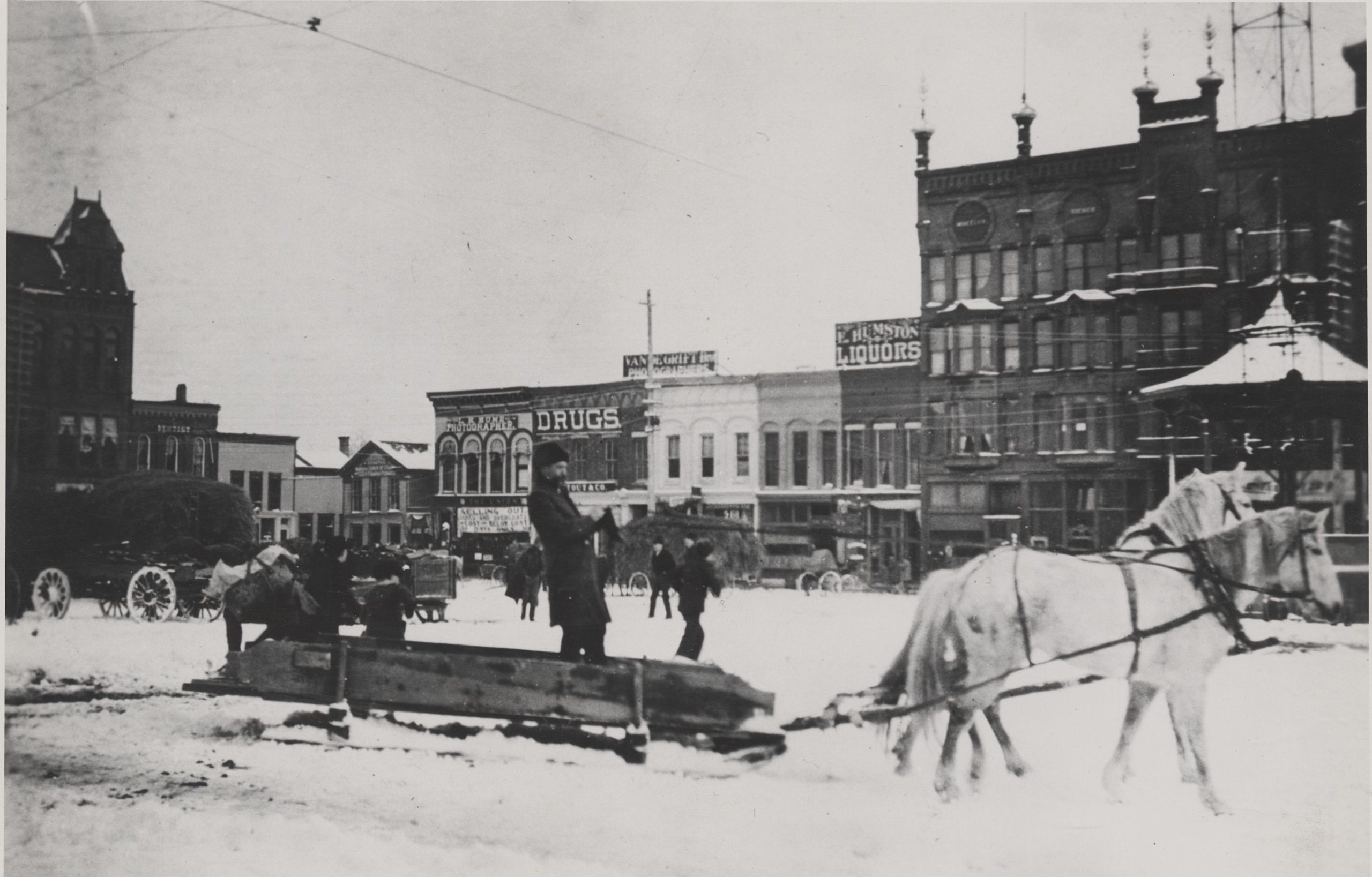
The Lima House Hotel blossomed during the last decades of the 1800s. In 1872, its owner Michael Nixon added a fourth floor to the hotel.[58] The next year, Nixon sold it to Moses Simon, whose family would own the hotel for roughly the next seventy years.[59] Simon bought it for $72,000,[60] which is equivalent to almost $2 million dollars today.[61] Simon’s daughter and son-in-law, Nancy and Joseph Goldsmith, soon started running the business.[62] When oil was discovered in Allen County the hotels of the area boomed, especially the Lima House Hotel with its convenient location.[63] Thus, in 1889, Goldsmith and the two adjoining building owners, William Tigner a cigar-maker and John Wheeler a grocer, decided to remodel and expand their buildings together.[64] This is when the hotel block was turned into its iconic Moorish Revival Style, with the minarets, ornamental spheres on the frieze, and the golden bulbous shaped domes.[65] Goldsmith, Tigner, and Wheeler wanted it to look metropolitan and worldly and definitely achieved that goal.[66] The renovation was completed in February of 1891 and had seventy-five hotel rooms, but only twenty-five of them had their own baths.[67] It also became five-stories during this redesign with a very popular restaurant added.[68] It was during this era that prominent figures such as President William McKinley and ‘Gentleman Jim’ Corbett were guests at the Lima House Hotel.[69] With its modernization, Lima House Hotel waltzed into the 20th century.
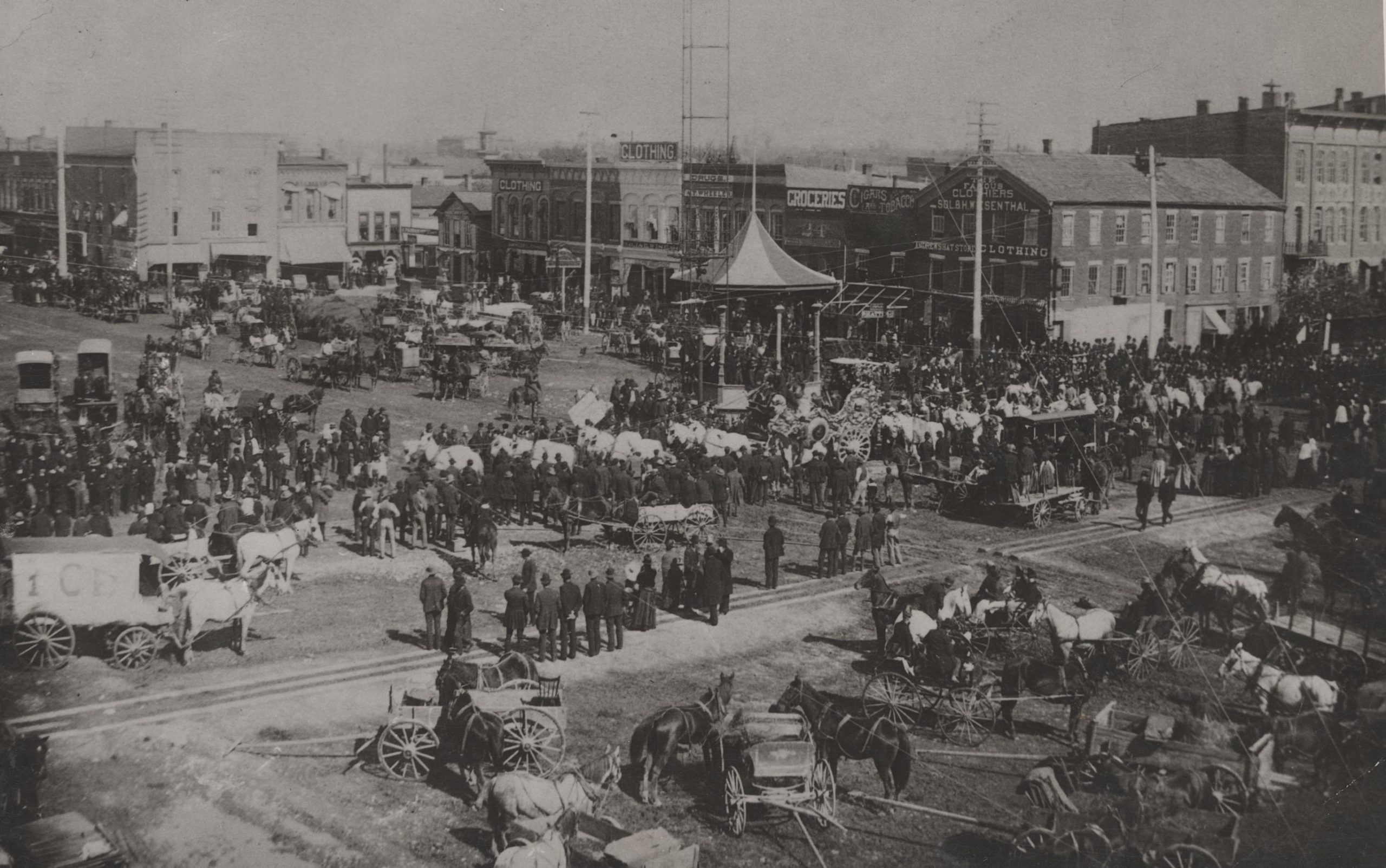
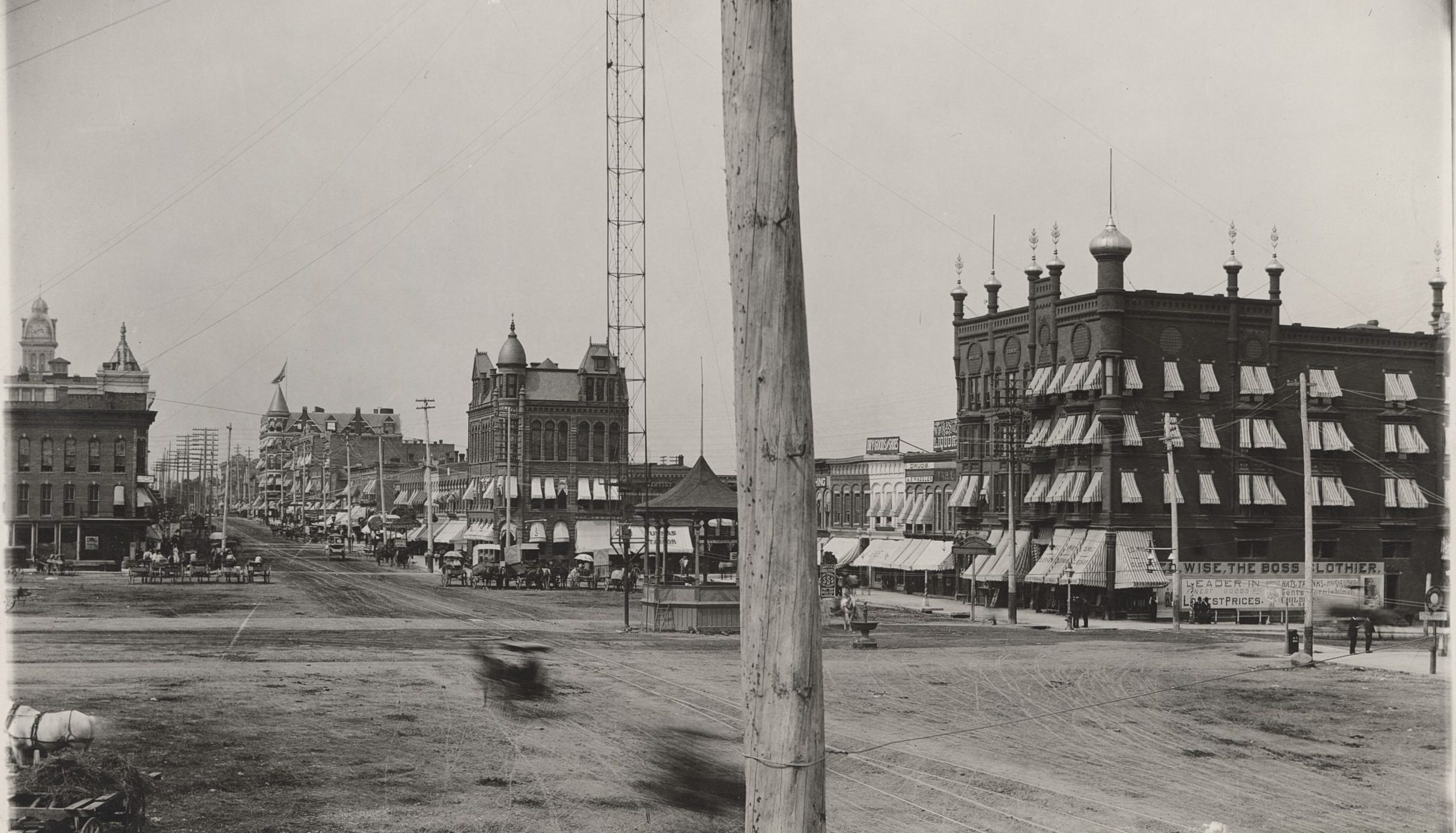
From a muddy square surrounded by wooden structures to an oil boomtown with the most modern of buildings, the northeast corner of Public Square changed incredibly during the 1800s. Each of its blocks holds important businesses and buildings that tell the story of Allen County during this era. Next month, we will come back and tell the rest of the story of the block from 1900 to today.
End notes:
[1] Jay Smith, “A Walking Tour of Downtown Lima,” The Allen County Reporter, Vol. LVII, 2001, No. 2., 73.
[2] “Allen County Leaders,” accessed April 27, 2026, https://allencountymuseum.org/allen-county-leaders/
[3] CPI Inflation Calculator, accessed April 27, 2026, https://www.in2013dollars.com/us/inflation/1838?amount=40.
[4] CPI Inflation Calculator, accessed April 27, 2026, https://www.in2013dollars.com/us/inflation/1838?amount=200.
[5] Jay Smith, “A Walking Tour of Downtown Lima,” The Allen County Reporter, Vol. LVII, 2001, No. 2., 73.
[6] Ibid.
[7] Ibid.
[8] Ibid.
[9] James A. MacDonell, “Early Land Buying in Lima,” July 1944, in Lima, OH – Bus. Blcks -Mitchel File at the Allen County Archives.
[10] Greg Hoersten, “Reminisce: Lima’s Downtown in Pioneer Days,” Lima News, June 18, 2024, accessed April 13, 2026, https://www.limaohio.com/top-stories/2024/06/18/reminisce-limas-downtown-in-pioneer-days/.
[11] Jay Smith, “A Walking Tour of Downtown Lima,” The Allen County Reporter, Vol. LVII, 2001, No. 2., 73.
[12] Ibid.
[13] Ibid.
[14] “History of the Cunningham and Baxter Block,” in Lima, OH – Bus. Blocks – Cunningham Block at the Allen County Archive.
[15] CPI Inflation Calculator, Accessed April 27, 2026, $48 in 1844 → 2026 | Inflation Calculator.
[16] “History of the Cunningham and Baxter Block,” in Lima, OH – Bus. Blocks – Cunningham Block at the Allen County Archive.
[17] Jay Smith, “A Walking Tour of Downtown Lima,” The Allen County Reporter, Vol. LVII, 2001, No. 2., 73.
[18] Greg Hoersten, “Reminisce: Lima’s Downtown in Pioneer Days,” Lima News, June 18, 2024, accessed April 13, 2026, https://www.limaohio.com/top-stories/2024/06/18/reminisce-limas-downtown-in-pioneer-days/.
[19] Ibid.
[20] Jay Smith, “A Walking Tour of Downtown Lima,” The Allen County Reporter, Vol. LVII, 2001, No. 2., 73.
[21] Ibid.
[22] CPI Inflation Calculator, accessed April 27, 2026, $500 in 1859 → 2026 | Inflation Calculator.
[23] Greg Hoersten, “Reminisce: Lima’s Downtown in Pioneer Days,” Lima News, June 18, 2024, accessed April 13, 2026, https://www.limaohio.com/top-stories/2024/06/18/reminisce-limas-downtown-in-pioneer-days/ and “History of the Cunningham and Baxter Block,” in Lima, OH – Bus. Blocks – Cunningham Block at the Allen County Archive.
[24] Edgar B. Cunningham, “As I remember the Public Square in Lima, Ohio. From 1860-1870 in Civil War Times,” 1924, in Lima, OH – Bus. Blocks – Cunningham Block at the Allen County Archive.
[25] Greg Hoersten, “Reminisce: Lima’s Downtown in Pioneer Days,” Lima News, June 18, 2024, accessed April 13, 2026, https://www.limaohio.com/top-stories/2024/06/18/reminisce-limas-downtown-in-pioneer-days/.
[26] Ibid.
[27] Edgar B. Cunningham, “As I remember the Public Square in Lima, Ohio. From 1860-1870 in Civil War Times,” 1924, in Lima, OH – Bus. Blocks – Cunningham Block at the Allen County Archive.
[28] Ezkiel Owen, “More Trips Through Time,” The Allen County Reporter, Vol, LXVI, 2012, No. 2., 56.
[29] Ibid.
[30] Ibid.
[31] Ibid.
[32] Ibid.
[33] Ibid., 56-57.
[34] Ibid., 57.
[35] Ibid.
[36] Hope Strong, “Lima House… Tavern On Green,” The Lima News, April 3, 1966, in Hotels – (Lima) Lima House Hotel file in the Allen County Archives.
[37] Ibid.
[38] Ibid.
[39] Greg Hoersten, “Thomas K. Jacobs,” April 8, 2020, Reminisce, Lima News, in Reminisce Collection at the Allen County Archives.
[40] Hope Strong, “Lima House… Tavern On Green,” The Lima News, April 3, 1966, in Hotels – (Lima) Lima House Hotel file in the Allen County Archives.
[41] CPI Inflation Calculator, accessed April 28, 2026, https://www.in2013dollars.com/us/inflation/1854?amount=2800.
[42] Hope Strong, “Lima House… Tavern On Green,” The Lima News, April 3, 1966, in Hotels – (Lima) Lima House Hotel file in the Allen County Archives.
[43] Ibid.
[44] CPI Inflation Calculator, accessed April 28, 2026, https://www.in2013dollars.com/us/inflation/1635?amount=10500.
[45] “Lima House Saloon Ad,” The Lima Gazette, August 18, 1860, in Hotels – (Lima) Lima House Hotel file in the Allen County Archives.
[46] Hope Strong, “Lima House… Tavern On Green,” The Lima News, April 3, 1966, in Hotels – (Lima) Lima House Hotel file in the Allen County Archives.
[47] “Lima House,” Unknown Lima Newspaper, November 13, 1867, in Hotels – (Lima) Lima House Hotel file in the Allen County Archives.
[48] Jay Smith, “A Walking Tour of Downtown Lima,” The Allen County Reporter, Vol. LVII, 2001, No. 2., 73.
[49] Unveiling the Past: Highlights From Our History, Allen County Museum, 2025.
[50] Adrienne McGee, “Lima’s Skyscraper,” Lima News, January 21, 2009, in the Reminisce Files at the Allen County Museum.
[51] Ibid.
[52] Jay Smith, “A Walking Tour of Downtown Lima,” The Allen County Reporter, Vol. LVII, 2001, No. 2., 73.
[53] Jay Smith, “A Walking Tour of Downtown Lima,” The Allen County Reporter, Vol. LVII, 2001, No. 2., 74 and “The City Bank Building,” Lima Daily Democrat Times, April 6, 1889, in Lima, OH – Bus. Blcks -Mitchel File at the Allen County Archives.
[54] “The City Bank Building,” Lima Daily Democrat Times, April 6, 1889, in Lima, OH – Bus. Blcks -Mitchel File at the Allen County Archives.
[55] Jay Smith, “A Walking Tour of Downtown Lima,” The Allen County Reporter, Vol. LVII, 2001, No. 2., 74.
[56] “The City Bank,’ Lima Daily Democrat Times, March 25, 1889, in Lima, OH – Bus. Blcks -Mitchel File at the Allen County Archives.
[57] Ibid.
[58] Hope Strong, “Lima House… Tavern On Green,” The Lima News, April 3, 1966, in Hotels – (Lima) Lima House Hotel file in the Allen County Archives.
[59] Ibid.
[60] Ibid.
[61] CPI Inflation Calculator, accessed April 29, 2026, https://www.in2013dollars.com/us/inflation/1873?amount=72000.
[62] “Historian Delves Into Lima House Records,” Unknown Lima Newspaper, January 23, 1955, in Hotels – (Lima) Lima House Hotel file in the Allen County Archives.
[63] Ibid.
[64] “Historian Delves Into Lima House Records,” Unknown Lima Newspaper, January 23, 1955, in Hotels – (Lima) Lima House Hotel file in the Allen County Archives and Allen County Museum Facebook Post, accessed October 3, 2025, https://www.facebook.com/photo.php?fbid=1279796173345321&set=pb.100039448526303.-2207520000&type=3..
[65] Allen County Museum Facebook Post, accessed October 3, 2025, https://www.facebook.com/photo.php?fbid=1279796173345321&set=pb.100039448526303.-2207520000&type=3.
[66] Ibid.
[67] “Brilliant,” Allen County Republican Gazette, November 25, 1898, in Hotels – (Lima) Lima House Hotel file in the Allen County Archives.
[68] “Brilliant,” Allen County Republican Gazette, November 25, 1898, in Hotels – (Lima) Lima House Hotel file in the Allen County Archives and Hope Strong, “Lima House… Tavern On Green,” The Lima News, April 3, 1966, in Hotels – (Lima) Lima House Hotel file in the Allen County Archives.
[69] Ronald Lederman Jr., “Lima House,” Lima News, May 10, 2000, in Reminisce Files at the Allen County Archives.
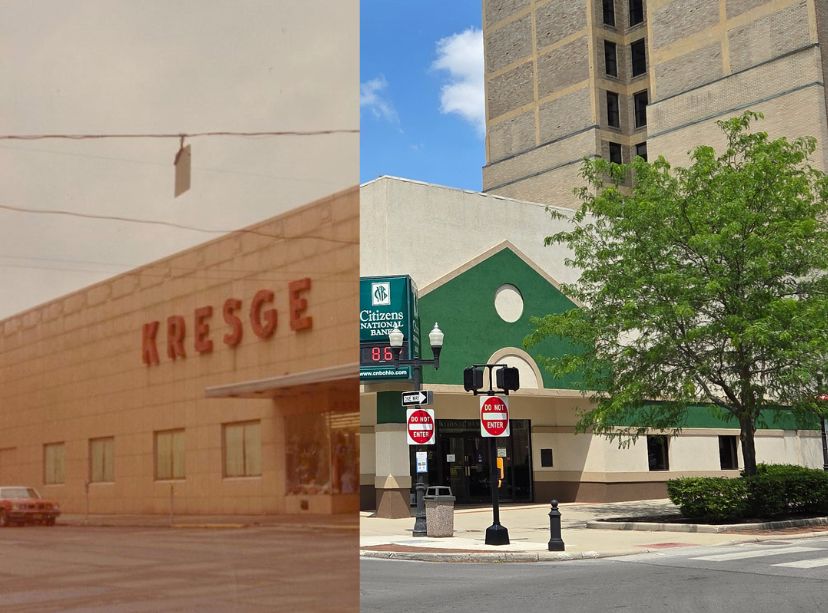
All images are from the Allen County Archives.









Leave A Comment