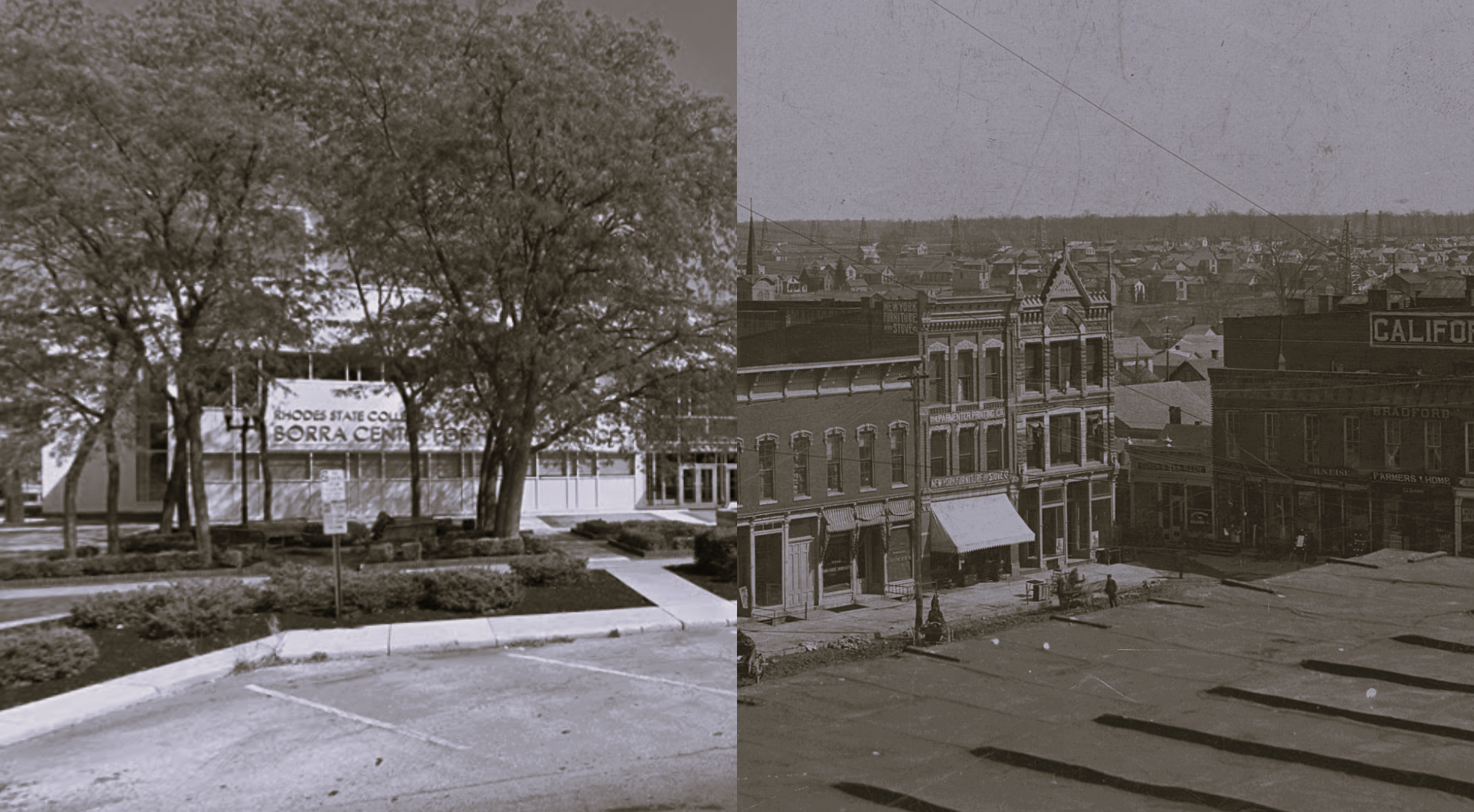
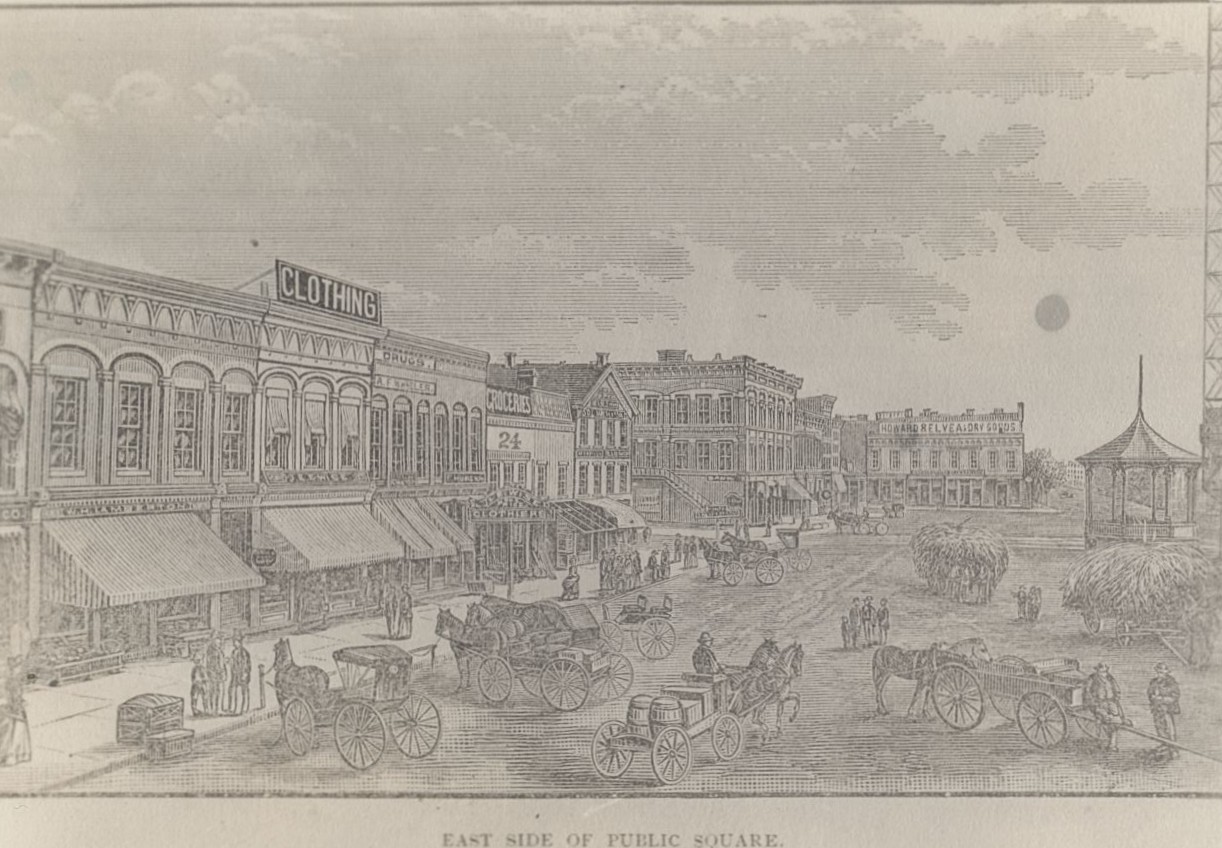
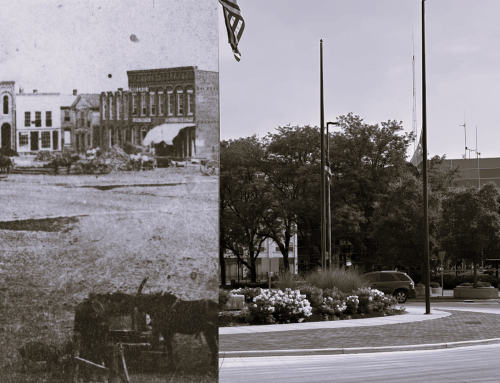
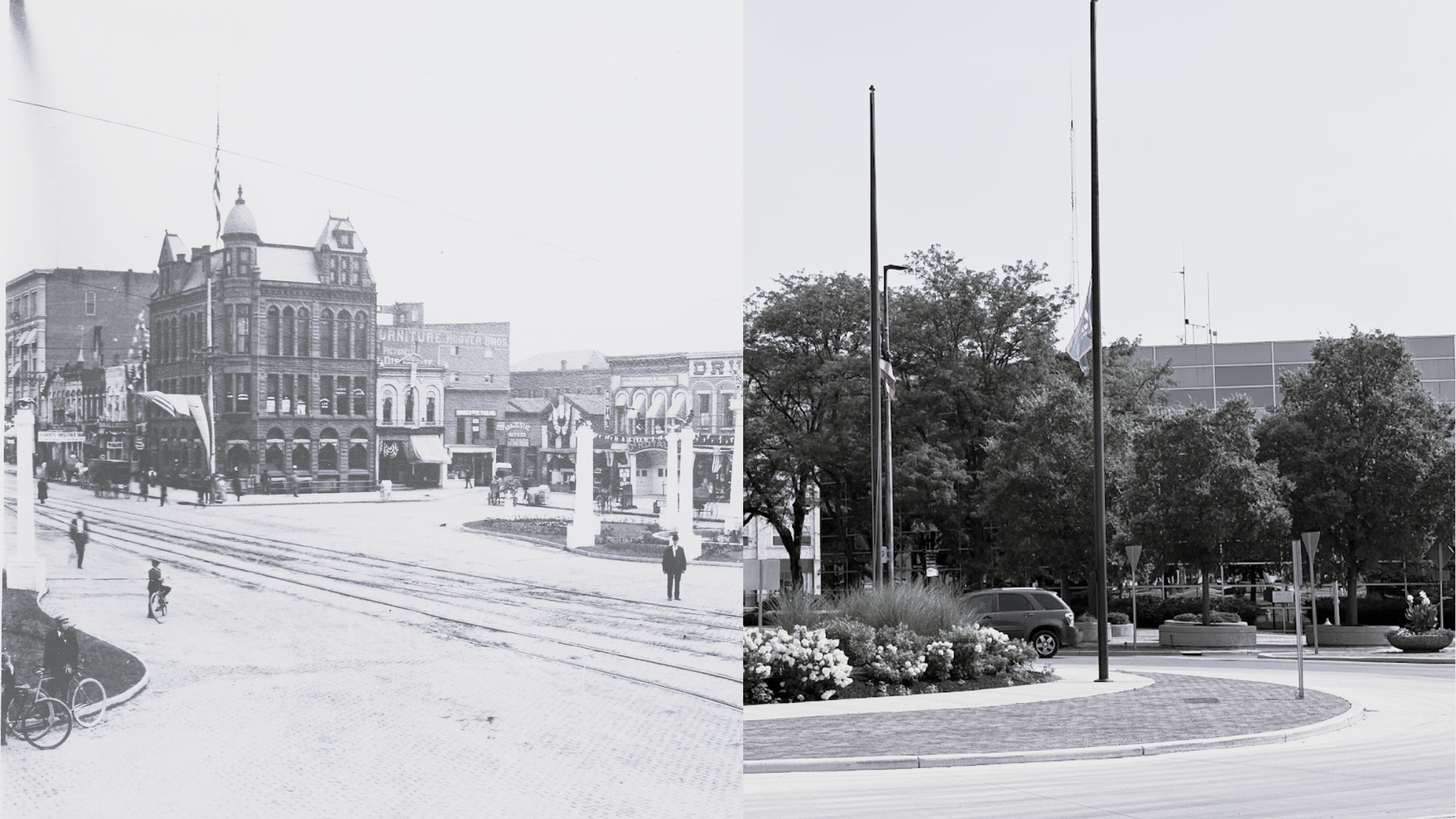
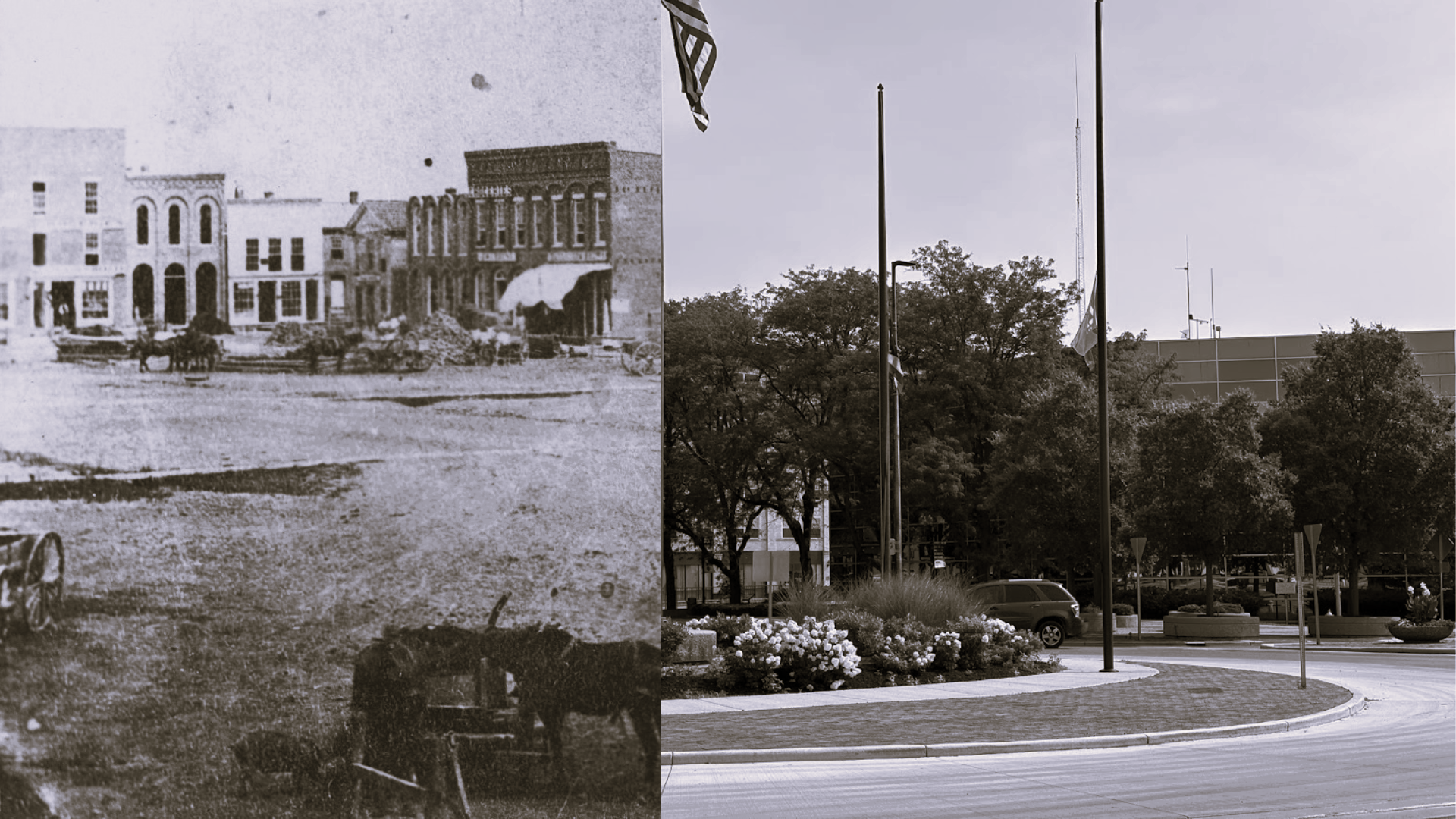
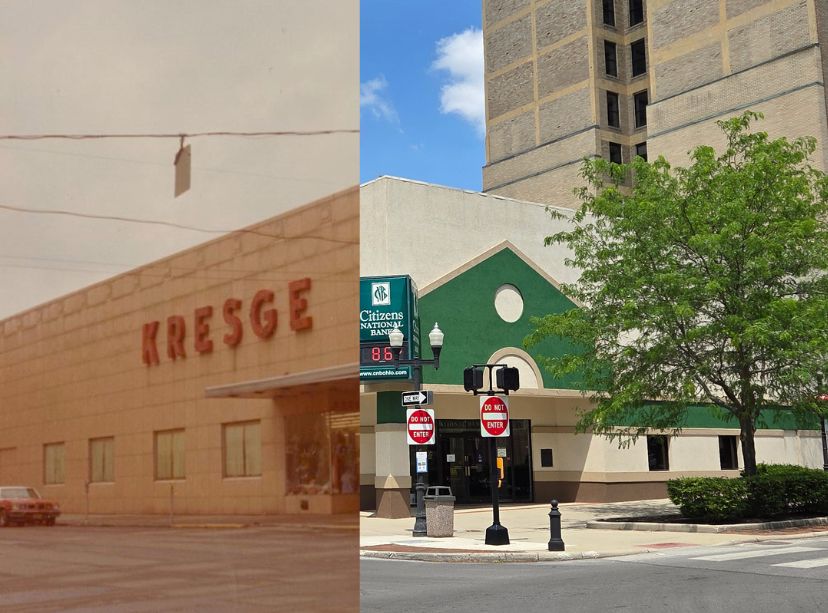
Today we will highlight the southeast corner of Public Square, which today prominently holds Rhode College’s Borra Center. The lots that have traditionally made up this corner are Public Square #2 – 38. It was one of the square’s main retail hubs, home to many small businesses for most of its history, and many businesses called this corner home for only a short period throughout its history. The two main blocks that made up this corner are the Union Block, which was at the northmost corner situated on East Market and the Square, and the Crall Block, which was in the corner just north of Buckeye Alley, which is no longer there. In this article, we will walk through this corner’s history up to 1900.
Before venturing further, it is vital to note that before any settlers or pioneers came to the Allen County area, it was the home and trade location of many indigenous tribes, including the Shawnee, Kiikaapoi, Kaskaskia, and Myaami Tribes. These tribes and more were forcefully removed from Allen County and Ohio, and to tell the story of this area without acknowledging this would be an erasure of history. We recognize and honor the past, present, and future lives of Indigenous people in Allen County, as well as the historic tribes that have inhabited the area, and recognize their continued resilience as the original stewards of this land.
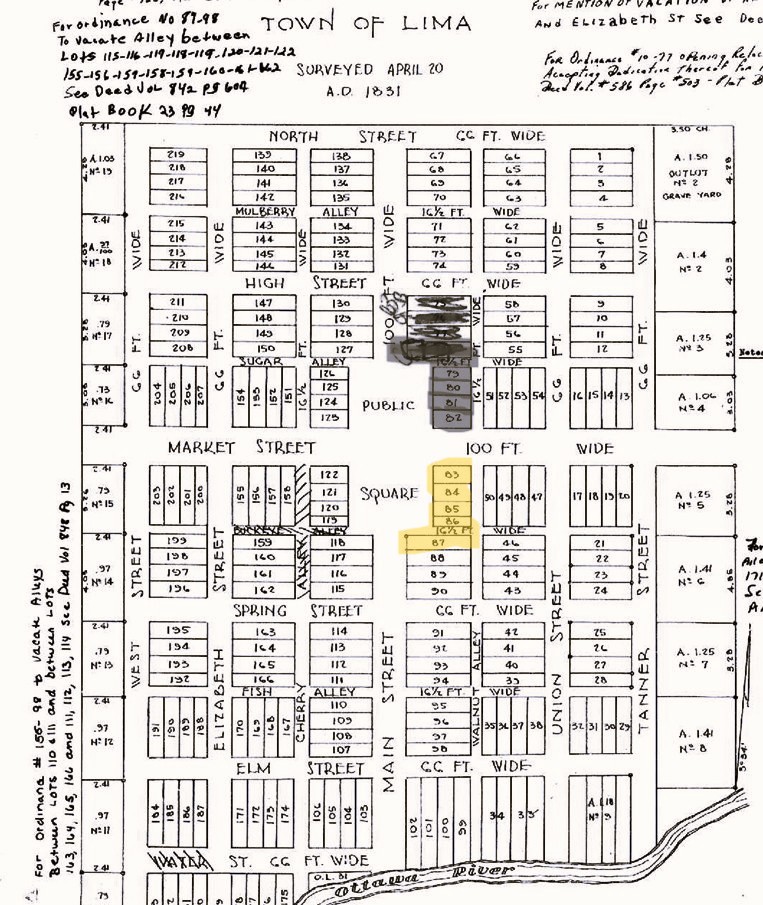
The Union Block is where this corner’s history begins. T. T. Mitchell’s father was the first to build in the location of the Union Block. Both the Mitchell family’s log cabin and tavern were built where the Union Block would later be.[1] These were built between 1831 and 1832, when Lima was first being laid out.[2] When pioneers moved into or through the area, it became a very popular spot, especially after the land office moved to Lima from Wapakoneta.[3]
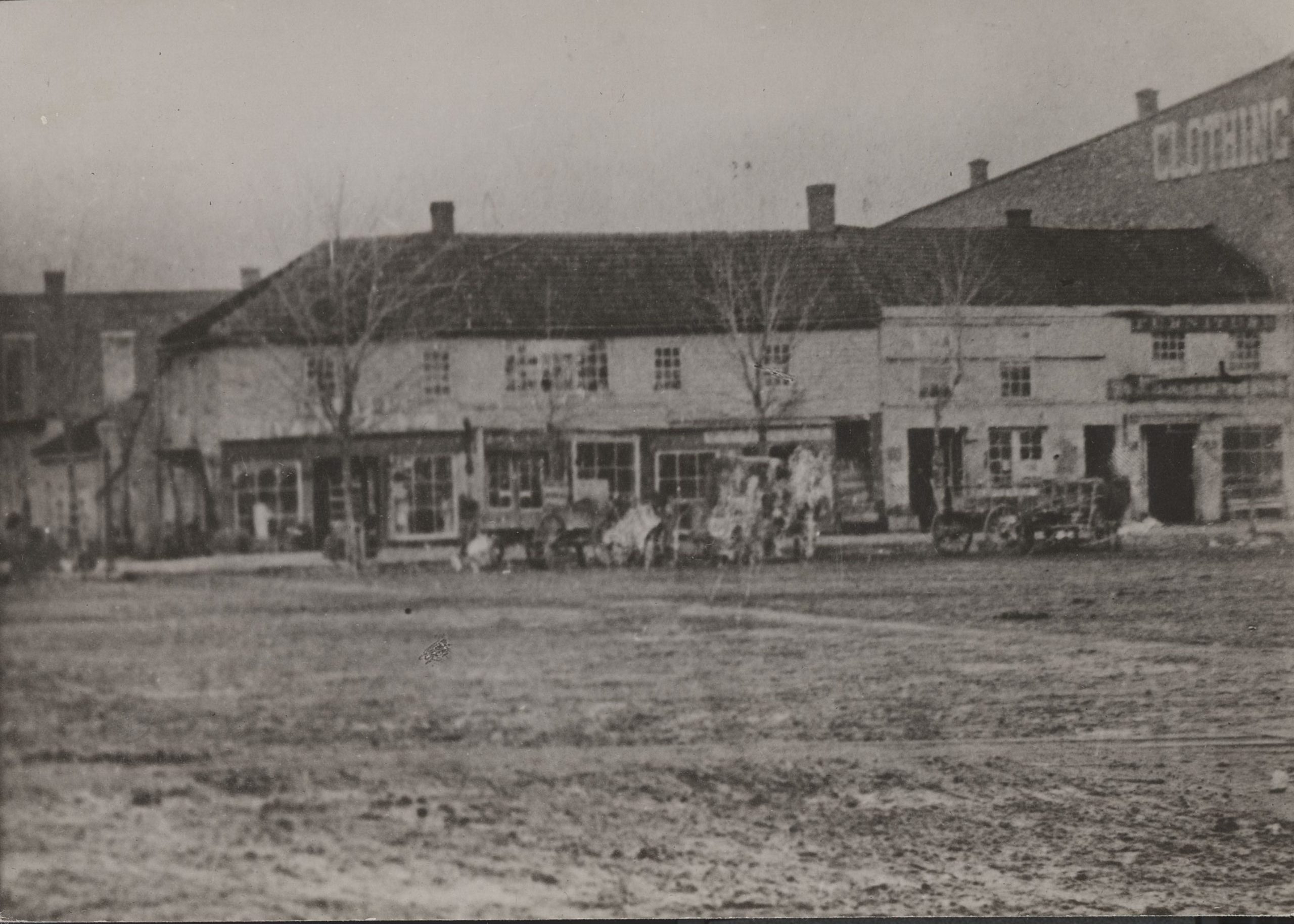
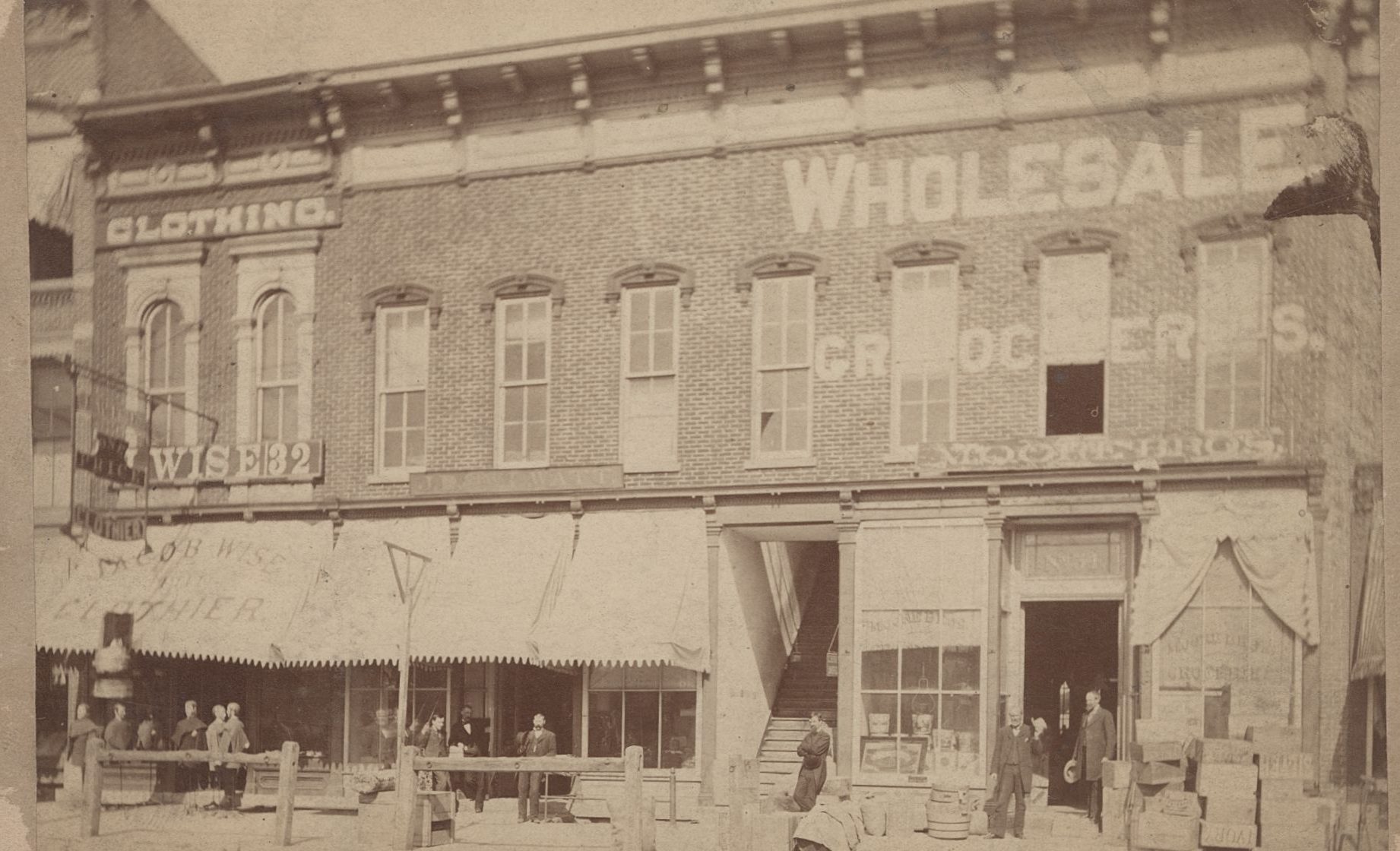
South of the Union Block, many framed buildings went up during the 1830s and 40s. The next one south was George Napaker’s shoe store.[4] Then some dry goods and grocery stores filled the next building; these often changed owners.[5] J. W. Krause also had another grocery store next door.[6] The following building was Watt & Sons company.[7] When Watt & Sons was excavating for a cellar, they undermined Krause’s store and it all fell into Krause’s cellar.[8] Watt & Sons’ store would then turn into Jule Curtis’s clothing store.[9] Then Krause’s grocery turned into Levi Jacobs’ clothing store, later to be Jacob Wise’s clothing store.[10] Moving south again, J. R. Hughes’ tin shop and T. T. Mitchell’s harness shop were in the same building.[11] Lastly, A. N. Smith had a tin store by the corner of South Main Street and the Public Square. The quick changeover between these stores will continue for the remainder of the corner’s history, but we will not mention every new business.
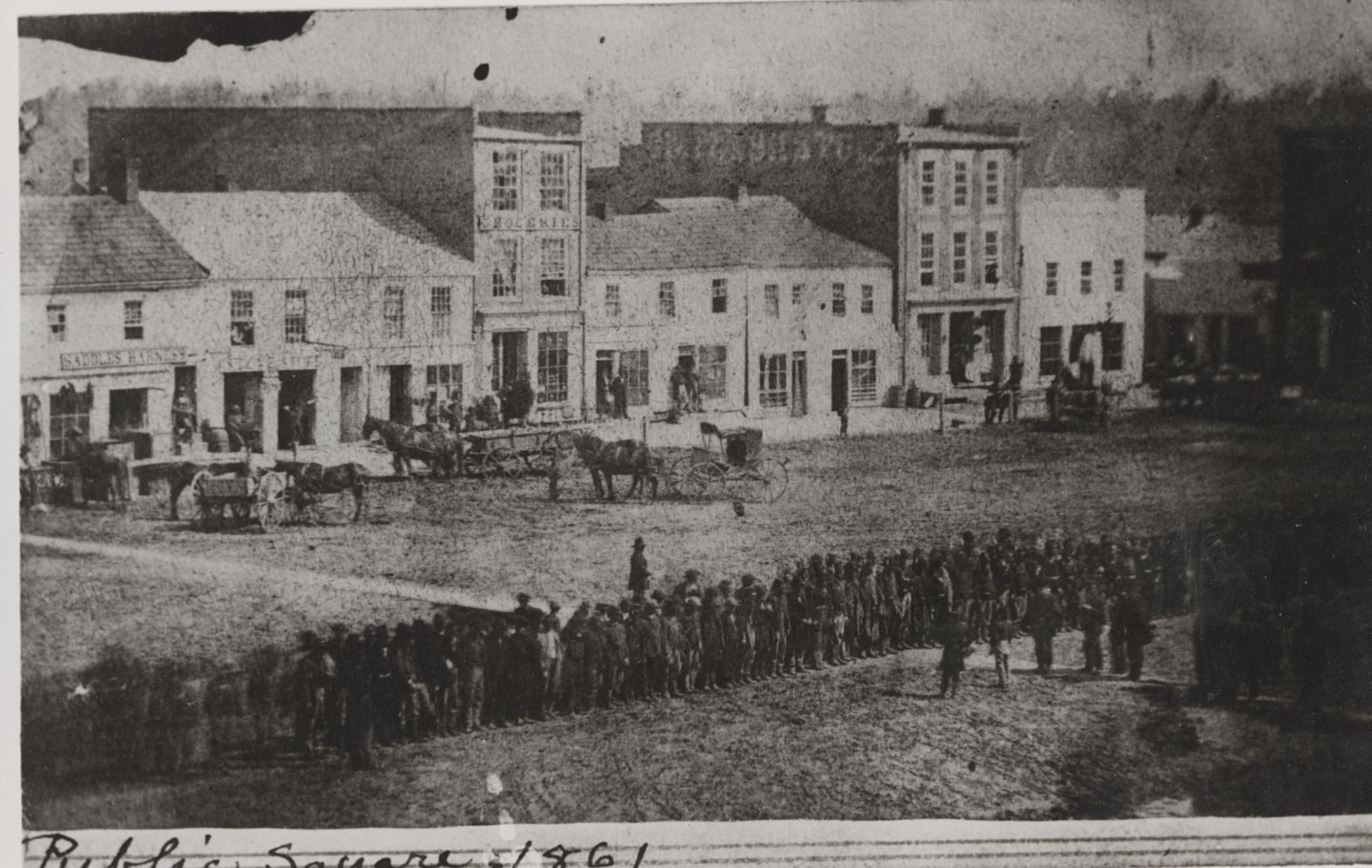
The late 19th century is one of the busiest times for the southeast corner. It continued to be a retail cluster with rapid turnover.[12] Likewise, it was the main place where farmers brought their goods to sell during this era.[13] From fruits and vegetables to livestock and their needs, the corner would be busy with a farmer’s market during the week in the summer.[14] This was the era when oil was discovered in the area causing much revitalization.[15] This is the stage that we will continue this story from.
The Union Block was officially built in 1877, on the ground where the Mitchell’s Tavern had previously been.[16] It was three stories with five business rooms on the bottom floor on both the Public Square and East Market Street.[17] The basement, cellar rooms were typically utilized by barber shops, where as the second story held offices, and the third was storage or apartments for people to rent.[18] The owners of the Union Block included T. T. Mitchell, his sister and her husband A. S. Smith, J. R. Hughes, and Mrs. J. W. Crouse.[19] At the beginning, A.S. Smith sold stoves and tinware out of the block and J. R. Hughes sold glassware.[20] There were a lot of other businesses run from the block including the Bank of Lima, the printers O. B. Selfridge and E. B. Halladay, clothiers, laundry, and a jeweler. Many attorneys used the office suites on the second floor throughout the first few years; even an artist and a photographer called the block home.[21] In the late 1880s, the Telephone Exchange, which sold stocks, moved into the building and called the third-floor home.[22] Throughout the first few years, many clothing stores changed hands in the Union Block.[23]
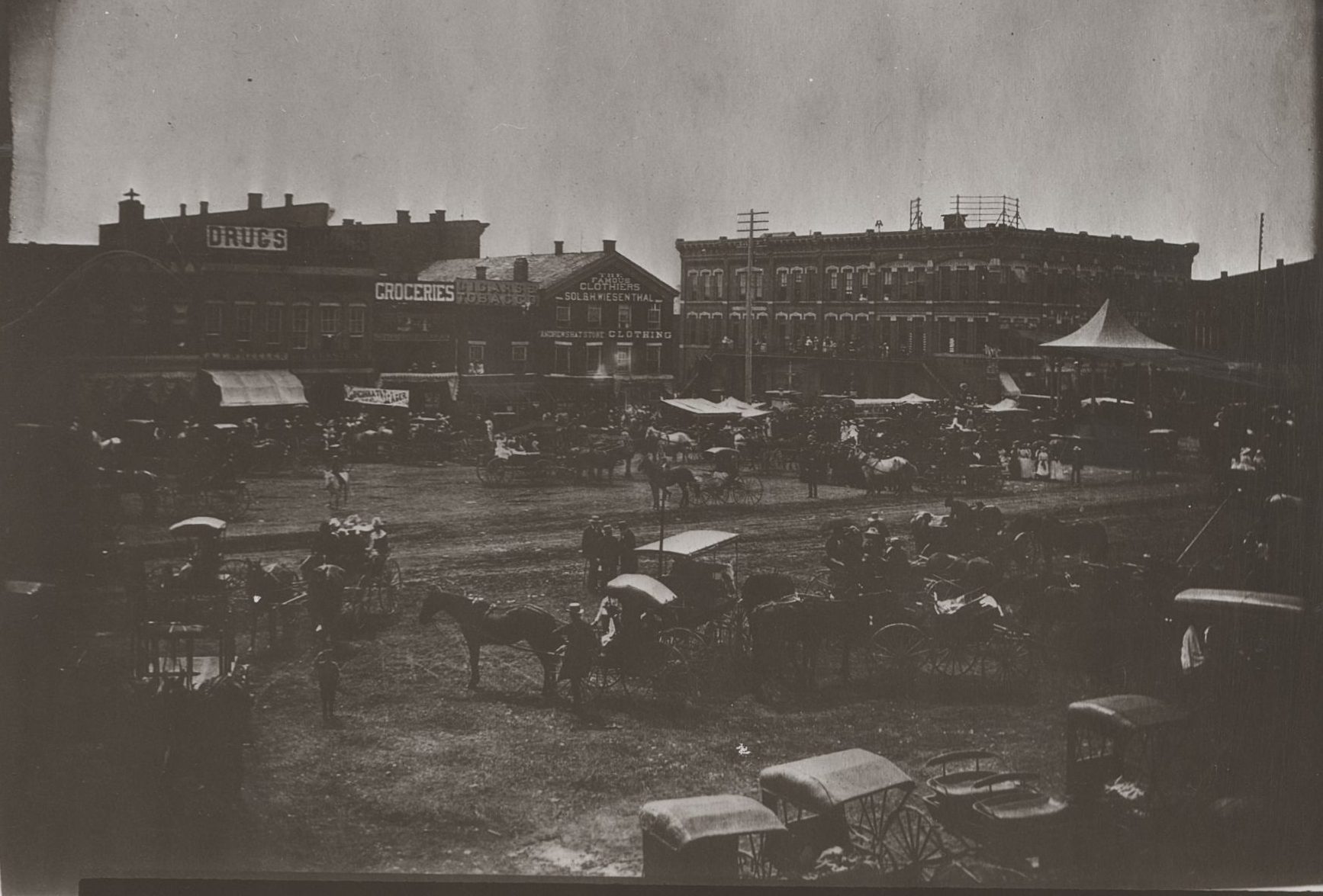
Like much of the Public Square, the Union Block faced fire and other damage throughout its early years. On July 3, 1879, lightning struck the building, tearing much of the third floor loose and breaking many large holes into the building.[24] One of the tenants, Frank Herman, was even struck by lightning and passed out.[25] While these damages were repaired, the calamities were not over. In September of 1881 a fire started in the Union Block, specifically in Ury’s Dry Goods and Millinery business rooms.[26] Pedestrians walking around the Public Square smelled smoke and found a wall of the Union Block on fire after investigating.[27] It had spread both towards the second story and the cellar, destroying both stairways.[28] Eventually it was put out, but many stockroom items were burnt or ruined by smoke and water.[29] The insurance was estimated to be around $7,000,[30] or close to $230,000 today.[31] Several of the adjoining stockrooms had some amount of damage as well.[32] A few years after that, a unsanctioned go devil business caused an eye injury in the building.[33] Go devils were an important part of keeping oil wells flowing around Allen County at this time, they were made from a mixture of nitric acid and zinc—a very explosive combination. Harry Callahan, who lived in the Union Block at the time, was creating some go devils in his room when the mixture exploded, almost causing him permanent blindness.[34] Fire damage continued to be a problem in the Union Block when another much smaller fire was started and snuffed out in Gus Kalb’s clothing store in March 1894.[35] Kalb had a large sale because of the smoke residue, which later became questioned because of how long the sale extended for.[36] So, these were the many disasters of the Union Block before the turn of the century.
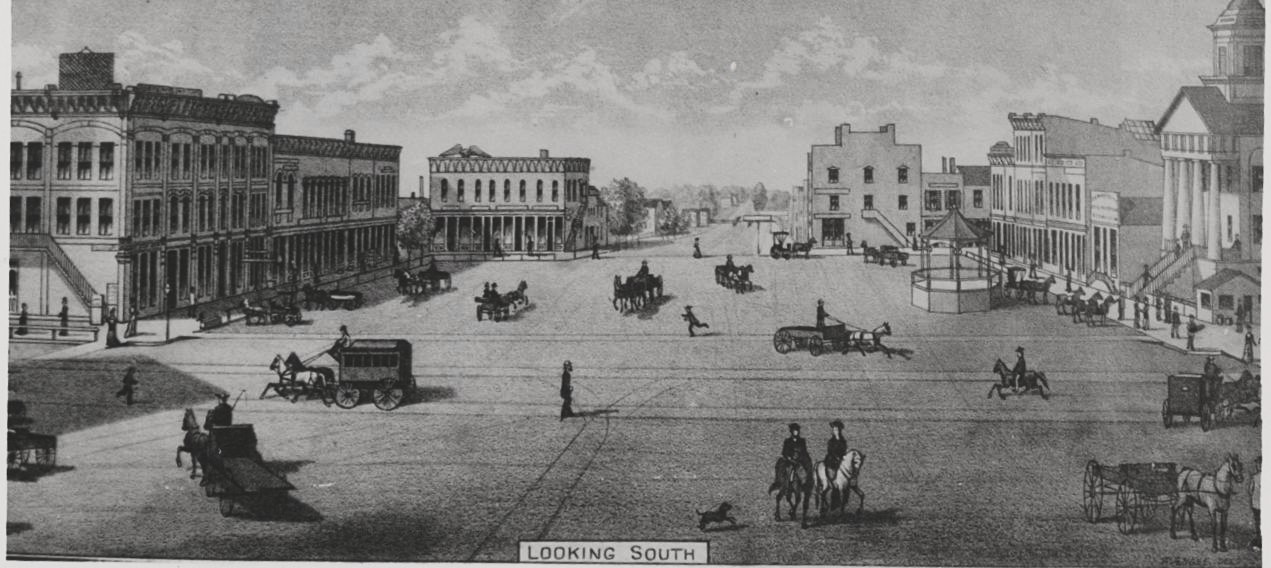
The Crall block was also built in the late 19th century. Before 1870, Jule Churchill had a dry goods store in an old, framed building in this corner location in the southeast of the Public Square.[37] He would sell the building and land to the Crall brothers, who had previously owned a farm in Westminster, Ohio.[38]They bought this lot in 1873. From 1877 to 1880, a furniture store owned by J. C. Musser ran out of the building.[39] Musser sold cabinets, coffins, and cupboards out of the storefront.[40] It was known for having items stacked all the way to the rafters.[41] They constructed a new building in 1890.[42] It was three stories and constructed out of both Bedford and Ohio brown stone.[43] It continued to be filled by various furniture stores, but was sold by the Crall brothers in 1902.[44] We will continue its story in next months article.
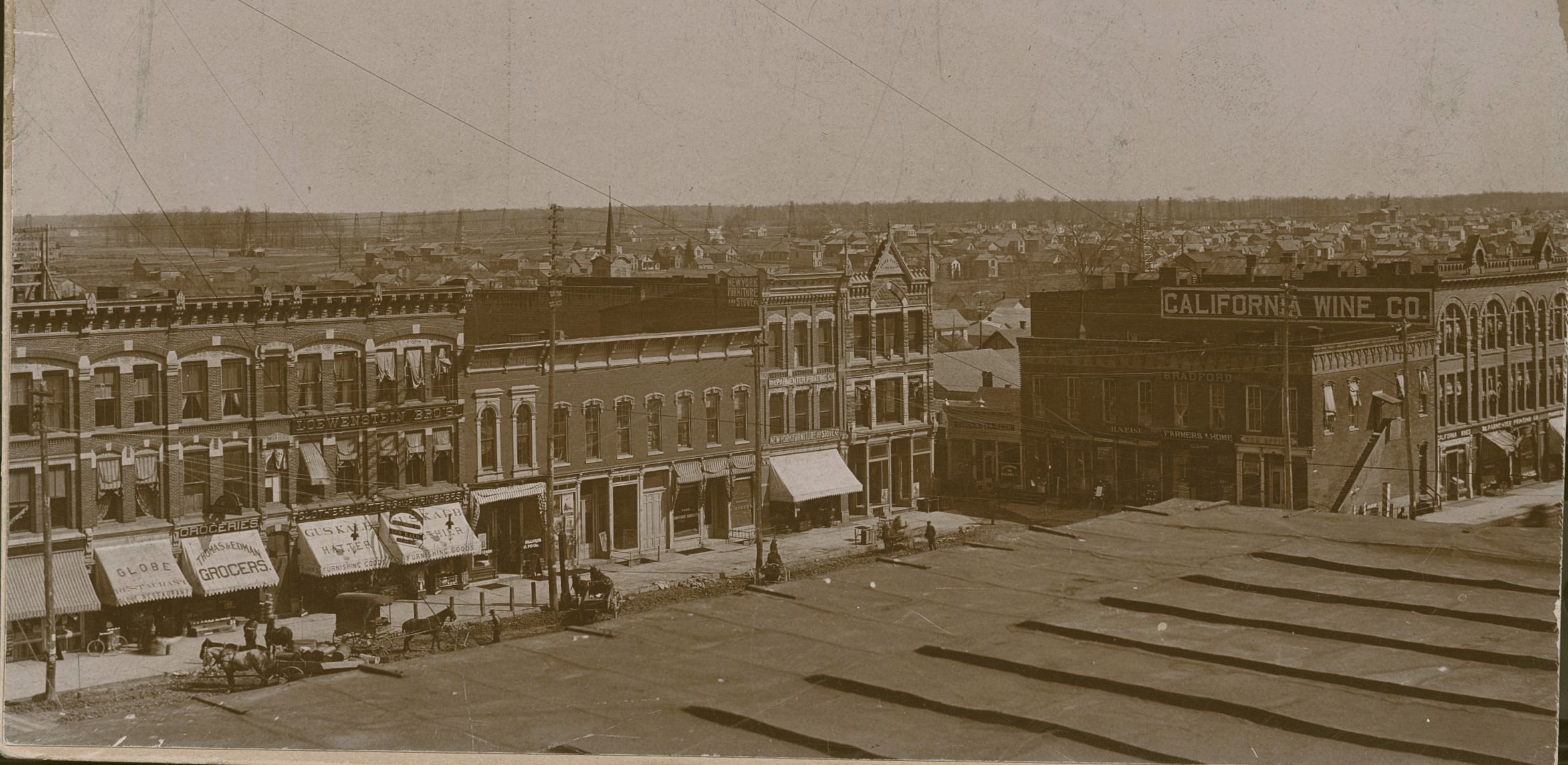
The southeast corner is most notably the home to many small retailers who often came and went. Like most of the Public Square, it also experienced its own bad luck with many disasters, especially fires. We will continue the story of the southeast corner of Public Square next month, from 1900 to today.
End notes:
[1] “Reached the Golden Milestone,” Unknown Lima newspaper, January 30, 1900, in Union Block Folder in the Allen County Archives, and Jay Smith, “A Walking Tour of Downtown Lima,” The Allen County Reporter, Vol. LVII, 2001, No. 2, 73.
[2] Jay Smith, “A Walking Tour of Downtown Lima,” The Allen County Reporter, Vol. LVII, 2001, No. 2, 73 and 100.
[3] Ibid., 73.
[4] Edgar B. Cunningham, “As I remember the Public Square in Lima, Ohio. From 1860-1870 in Civil War Times,” in Lima, OH – Bus. Blocks – Cunningham Block at the Allen County Archive.
[5] Ibid.
[6] Ibid.
[7] Ibid.
[8] Ibid.
[9] Ibid.
[10] Ibid.
[11] Ibid.
[12] Jay Smith, “A Walking Tour of Downtown Lima,” The Allen County Reporter, Vol. LVII, 2001, No. 2, 100.
[13] Ibid.
[14] Ibid.
[15] “Lima Multiple Resource Area,” National Register of Historic Places Inventory-Nomination Form, November 1978, accessed July 22, 2026, https://npgallery.nps.gov/NRHP/GetAsset/NRHP/64000633_text.
[16] Greg Hoersten, “‘Union Block’ full of action,” Lima News, December 17, 2014, in Reminisce files at Allen County Archive.
[17] Ibid.
[18] “Going to Build,” Lima Gazette, February 14, 1877, in Union Block Folder in the Allen County Archives.
[19] Ibid.
[20] Greg Hoersten, “‘Union Block’ full of action,” Lima News, December 17, 2014, in Reminisce files at Allen County Archive.
[21] 1878-1879 City Directory, in Union Block Folder in the Allen County Archives.
[22] Greg Hoersten, “‘Union Block’ full of action,” Lima News, December 17, 2014, in Reminisce files at Allen County Archive.
[23] Greg Hoersten, “Clothiers in the Union Block,” Lima News, November 13, 2019, in Reminisce files at the Allen County Museum.
[24] Greg Hoersten, “‘Union Block’ full of action,” Lima News, December 17, 2014, in Reminisce files at Allen County Archive.
[25] Ibid.
[26] “Almost a Disastrous Conflagration,” Allen County Democrat, September 8, 1881, in Union Block Folder in the Allen County Archives.
[27] Ibid.
[28] Ibid.
[29] Ibid.
[30] Ibid.
[31] “$7,000 in 1881 is worth $229,182.75 Today,” accessed August 3, 2026, https://www.in2013dollars.com/us/inflation/1881?amount=7000.
[32] “Almost a Disastrous Conflagration,” Allen County Democrat, September 8, 1881, in Union Block Folder in the Allen County Archives.
[33] “A Lucky Escape,” Lima Democrat Daily Times, September 17, 1888, in Union Block Folder in the Allen County Archives.
[34] Ibid.
[35] Greg Hoersten, “Clothiers in the Union Block,” Lima News, November 13, 2019, in Reminisce files at the Allen County Museum.
[36] Ibid.
[37] Greg Hoersten, “The Crall Block,” Lima News, in Reminisce Files at the Allen County Archives.
[38] Ibid.
[39] Ibid.
[40] Ibid.
[41] Ibid.
[42] Ibid.
[43] Ibid.
[44] Ibid.
All images are from the Allen County Archives.









Leave A Comment