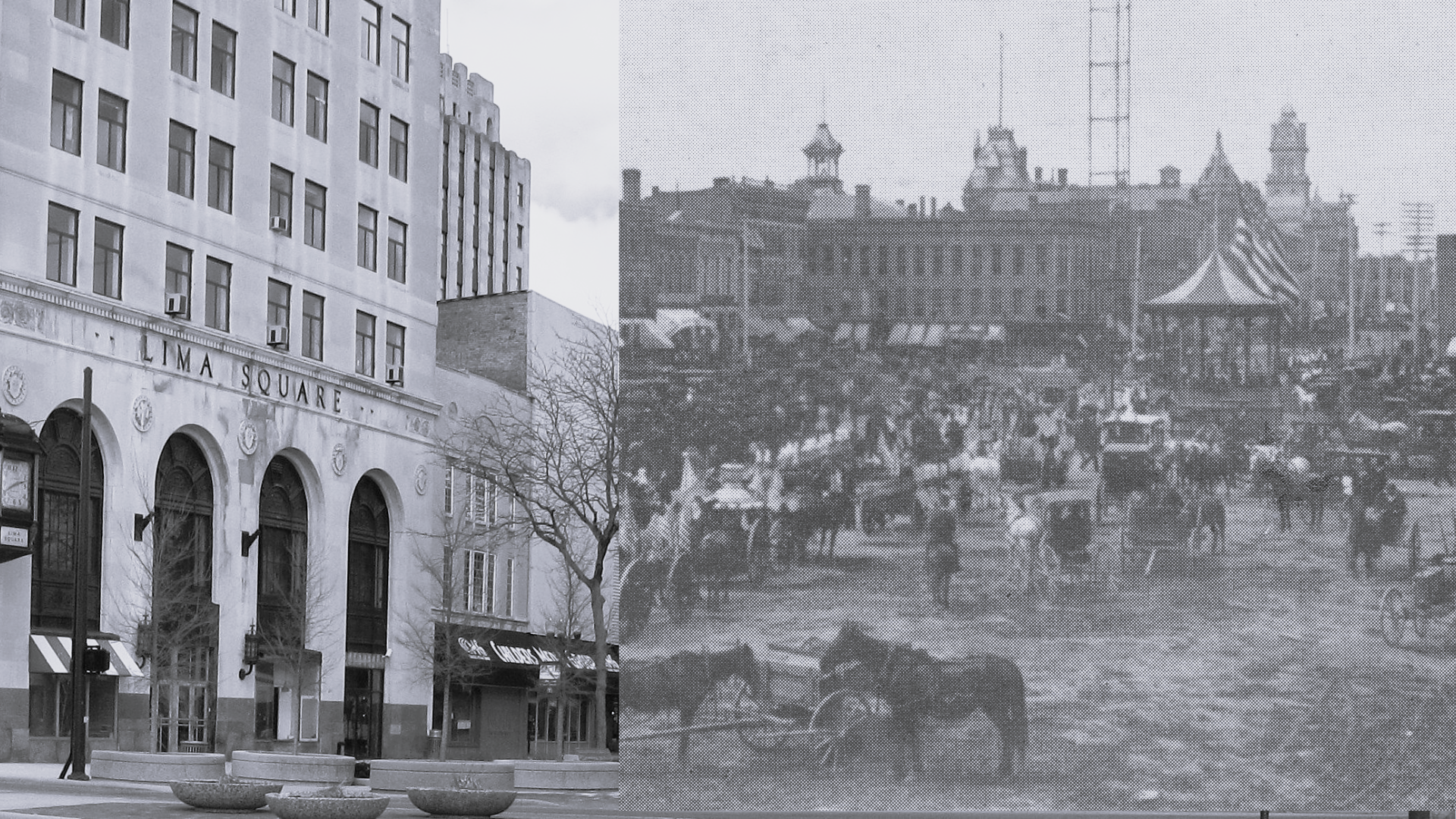
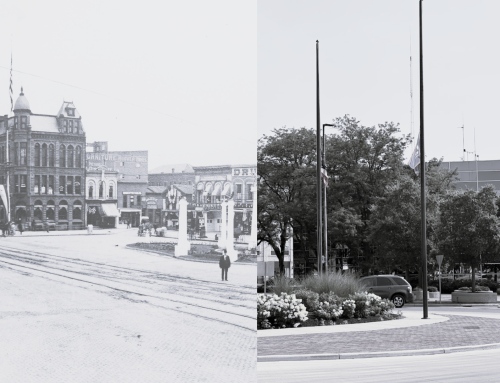
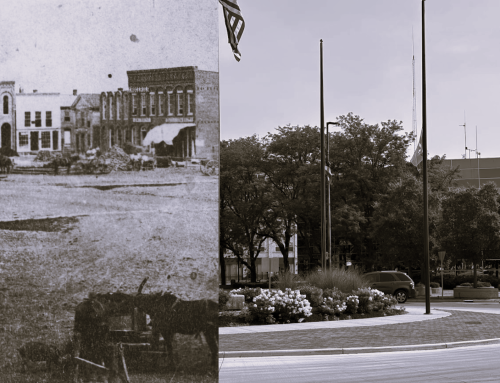
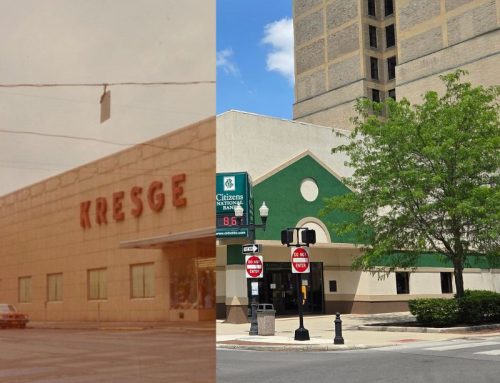
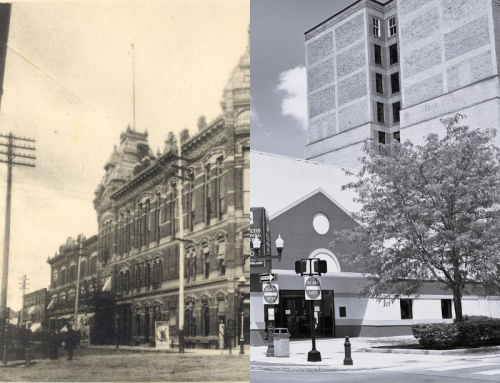
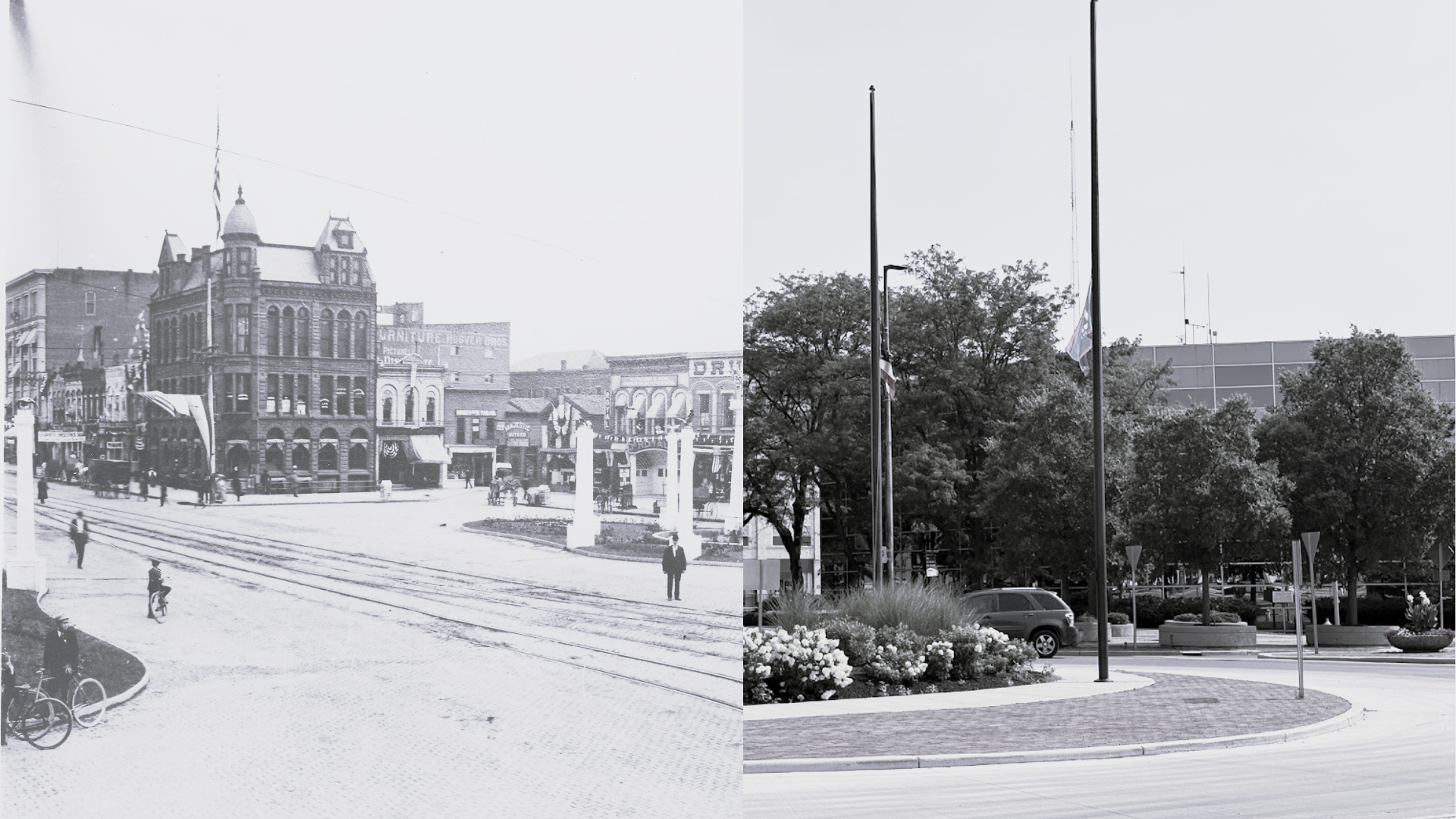
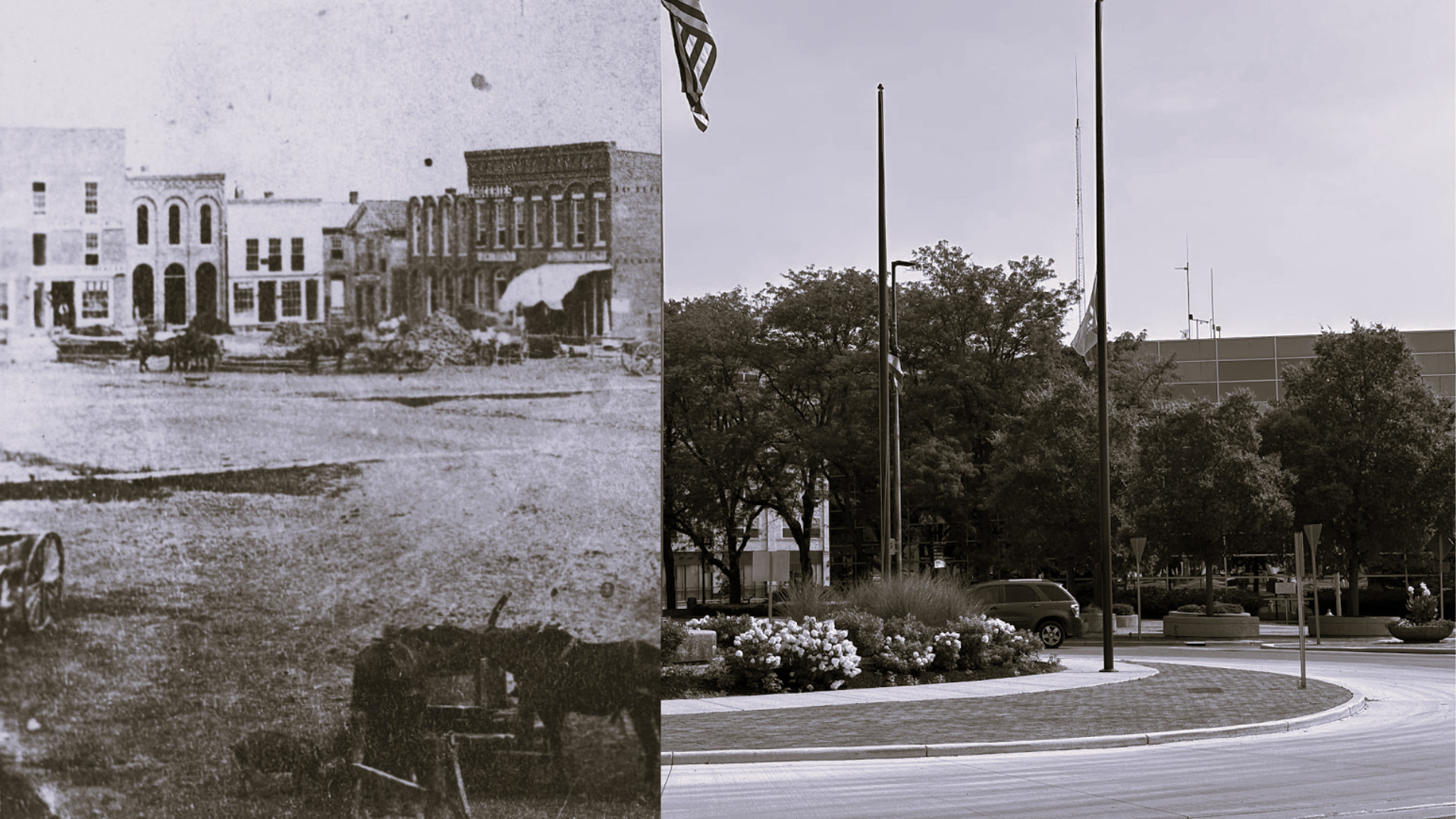
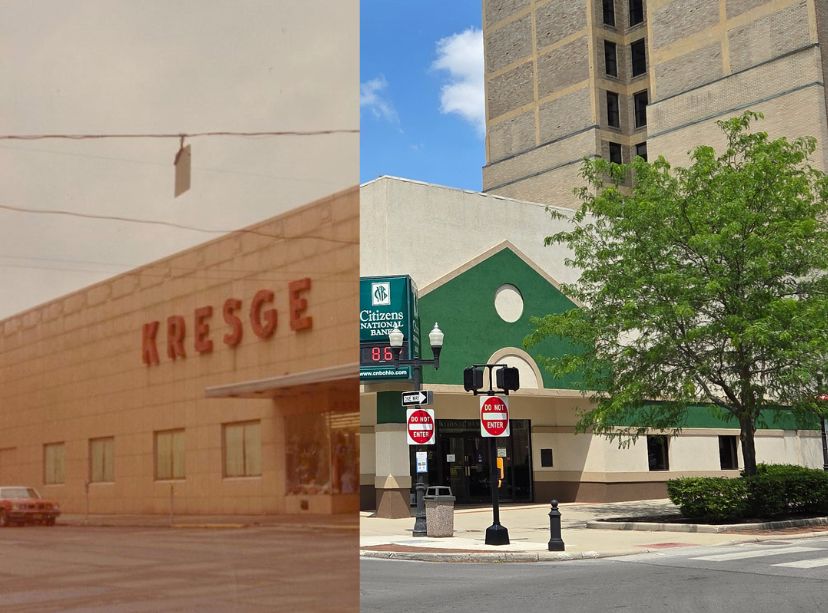
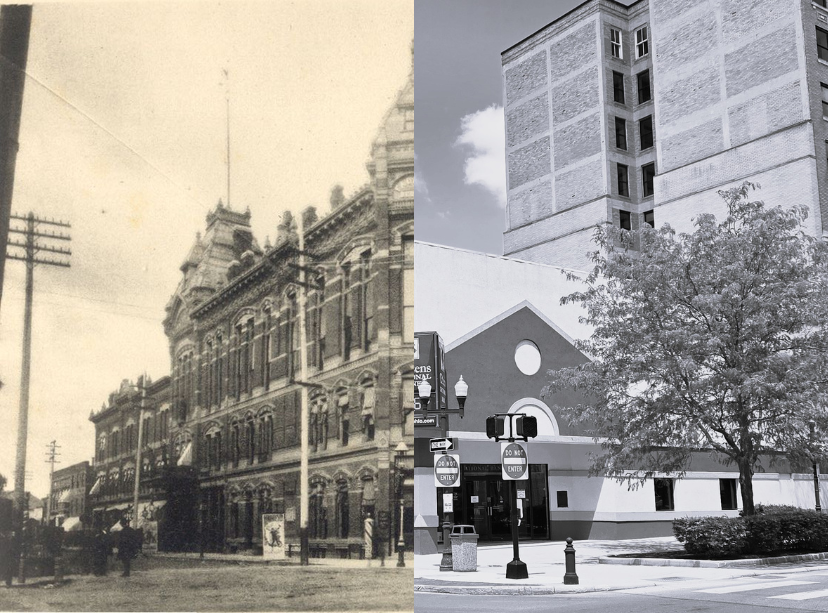
Today, we are starting the history of the northwest corner of Public Square. This area is currently home to many businesses, including, but not limited to, Art Space Lima, Woof Boom Radio Lima, and High Road School of Lima. As with the other articles, we will be discussing the interesting things that happened in that area rather than list every business or institution that made its home there. As we go through this corner, we will work first from the Ashton Block, on the corner of West Market and Public Square, through the middle blocks to the Collins Block, on the corner of North Main Street and Public Square. Always going south to north within the northwestern corner, then looping back around at the next time period. The northwestern corner’s history is integral to Lima’s development, with some of the first general stores, public gathering spaces, and hardware stores in the area.
Before venturing further, it is vital to note that before any settlers or pioneers came to the Allen County area, it was the home and trade location of many indigenous tribes, including the Shawnee, Kiikaapoi, Kaskaskia, and Myaami Tribes. These tribes and more were forcefully removed from Allen County and Ohio, and to tell the story of this area without acknowledging this would be an erasure of history. We recognize and honor the past, present, and future lives of Indigenous people in Allen County, as well as the historic tribes that have inhabited the area, and recognize their continued resilience as the original stewards of this land.
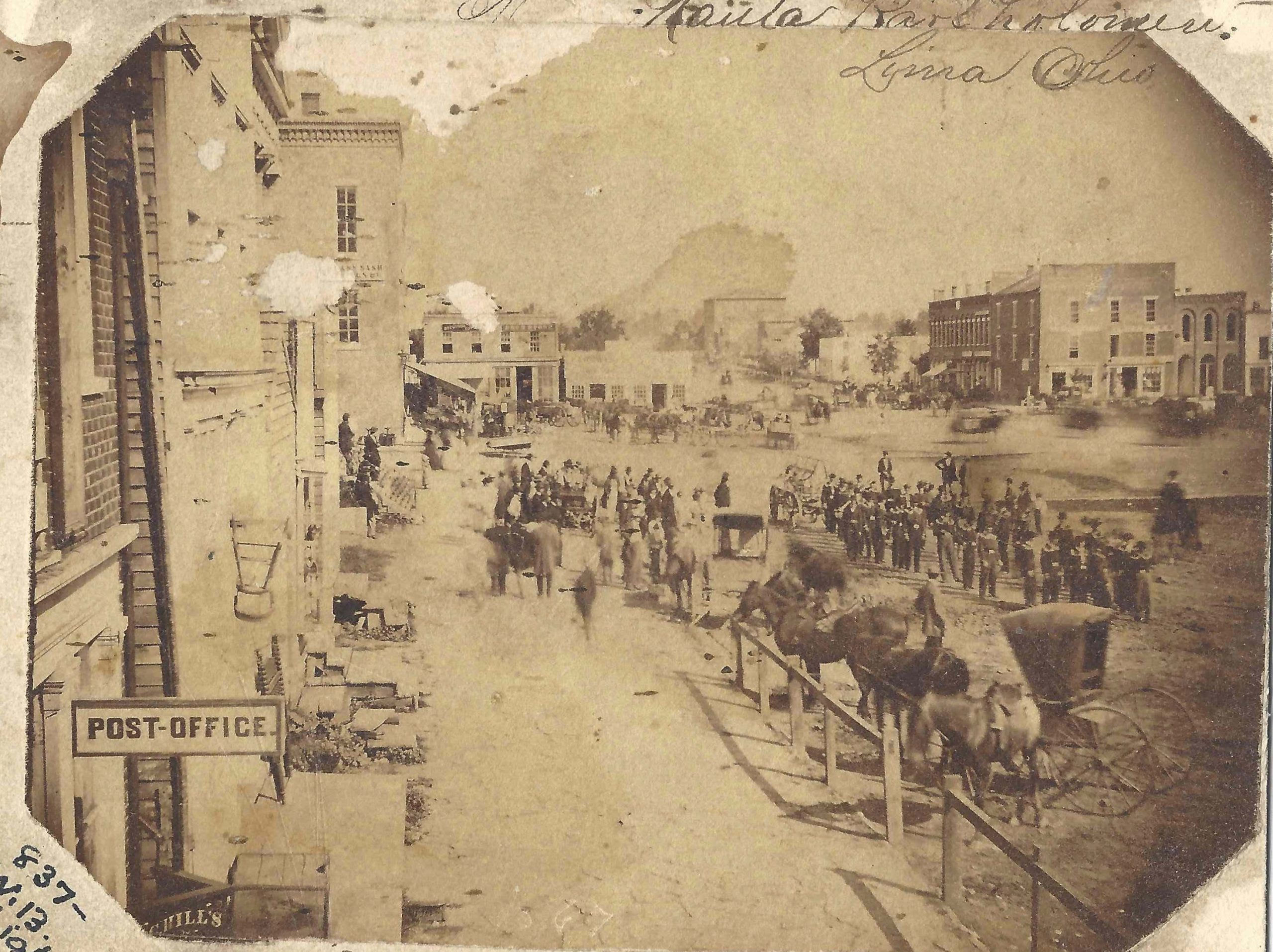
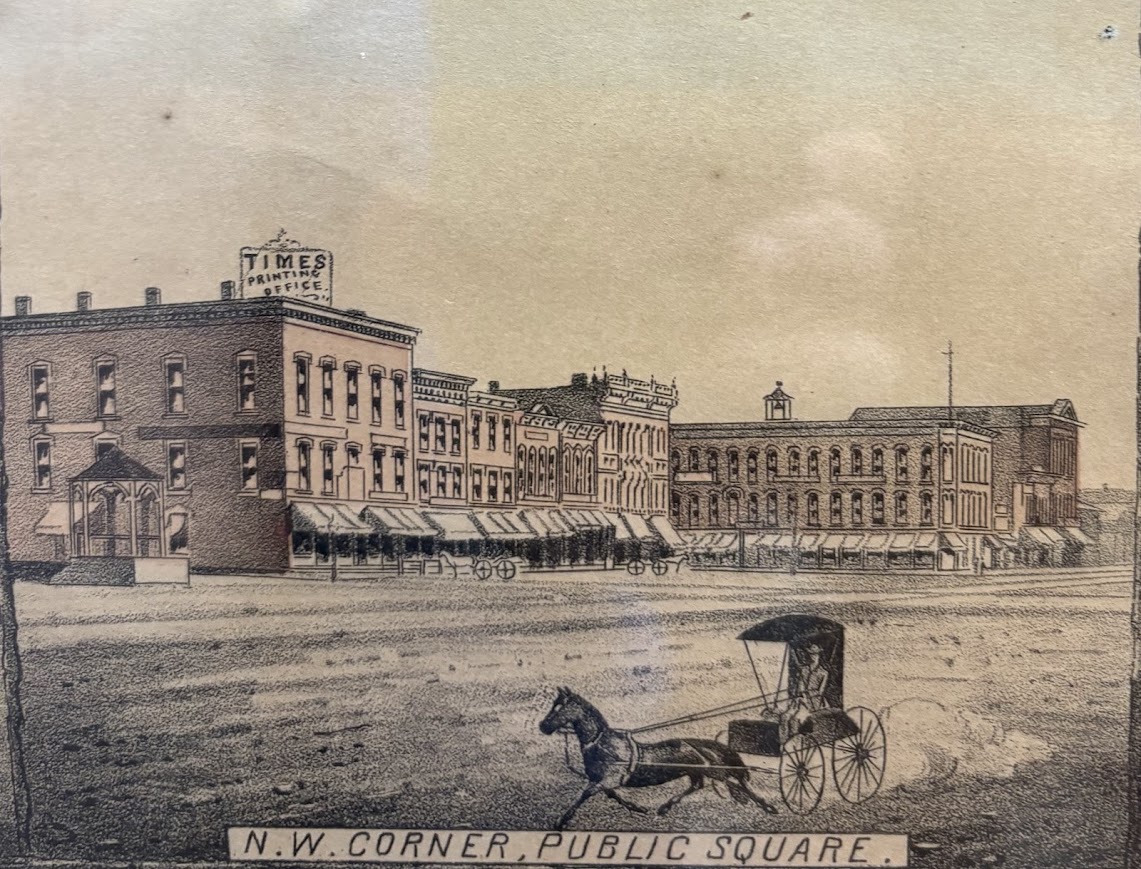
Frank Ashton, the patriarch of the Ashton family, built the Ashton Block after moving to Lima in the middle of the 1850s. According to his granddaughter, Frank Ashton was the first passenger to disembark The Pittsburgh, Fort Wayne, and Chicago railroad when it was finished in the mid-1850s.[1] With his sons, he opened a hardware store at 18 Public Square by January 19, 1856, when an ad announced their business.[2] They would buy the land to build the Ashton Block, where the First National Bank and Trust Building is today, only two years later in 1858.[3] They built a three floor building with their hardware store on the bottom floor, offices on the second floor, and a gathering place known as Ashton Hall on the third floor .[4] The Ashton’s hardware store was one of the best stores of its type in northwest Ohio.[5] They sold a diverse range of items, especially for the era: “along with hardware, the store dealt with iron, steel, wagon and buggy woodwork, blacksmith tools and blacksmith coal.”[6] As a result blacksmiths and builders came from all over the surrounding counties to Lima to purchase their supplies from the Ashtons. In 1866, the Ashtons’ sold their hardware store to two Wooster men, W.K. Boone and J.H. Kauke.[7] For a few years two of the Ashton sons worked for Boone and Kauke.;[8] however, soon after, the Ashtons decided to open a grocery store.[9] This caused Boone and Kauke to move their store a few buildings north, where we will follow their story later in this article.[10] Other businesses housed within the Ashton Block at the time included the Times Democrat Printing Office.[11] There were many concerts and performances on the top floor in Ashton Hall.[12] It was the primary performance venue in the area at that time, which was known for its tall ceilings and grand chandeliers.[13] It had a big enough stage for some traveling troops of the era including: Tom Thumb and Minnie Warren, Sol Smith Russell, and the Swiss Family Bell Ringers.[14] Another hall next door was known for staging the amateur performances of the area.
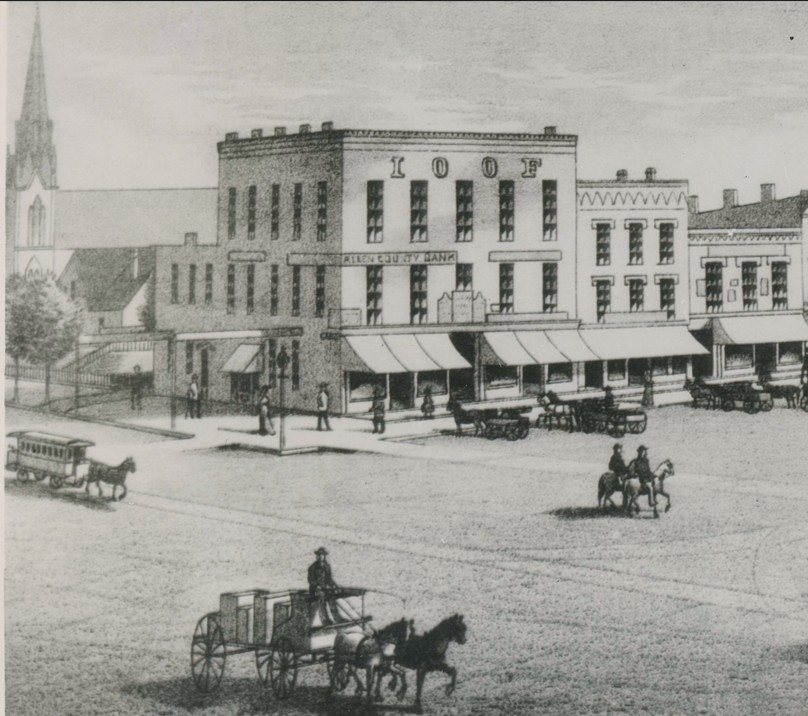
Sanford Block was the building north of the Ashton Block; although where it stood would still be where the Lima Trust Building is today, as that building occupies the footprint of both the Ashton and Sanford Blocks in the 1850s. Sanford Block is mostly known for its third story hall known as Sanford Hall, which was built a decade before Ashton Hall in the 1850s.[15] The hall did not welcome large performances or traveling troops like Ashton Hall, but the citizens of the area interested in the stage had a home there.[16] One of these groups was The Lima Thespian Club who called this hall home during this time period.[17] It’s membership included some notable figures of the era: “Judge Charles M. Hughes, O.E. Griffith, who was one time clerk of the county, David S. Fisher an early editor of the old Allen County Democrat, and representations of the following families: Cunningham, Crouse, Meily, Townsend, Harper, Richardson, Metcalf, and others.”[18] Their hallmark performances included “Rip Van Winkle,” “Pizarro, the Bandit Chef,” and “Black Eyed Susan.”[19] Locals enjoyed the club’s theater performances and they were always well attended.[20] Thus, between Sanford and Ashton Hall the entertainment of the era was firmly entrenched in the northwestern corner of Public Square.
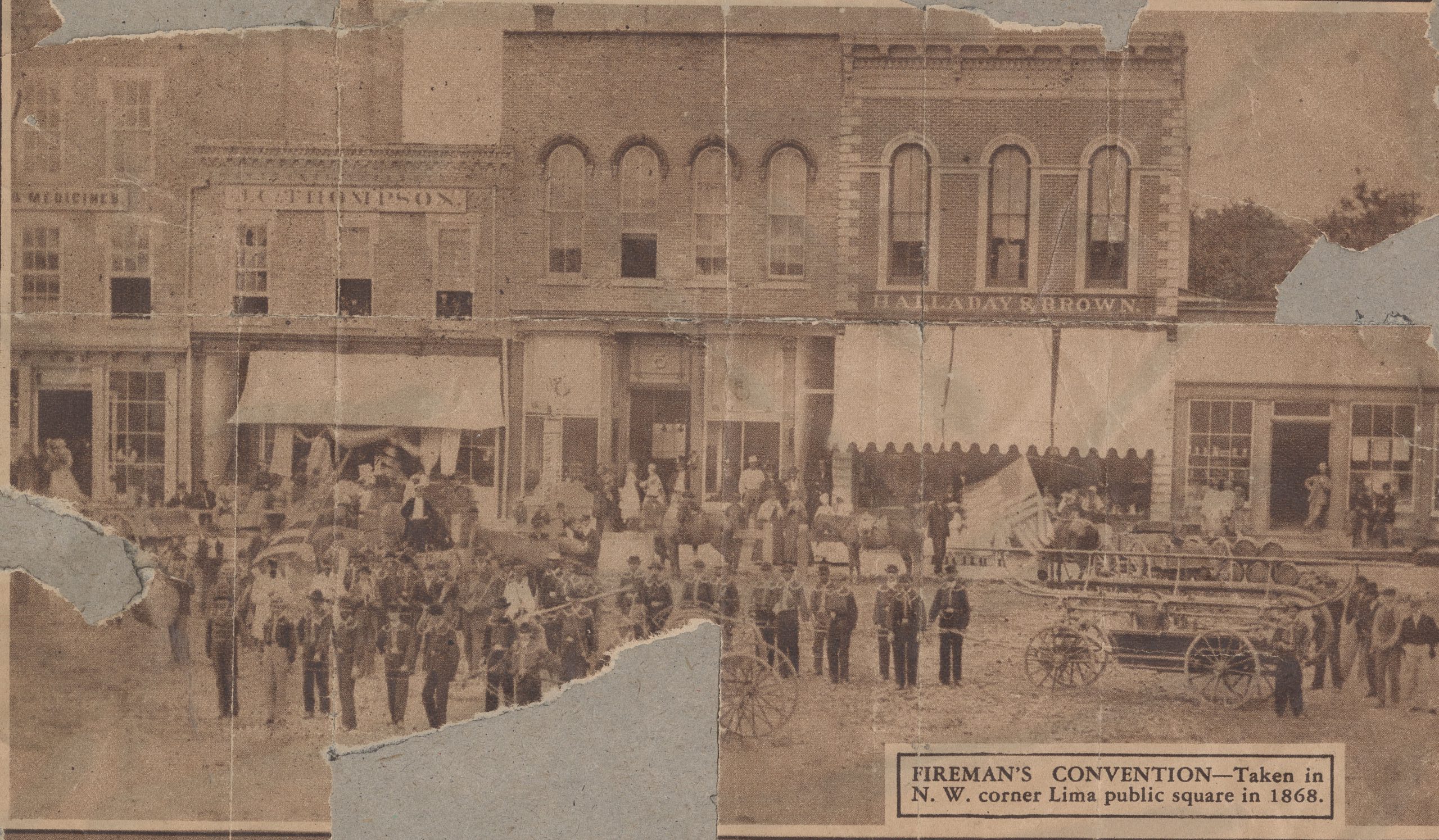
The Collins Block was also originally built in the 1850s, built in the northwest corner of Public Square, where the High Road School of Lima is today.[21] Samuel Collins was the builder of this block. It primarily held his store, which opened after 1852, and the Collins family’s home.[22] In those first few years, money was still uncommon in Lima, so the story goes that Collins took payment in animal pelts for any item he sold.[23] Thus, for a rabbit pelt, you could buy anything from clothes to food making Collins more of a general store, but by the early 1860s, it became a grocery business.[24] Collins would retire from his grocery store in 1865, turning instead to his real estate holdings.[25]
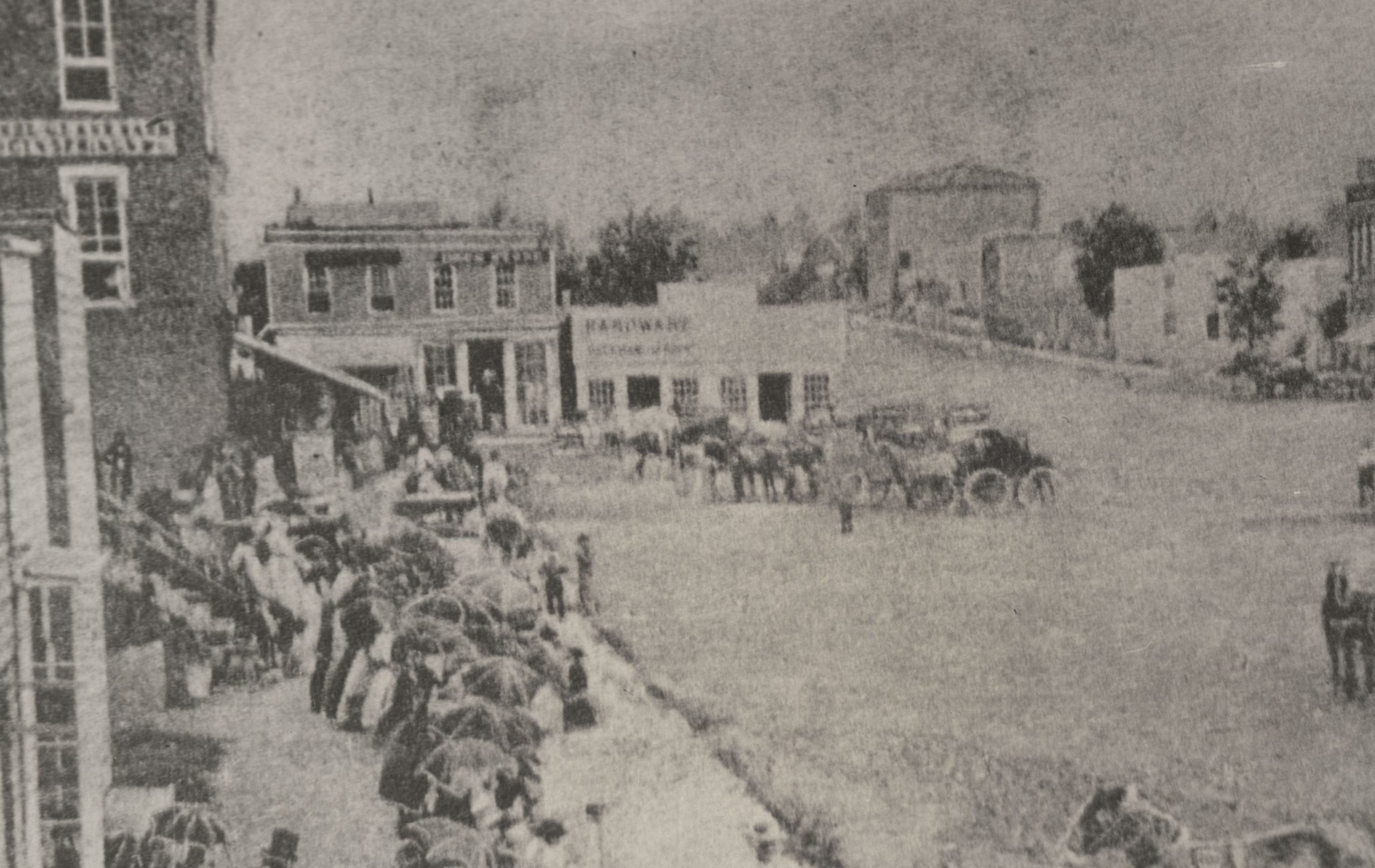
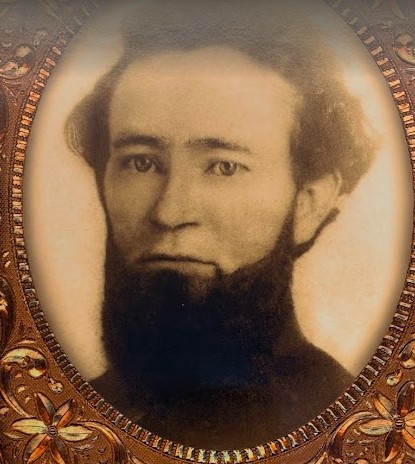
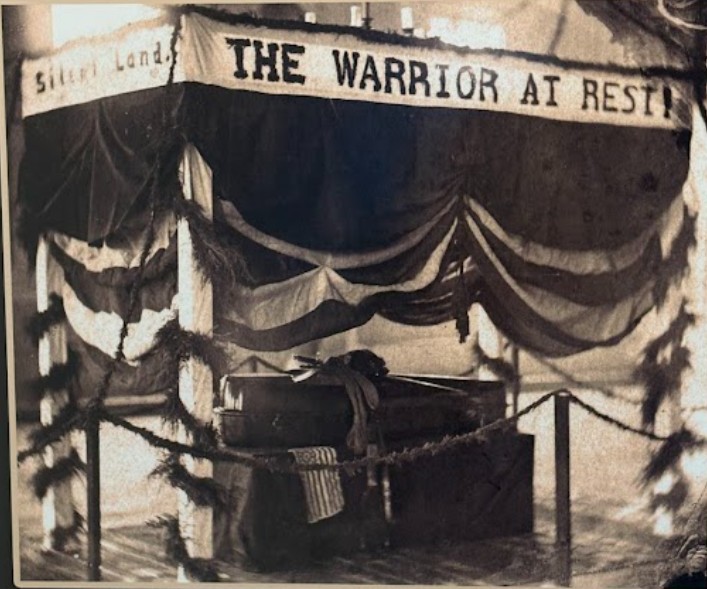
We will go back to Ashton Block now and advance the timeline. Ashton Block was the nexus of activity in Lima during the Civil War. It was often the place where volunteers would be heralded for the Union Army, and it also held the offices of the Provost Marshall and other Federal officers during those years.[26] Likewise, concerts were held in Ashton Hall to inspire men to join the army and the money made from said concerts would be used to by necessities for those at the front.[27] One of the saddest events of the time occurred in Ashton Hall: the laying in state of Captain Mart Armstrong.[28] In 1861, at the start of the war, Armstrong had been one of the first to volunteer and was appointed by the members of his company, in the 81st Ohio Volunteer Infantry (O.V.I.), as their Lieutenant.[29] Through his hard work and dedication, Armstrong then was promoted to captain.[30] In the spring of 1862, their company joined General Ulysses S. Grant in Tennessee for a battle that began April 6, where Armstrong was hit and killed by a projectile hitting him in the head.[31] Armstrong was the first Allen County soldier killed in the Civil War, and it hit the area hard.[32] His father and brother-in-law went and brought Armstrong’s body back to Lima, and his funeral was held by Reverand T.P. Johnston in Ashton Hall on April 30, 1862.[33] In an unfinished letter to his sister Armstrong wrote,
“I suppose you think we have a hard time of it in the army and that had we the choice to make it again, we would prefer to stay at home. I don’t speak for others, but for myself, when I say, truly, I would not exchange my tent in this crisis for a palace home. The world’s work is to be done and he who labors to perform it and urge on the wheels of progress, knowing that he is doing his part, is the only happy one.”[34]
A truly honorable young man who gave his life for his country.
Ashton Hall was still a place of large gatherings for the coming decade– often hosting school exhibitions and graduations. In May of 1864, the first commencement of Lima High School was held in Ashton Hall.[35] One of the four students who graduated was Dr. Samuel A. Baxter Jr. who would later become one of Lima’s mayors.[36] Ashton Hall’s position as the center of performances and public meetings ended in 1867, when City Hall was built on the corner of Main and High streets.[37] However, it continued as an important business building since it held many important law offices of the era: Irvine & Brice; Hackedorn, Wheeler, & Shaw; and Schoonover.[38] Thus, the Ashton Hall transitioned from being the center of entertainment to a business block.
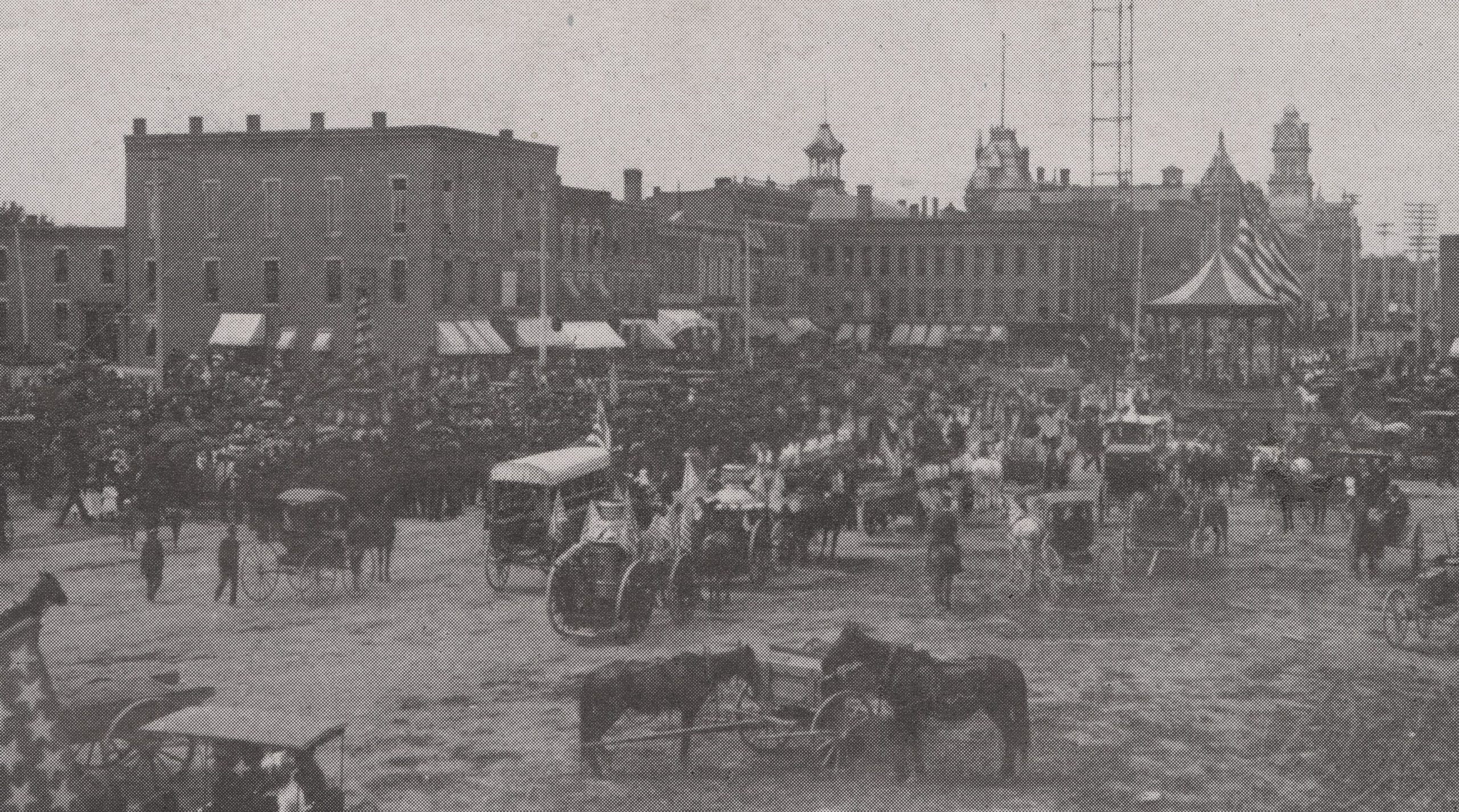
In the middle blocks, specifically at 59 Public Square, we circle back to the Ashton Hardware store, bought out by W. K. Boone and J.H. Kauke.[39] They had moved out of the Ashton block in 1866, and secured a salesroom in 59 Public Square just a few buildings north and still in the northwestern corner.[40] Likewise, right across from the building, most likely to the west, Boone was able to rent a two-story warehouse, which helped the business expand their products.[41] These new products included “a complete line of shelf hardware, mill supplies, mechanics and artisan tools, household goods, oils and varnishes.”[42] Likewise, they expanded their stock of saddlery and harnesses, paints, and building supplies.[43] They continued to be the stopping spot for anyone building in the surrounding eight counties. It was known as the hardware store that supplied building materials for the new courthouse and various other important buildings of the era.[44] The hardware store would stay there and be bought, changing name to the Cover Hardware Store, which we will follow in next month’s article.[45]
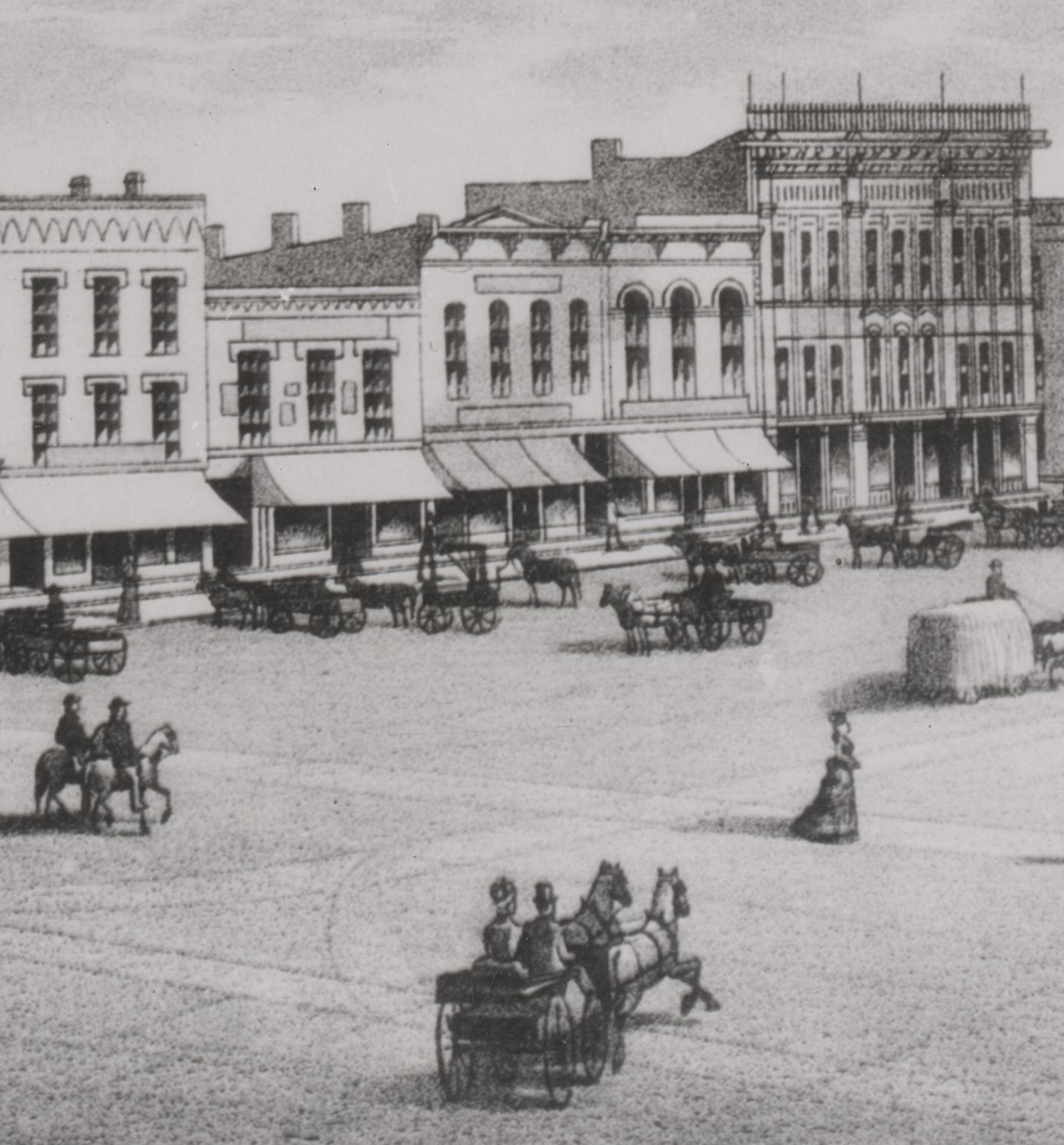
The Collins Block expanded even more in the 1870s. It housed many more businesses than just the Collins’ general store.[46] One important business it housed for a short period of time was the First National Bank, which was on the second floor facing North Main Street.[47] Right under it was City Restaurant, both of these called this block home before 1880.[48] Lima’s original YMCA started in the Collins Block, and was there from 1888 to 1895.[49] The next year, 1896, “Lima’s School of Music” opened on the third floor of the building.[50] Around the turn of the century two doctors, Bennett and Buck, opened their offices in the block.[51] Thus, it was a busy ever changing business block during the late 1800s, and will continue to be one as the story progresses.
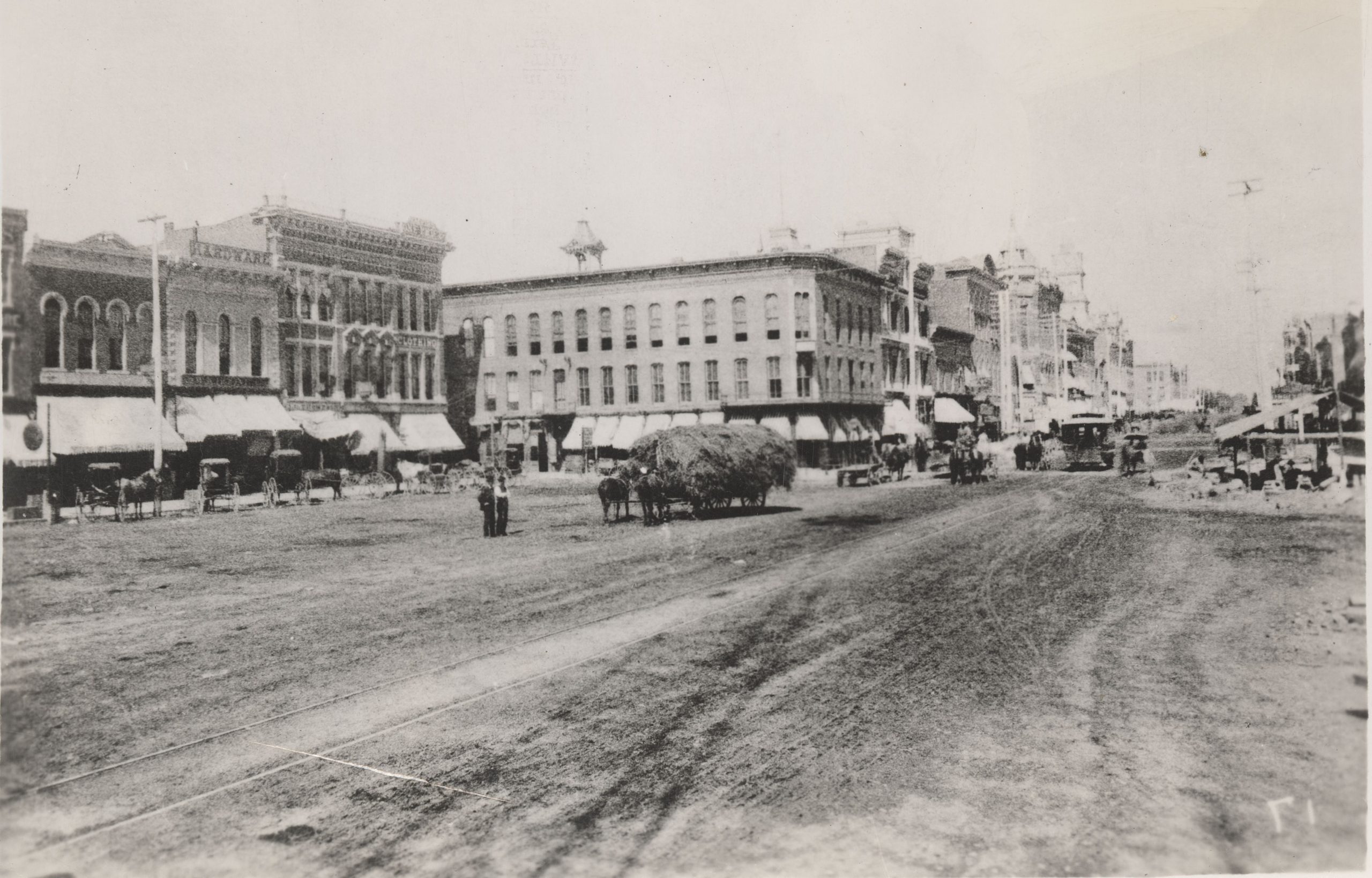
Most of the blocks in the northwestern corner of Public Square were started by entrepreneurs who brought vital businesses to the area. Then as Lima began to grow, they expanded their buildings to hold other businesses that helped the area. From general stores to banks and performance venues, the northwestern corner was a busy place in the 1800s. However, the story has just begun, check back in next month to follow the history of the northwestern corner of Public Square to today.
Endnotes:
[1] Greg Hoertsen, “Ashton Family Comes to Lima,” Lima News, August 25, 2021, in Reminisce File at the Allen County Archives.
[2] Ibid.
[3] Ibid.
[4] Ibid.
[5] Kim Kincaid, “Helping to Build a Community: The Hardware Store,” June 12, 2002, Lima News, in Reminisce Files at the Allen County Archives.
[6] Ibid.
[7] Ibid.
[8] Ibid.
[9] Ibid.
[10] Ibid.
[11] Anna Selfridge, “A Walk on West Market,” The Allen County Reporter, Vol. LXIV, 2010, No. 1, 5-6.
[12] Ibid., 6.
[13] Greg Hoertsen, “Ashton Family Comes to Lima,” Lima News, August 25, 2021, in Reminisce File at the Allen County Archives.
[14] Ezekiel Owens, “Lima’s First Show was Staged in the Old Court House on Main Street Previous to Year 1940,” The Allen County Reporter, Vol. LXVI, 2012, No. 1, 3.
[15] Ibid., 2.
[16] Ibid., 3.
[17] Ibid.
[18] Ibid.
[19] Ibid.
[20] Ibid.
[21] Greg Hoersten, “Samuel Collins: Tied to Lima’s Early Days,” Lima News, August 1, 2018, in Reminisce Files at the Allen County Archives.
[22] Ibid.
[23] Ibid.
[24] Ibid.
[25] Ibid.
[26] Ezekiel Owens, “Lima’s First Show was Staged in the Old Court House on Main Street Previous to Year 1940,” The Allen County Reporter, Vol. LXVI, 2012, No. 1, 3 and Anna Selfridge, “A Walk on West Market,” The Allen County Reporter, Vol. LXIV, 2010, No. 1, 5.
[27] Ezekiel Owens, “Lima’s First Show was Staged in the Old Court House on Main Street Previous to Year 1940,” The Allen County Reporter, Vol. LXVI, 2012, No. 1, 3-4.
[28] Greg Hoersten, “Remembering Mart Armstrong,” Lima News, October 9, 2019, in Reminisce Files at the Allen County Museum.
[29] Ibid.
[30] Ibid.
[31] Ibid.
[32] Ibid.
[33] Ibid.
[34] Ibid.
[35] Ezekiel Owens, “Lima’s First Show was Staged in the Old Court House on Main Street Previous to Year 1940,” The Allen County Reporter, Vol. LXVI, 2012, No. 1, 4.
[36] Jeanne Porreca, “Lima’s Great Doctor,” Time Capsule in Our Generations Magazine, March 2006, in Baxter Family File in the Allen County Archives, 16.
[37] Ezekiel Owens, “Lima’s First Show was Staged in the Old Court House on Main Street Previous to Year 1940,” The Allen County Reporter, Vol. LXVI, 2012, No. 1, 4.
[38] Anna Selfridge, “A Walk on West Market,” The Allen County Reporter, Vol. LXIV, 2010, No. 1, 5.
[39] Kim Kincaid, “Helping to Build a Community: The Hardware Store,” June 12, 2002, Lima News, in Reminisce Files at the Allen County Archives.
[40] Ibid.
[41] Ibid.
[42] Ibid.
[43] Ibid.
[44] Ibid.
[45] Ibid.
[46] Greg Hoersten, “Samuel Collins: Tied to Lima’s Early Days,” Lima News, August 1, 2018, in Reminisce Files at the Allen County Archives.
[47] Ibid.
[48] Ibid.
[49] Ibid.
[50] Ibid.
[51] Ibid.
All images are from the collection of the Allen County Archives or taken by an Allen County Museum staff member.












Leave A Comment